


Audit the suppliers your label depends on
When a supplier fails, the recall carries your name, not theirs. Second-party audits check the things a certificate never will: your spec, your allergen exposure, the line your material actually runs on. We scope them, run them, and make the findings stick.
Not ready for a call? Tell us which supplier worries you most.
A supplier audit program, not a stack of visits
One-off supplier visits produce trip reports. A program produces an approved-supplier list you can defend: scoped audits on a schedule, findings with follow-through, and results that feed the approval decision.
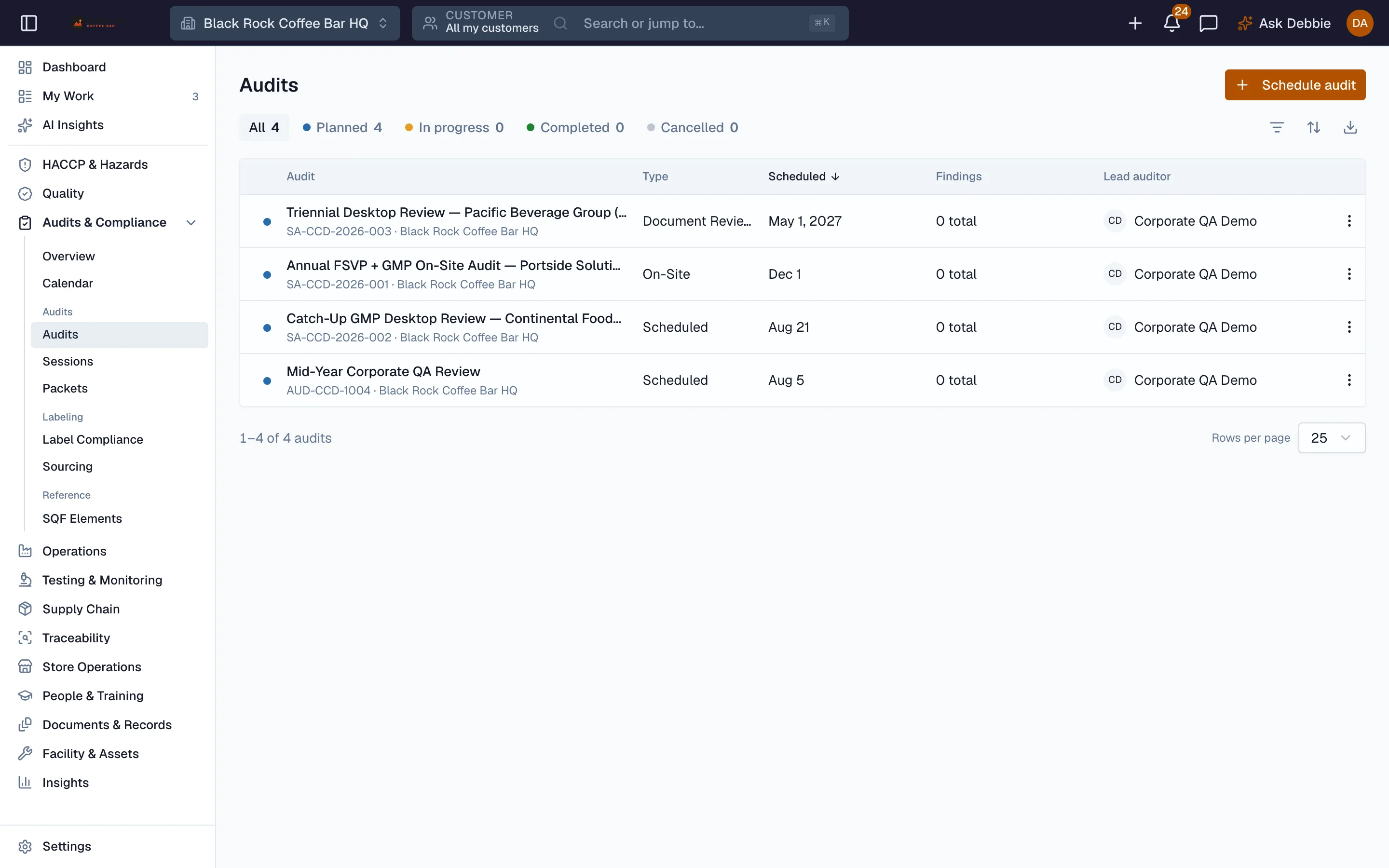
A flour mill feeding your allergen-free line and a film supplier do not deserve the same audit. We scope each supplier by the material and what its failure would cost you, then schedule on-site visits and desk reviews on a cycle you can keep.
Explore Scope by What They Send You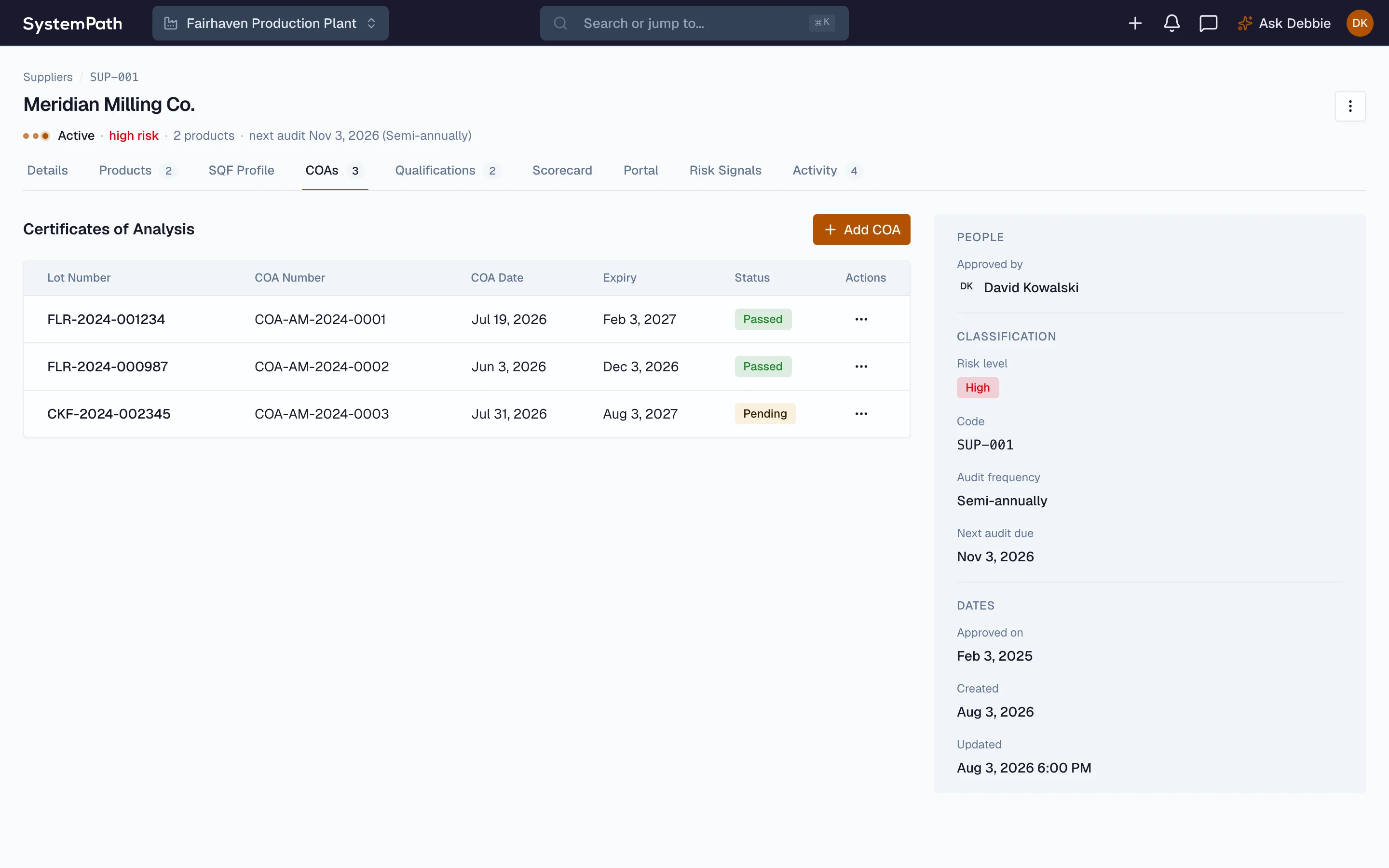
Questionnaires, qualifications, certificates, and COAs tied to the lots they cover, current and in one place. The desk work happens before anyone travels, so the on-site day goes to the things only a walk-through can answer.
Explore The File Before the Visit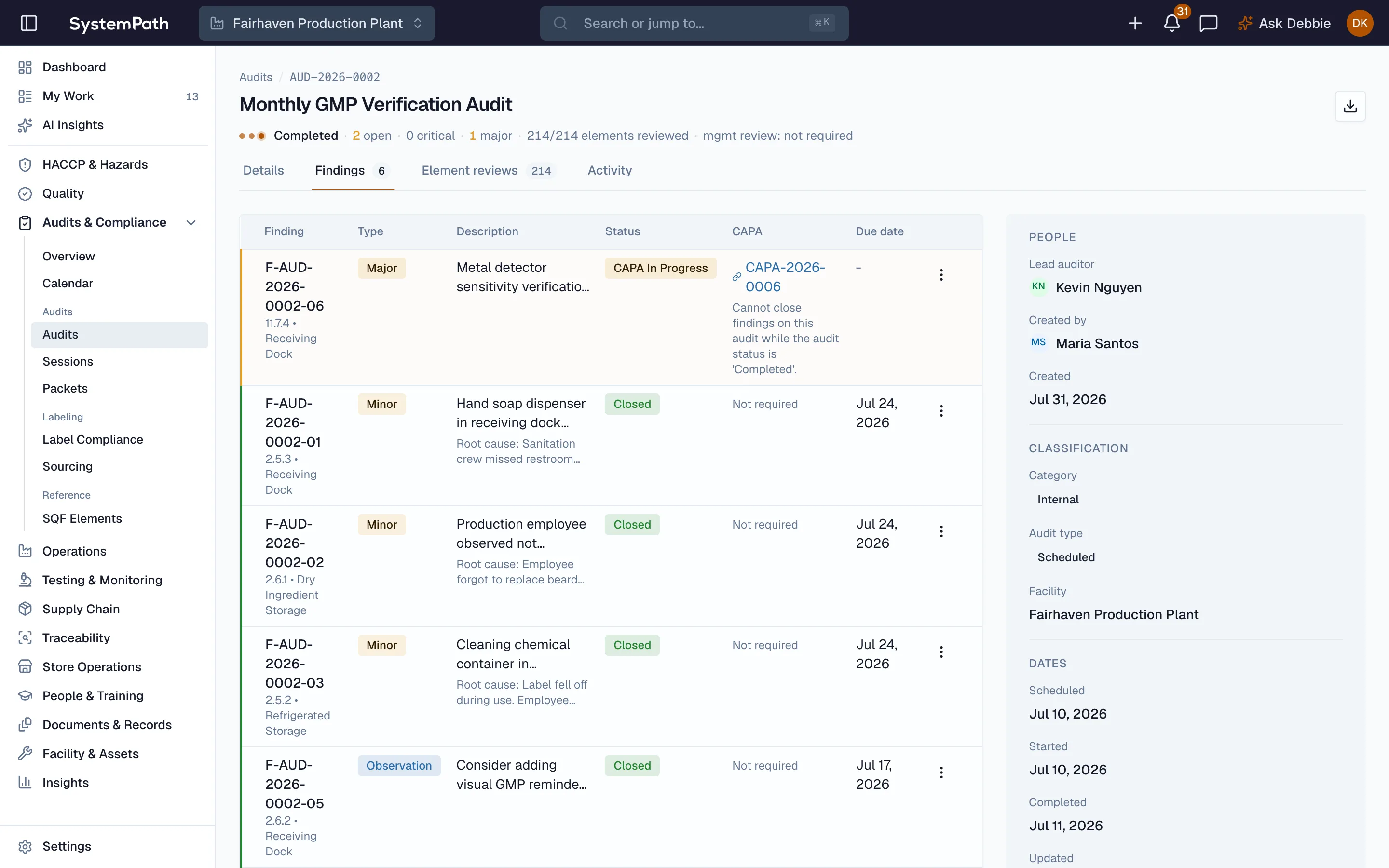
Each finding goes to the supplier as a corrective action request with a deadline, and the response gets reviewed before anything closes. A supplier that will not close findings has answered the most important audit question there is.
Explore Findings the Supplier Answers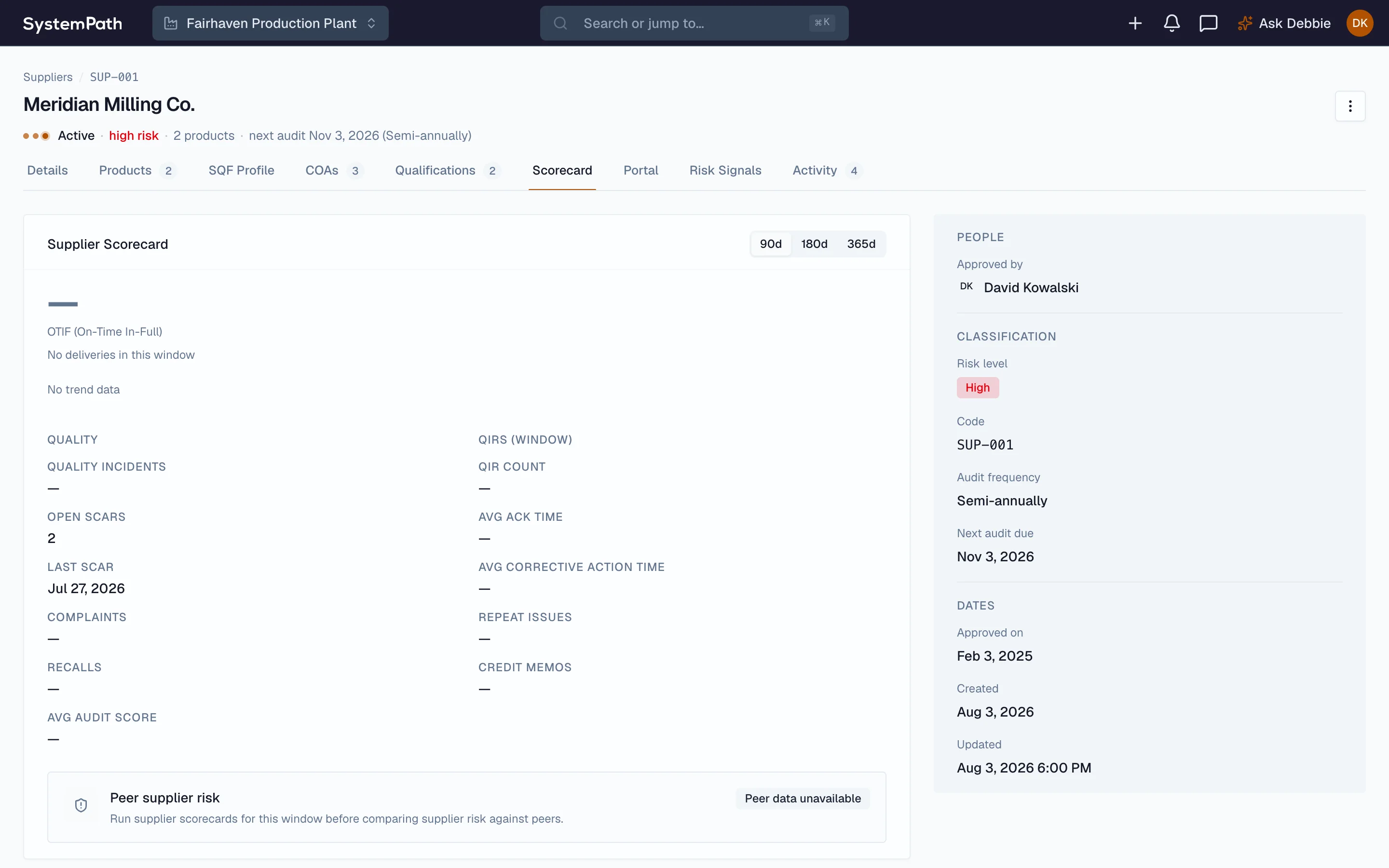
Audit results, receiving non-conformances, and closure performance accumulate on the supplier scorecard, so the approval decision at requalification is made from a record, not a memory. Approved status stays something a supplier can lose.
Explore Results That Feed ApprovalFrom supplier list to a defensible program
We start from what each material can do to your product, not from a generic checklist. The program that comes out is one your team can run: most facilities keep us for the critical audits and take the routine ones in-house within a year.
Start with a program reviewSort the supplier base
1 weekWalk the approved list material by material: what each one sends, what its failure would cost, and what verification that warrants. Certificates alone for some, audits for others.
Build the criteria
1-2 weeksAudit criteria written from your specs, your allergen exposure, and your scheme requirements. Your requirements are the standard; that is what second-party means.
Set the cycle
1 weekOn-site visits and desk reviews on a schedule the team can keep, with the supplier file worked before anyone books travel.
Run the audits
per cycleWe audit as your second party, or alongside your team while they learn the craft. Findings recorded where they are found, evidence attached.
Route findings to the supplier
ongoingEach finding becomes a supplier corrective action request with a deadline. Responses reviewed, evidence checked, nothing closed on a promise.
Feed the approval decision
ongoingAudit results and closure performance land on the scorecard, so requalification reads a record. The approved list stays a decision, not a habit.
What a supplier audit has to produce.
A pleasant site visit and a PDF is not an audit. These four things are.
Your requirements
Not a generic checklist
The criteria come from your specs, your allergen exposure, and your scheme. An audit against someone else's checklist answers someone else's question.
Evidence, not vibes
Records reviewed on site
Findings cite what was seen: the record, the practice, the gap. A clean walk-through with no records reviewed is a tour, and tours find nothing.
Follow-through
With a deadline
Every finding gets a supplier corrective action with a date, and the response gets reviewed. Unanswered findings are the program admitting it is optional.
A consequence
Approval can move
Results feed requalification. If no audit outcome could ever change a supplier's status, the program is a formality and everyone involved knows it.
Not sure your program produces all four. Tell us about your supplier base and we'll tell you where we'd audit first.
Our supplier-audit work is led by a former SQF Lead Auditor who has audited plants for a living and knows what a second-party audit must produce before it can stand in for your own name on the label. Meet Jeff.
The supplier file lives in Beacon. Audits included.
Supplier audits run on the same audit engine as your internal audits, and every supplier carries its whole file: approval status, audit dates, questionnaires, certificates, COAs tied to lots, and the scorecard. See how supplier management works.
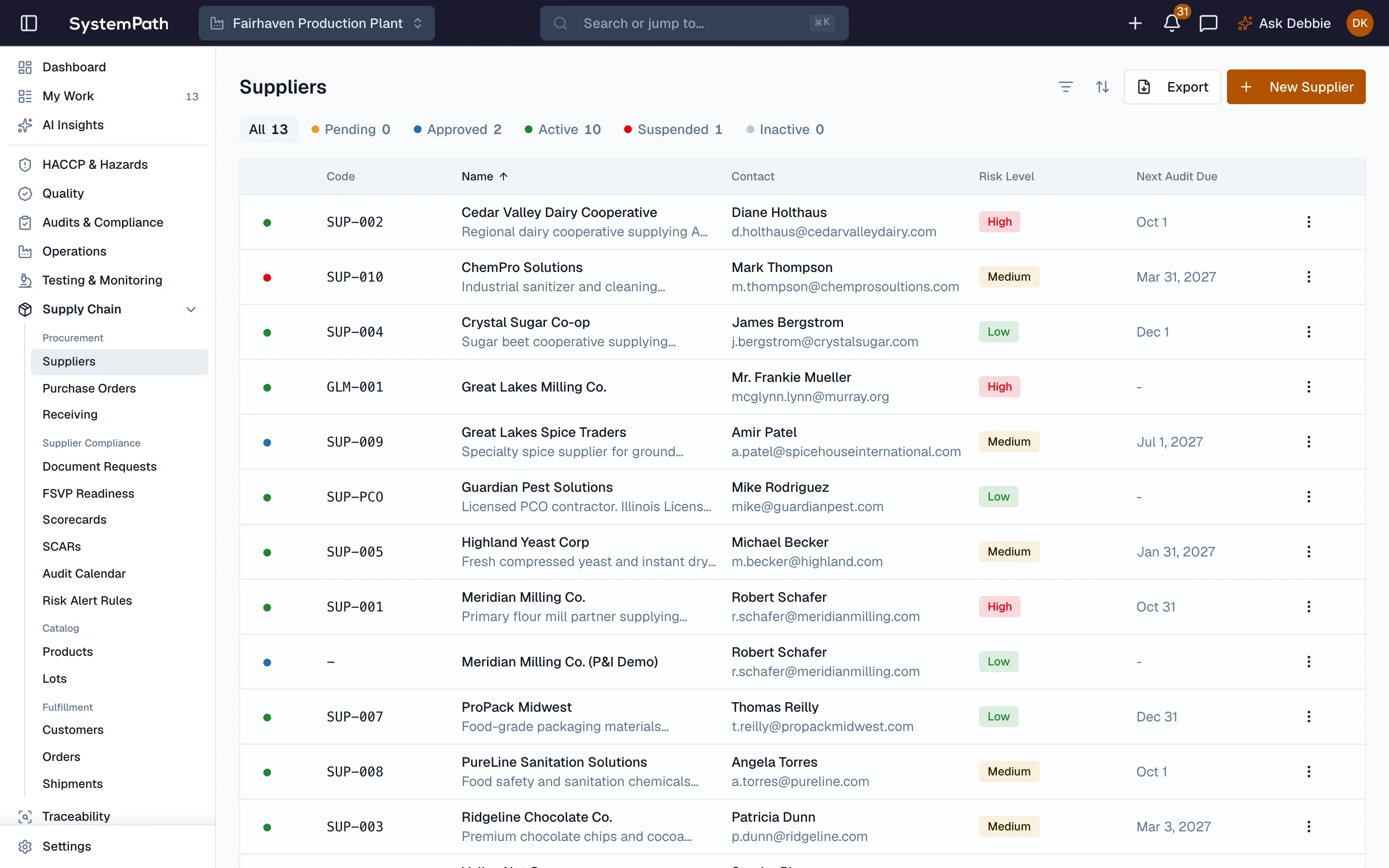
Anyone can visit a supplier and write a report. The difference is whether the approved-supplier list means something a year later. See why teams build it with us.
Run supplier audits your customers would accept as their own
Bring your approved-supplier list. In 20 minutes you'll know which suppliers warrant an audit, which just need a better file, and what the first cycle should cover.
Prefer the phone? (313) 484-4887
What happens next
Discovery call
About your facility and goals. Not a sales pitch.
See it in action
A live walkthrough of Beacon scoped to your operation.
Custom proposal
Software, consulting, and training sized to your facility.
You'll talk with a food safety expert, not a sales rep.
20 minutes · No commitment · No pressure
Tell us which supplier worries you most
The single-source ingredient, the co-manufacturer running your label, the one whose paperwork always arrives late. We come back with a read on what verification that supplier warrants and what an audit would need to cover.
Supplier audit questions, answered
Common questions from QA teams building or tightening a supplier audit program.