


Keep the allergen off the wrong line.
A customer sent an allergen questionnaire, or you are staking a "free-from" claim on a line that runs the allergen too. Undeclared allergens drive more recalls than anything else, almost always from cross-contact or a label that drifted from the recipe. A real program maps your allergens, validates each changeover, and keeps the claim defensible across the line.
Sitting on a customer questionnaire? Send it over before you book anything.
From the matrix to the label, one program
Allergen management runs from the map through the changeover to the claim on the package. An auditor reads all four, and every one of them reads off a matrix Beacon keeps current.
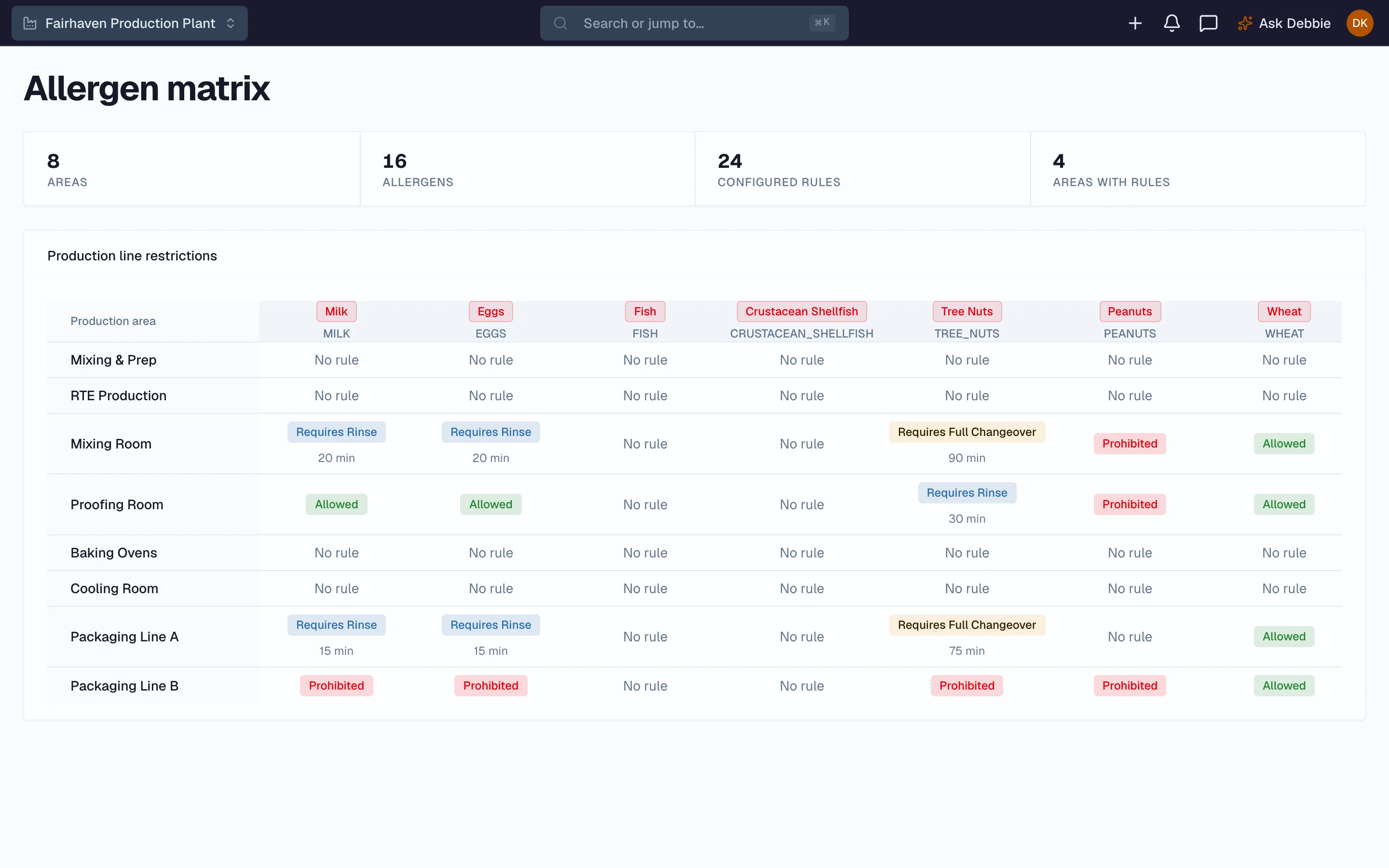
The map shows which allergens live in each ingredient, each product, and on each line. From it you can see where cross-contact is possible and which changeovers carry the most risk. Every other control reads off this matrix, so we build it first and keep it current.
Explore Allergen Mapping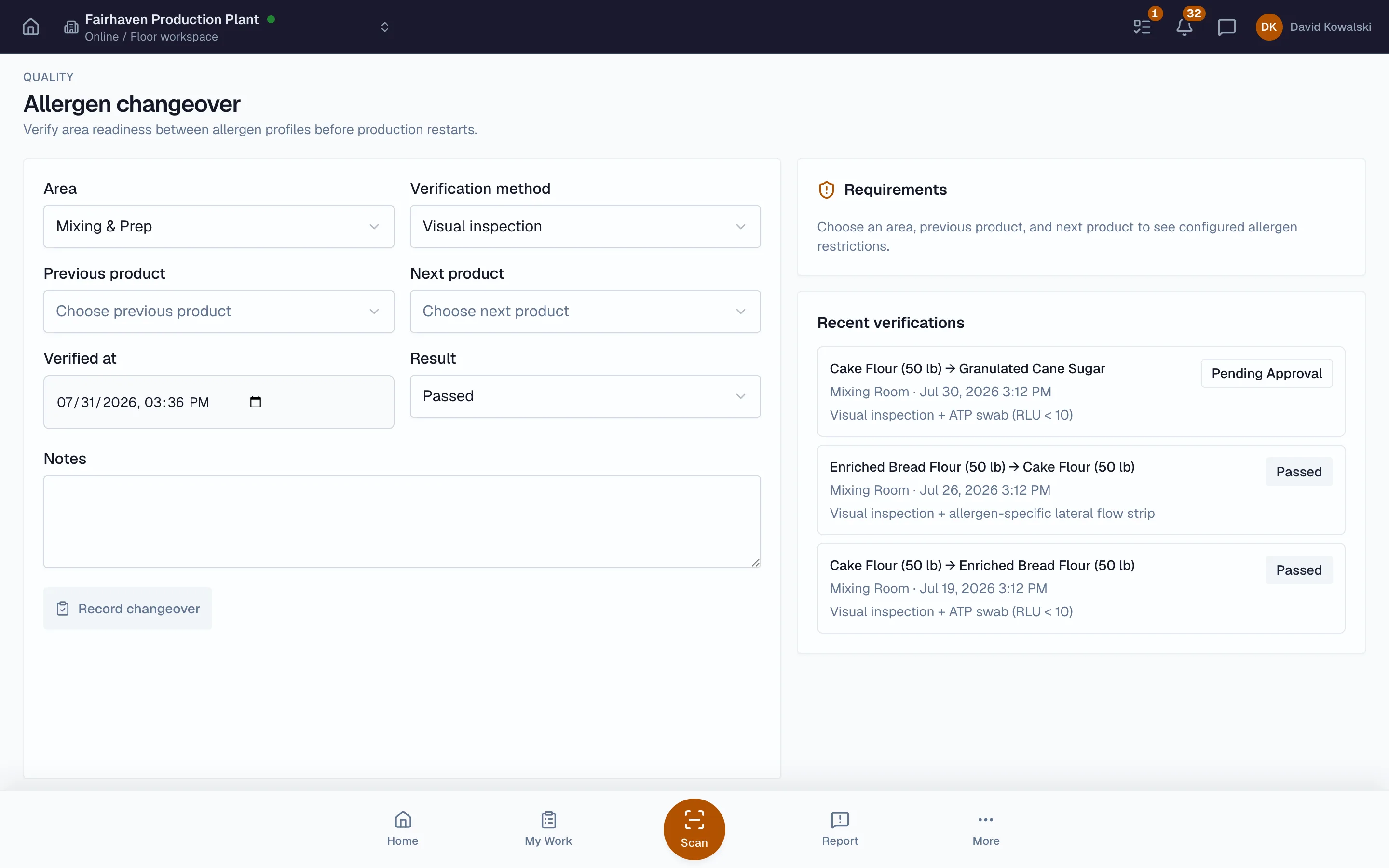
When a line switches from an allergen-containing product to one without it, the cleaning has to remove the allergen to a safe level. We validate the procedure with allergen-specific testing and set the routine verification that proves the changeover stays under control.
Explore Changeover Validation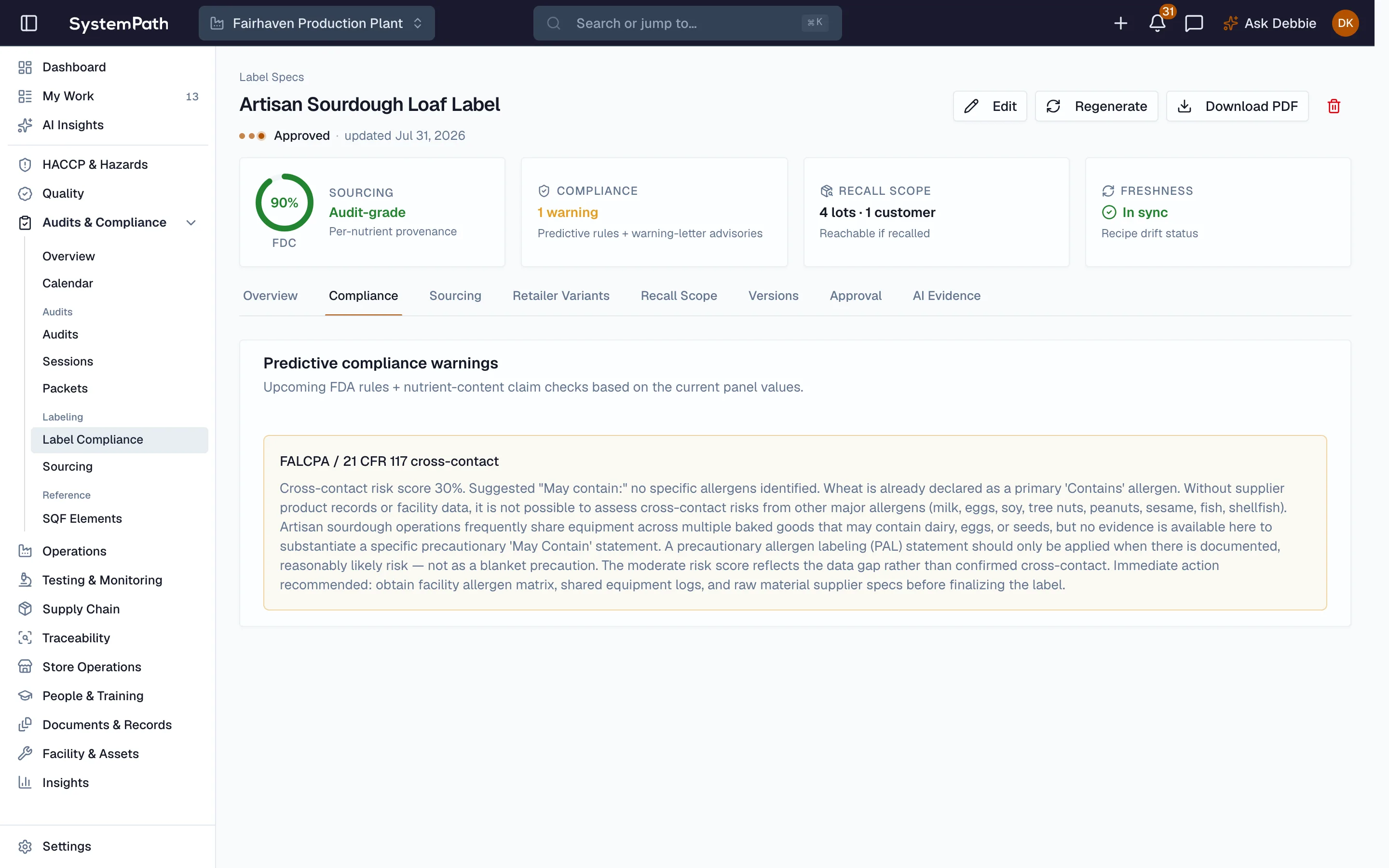
The allergen statement, any precautionary wording, and the formulation are kept in agreement so a recipe change cannot quietly outrun the label. A claim is defensible only when the controls back it, and label-claim control is what keeps the two in step.
Explore Label-Claim Control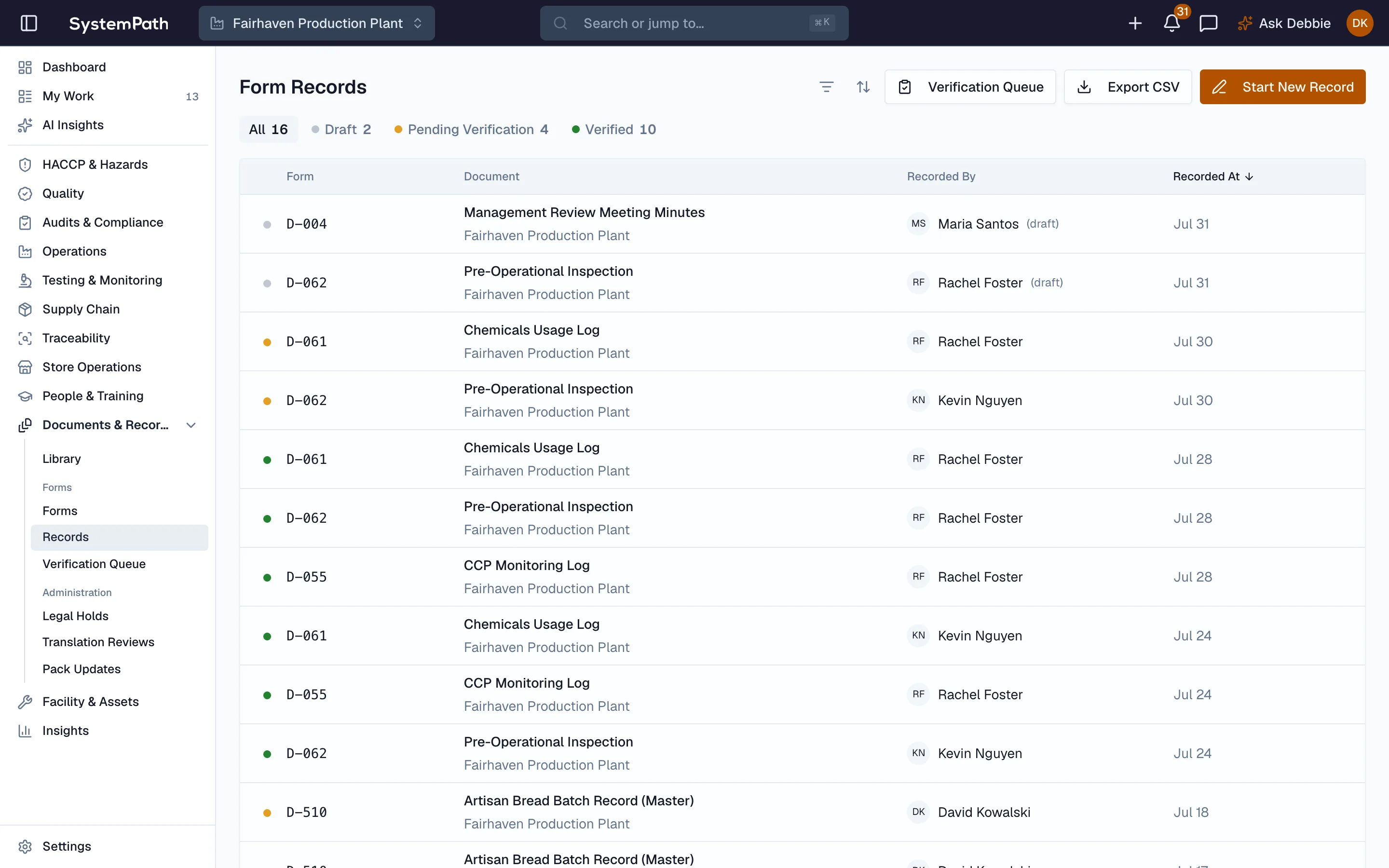
The cheapest cross-contact control is often the order you run things in. We review the production sequence to cut high-risk changeovers, then set the routine verification and records that show the program runs, not just exists.
Explore Scheduling and VerificationFrom ingredient list to a defensible label
A real allergen program takes a few weeks to map and validate, then routine verification to keep. We build the matrix, validate the changeovers, and align the labels. The platform then holds it so the program stays current as products change.
Start with an allergen mapBuild the allergen matrix
1 weekMap every allergen across ingredients, products, and lines. The matrix that everything else reads from.
Identify cross-contact risk
1 weekWalk the lines against the map and flag where shared equipment, rework, and airflow create cross-contact paths.
Validate changeovers
2-4 weeksValidate the cleaning between high-risk products with allergen-specific testing, and set the routine verification cadence.
Align labels to recipes
1-2 weeksReconcile every allergen statement and precautionary claim with the actual formulation and what the line can guarantee.
Optimize the schedule
1 weekSequence production to cut high-risk changeovers, so the cheapest control does part of the work for you.
Keep the matrix true
ongoingRun the routine verification, update the matrix the day a formulation changes, and walk into the audit with a map that still matches the line it describes.
Nine to map across every line.
The United States now recognizes nine major allergens. Sesame became the ninth under the FASTER Act, effective January 2023, and the program maps every one.
Milk
Dairy and derivatives across most bakery and confectionery lines.
Eggs
Whole, white, and powdered forms, often hidden in batters and binders.
Fish
Finned species, including sauces and flavor bases.
Crustacean shellfish
Shrimp, crab, and lobster, frequently a dedicated-line concern.
Tree nuts
Almonds, walnuts, and more, the classic nut-free claim risk.
Peanuts
A legume, controlled separately from tree nuts for cross-contact.
Wheat
A gluten source that drives both allergen and gluten-free claims.
Soybeans
Lecithin, protein, and oil forms across countless products.
Sesame
The ninth major allergen since January 2023, often overlooked.
Nine allergens, every line, every changeover, and one label that has to keep up. Tell us what you run and we will map where the risk sits.
Our allergen work is led by a former SQF Lead Auditor and the practitioners on our bench, people who have pulled the thread on a free-from claim until it either held or came apart. Meet Jeff.
Your allergen matrix lives in Beacon. Not on a whiteboard.
Everything we build during the engagement runs in Beacon: the matrix, the changeover validation, the verification records, and the label-claim controls. A claim is backed by the evidence behind it, dated and ready when the auditor asks. See how the food safety module works.
Any consultant can hand you an allergen matrix. The difference is whether it still matches the line after the next formulation change. See why teams build it with us.
Make every allergen claim defensible across the line
Bring the questionnaire a customer sent, or the claim you need to defend. In 20 minutes you'll know where your allergen controls hold and where the label could outrun the recipe.
Prefer the phone? (313) 484-4887
What happens next
Discovery call
About your facility and goals. Not a sales pitch.
See it in action
A live walkthrough of Beacon scoped to your operation.
Custom proposal
Software, consulting, and training sized to your facility.
You'll talk with a food safety expert, not a sales rep.
20 minutes · No commitment · No pressure
Send us your allergen program
Send your matrix, or the questionnaire a customer put in front of you, and the claim you need to defend. We come back with where cross-contact is possible and where the label could outrun the recipe.
Allergen management questions, answered
Common questions from QA teams running an allergen program.