


A sanitation program with the records to prove it
The master sanitation schedule is one of the first things an auditor asks for, and a schedule with missed sign-offs is a finding. A real program sets the cadence, controls the chemicals, and verifies the clean, so the evidence is on the record when the auditor looks, not reconstructed from memory the night before.
Not ready for a call? Send your schedule and we'll read it back first.
Schedule it, control it, verify it, prove it
A sanitation program is a loop from the schedule through the clean to the verified record. An auditor pulls all four, and Beacon is where the sign-offs land instead of going missing.
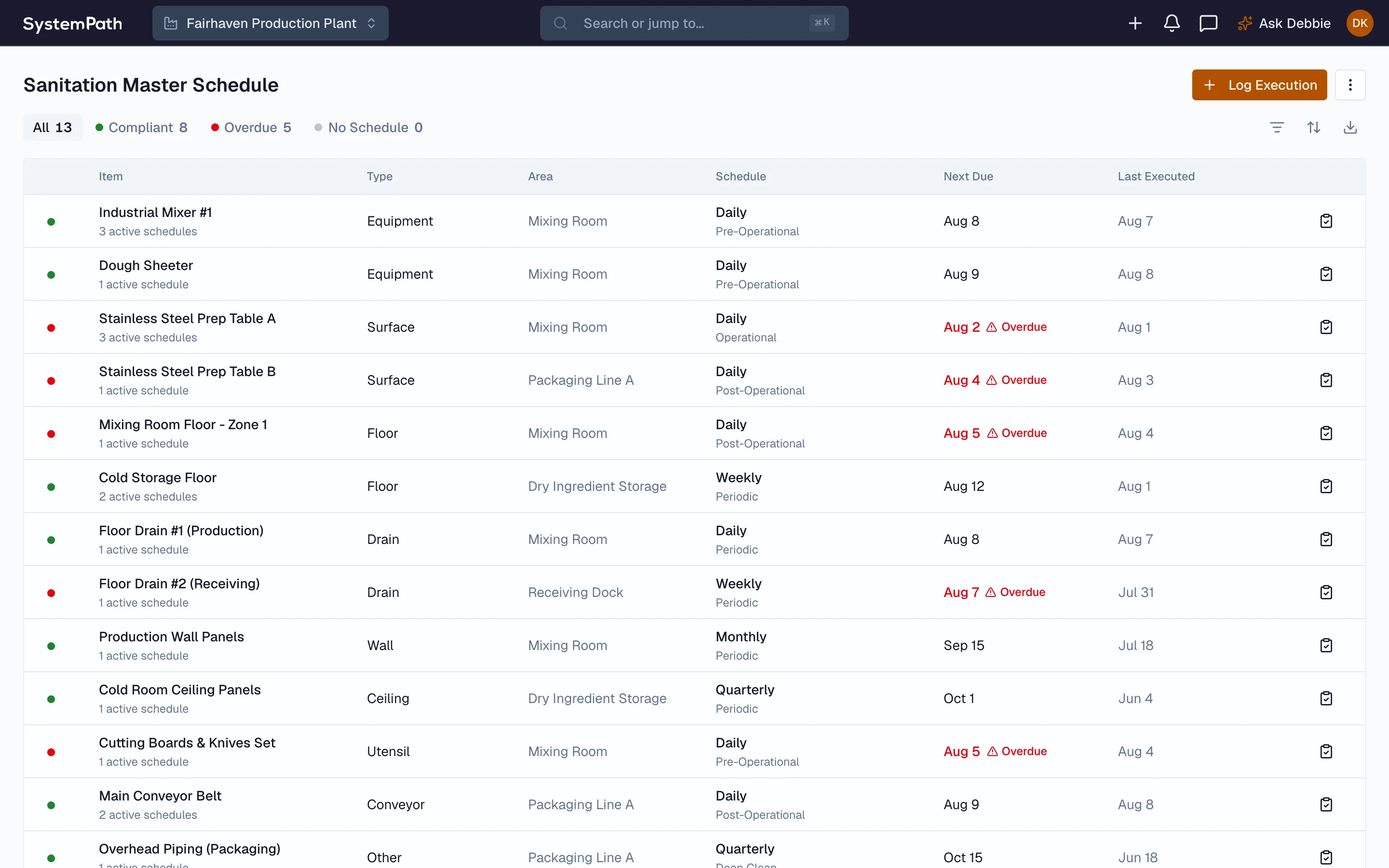
The MSS captures the deep cleans, overhead and drain work, and equipment teardowns that fall outside daily cleanup, each on a weekly, monthly, or quarterly cadence. We build the schedule to your facility and lines so the hard-to-reach places get cleaned on a plan, not on memory.
Explore Master Sanitation Schedule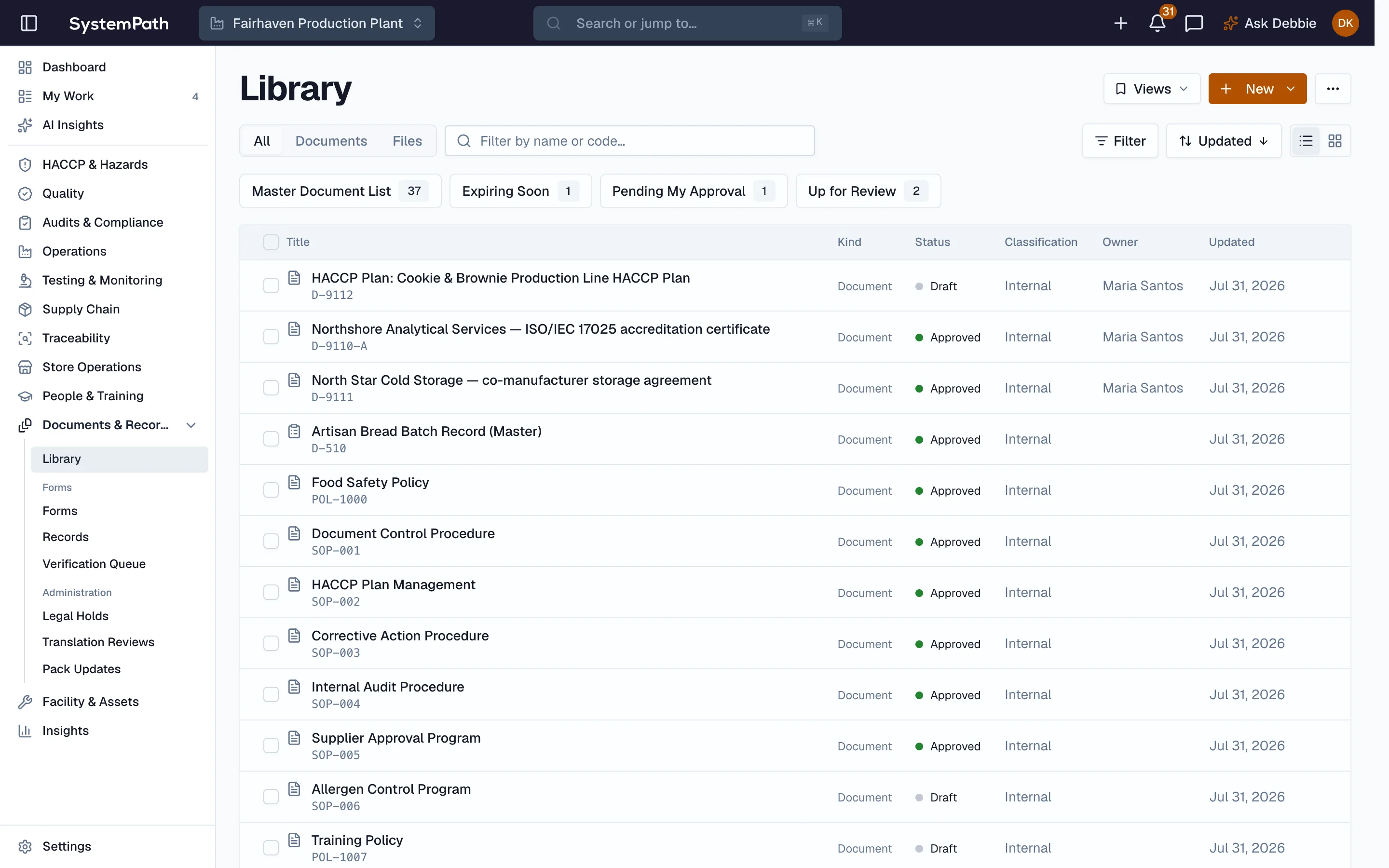
The pre-operational and operational cleaning procedures, written to the equipment and the people who run it. Good SSOPs are specific enough to repeat and simple enough to follow on third shift, and they sit under document control so the version in use is the version on file.
Explore SSOPs and Procedures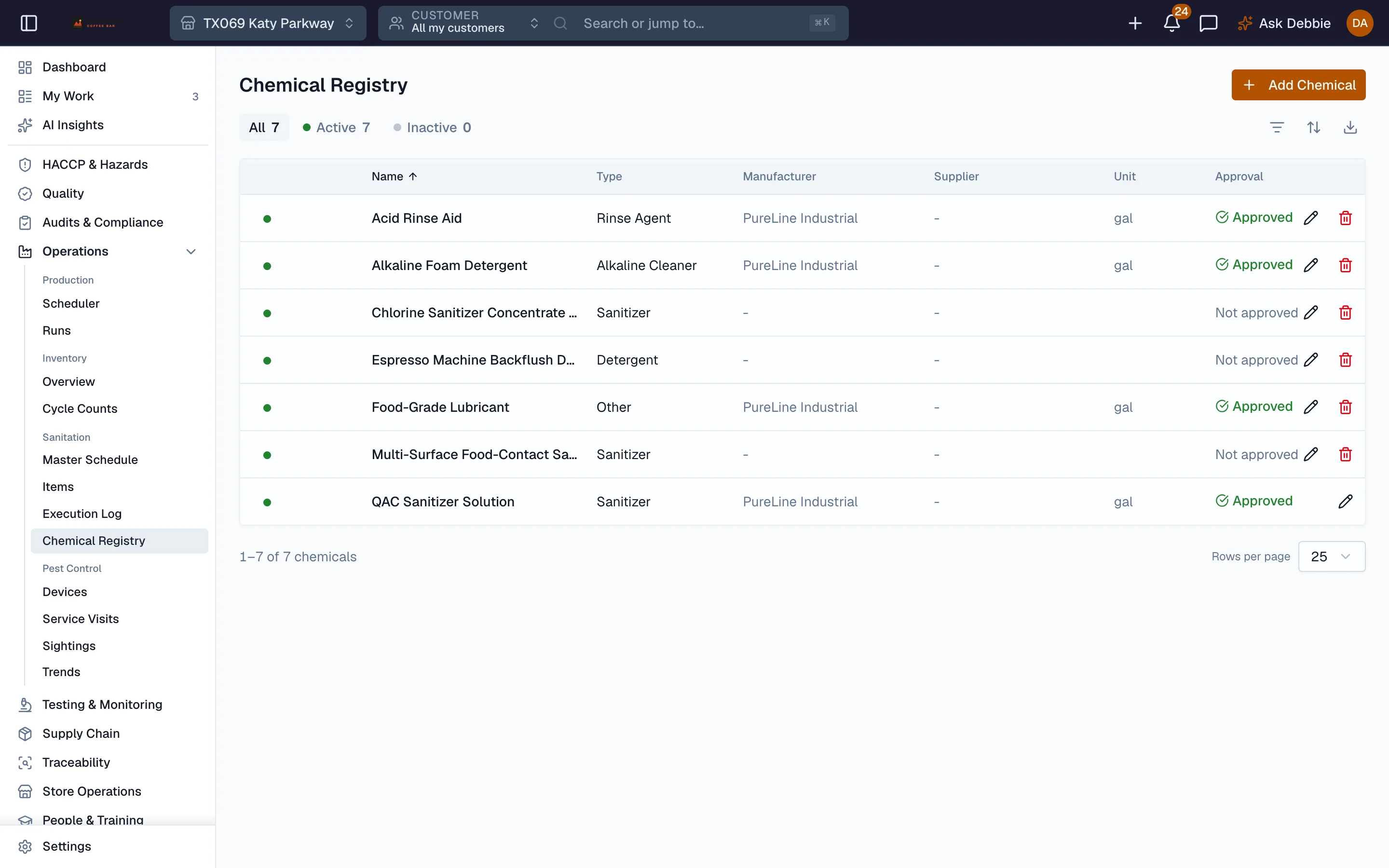
An approved-chemical list, current safety data sheets, titration verification, and proper labeling and storage. We set the controls that keep each sanitizer matched to its surface and verified in range, because a sanitizer out of strength quietly undermines every clean.
Explore Chemical Control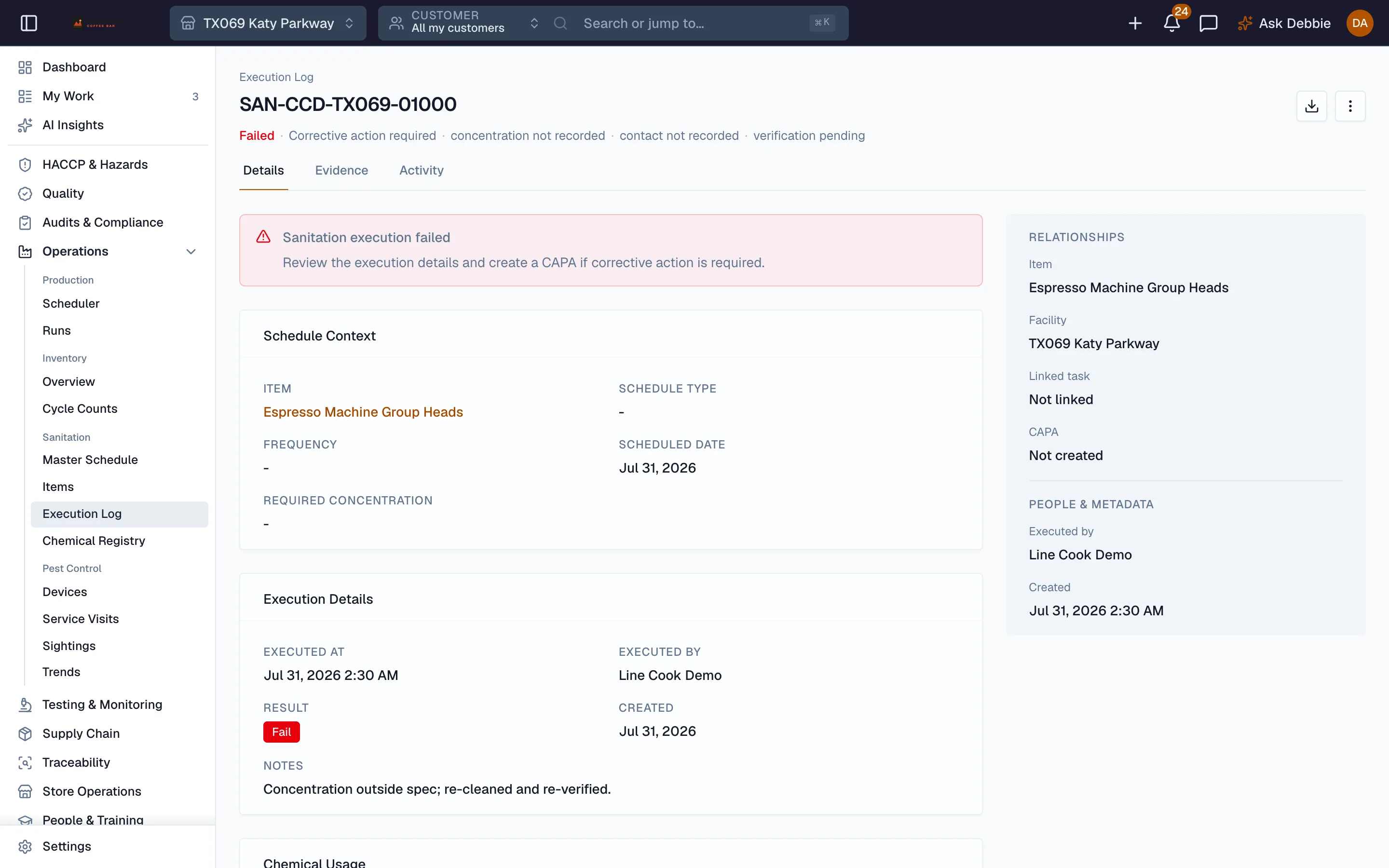
Pre-operational inspection before production, routine verification, and corrective action for any failed check, all captured as records an auditor can read. Sanitation that schedules cleaning but never verifies it has no evidence, and evidence is the whole point.
Explore Verification and RecordsFrom the schedule to the sign-off
Building a sanitation program that holds up takes a few weeks of design and routine verification to keep. We set the schedule around your run plan, write the SSOPs, control the chemicals, and define the checks. The platform then tracks completion so a missed task is flagged, not forgotten.
Start with a sanitation reviewWalk the facility
1 weekMap every surface, drain, and piece of equipment, and find the spots the daily clean never reaches. The starting point for the schedule.
Build the master schedule
1-2 weeksSet the cadence for every periodic task, weekly through quarterly, sequenced into your run plan and assigned to owners with clear sign-off.
Write the SSOPs
1-2 weeksDocument the daily pre-op and operational cleaning to the equipment and the shift, under document control so the right version is in use.
Set chemical control
1 weekBuild the approved-chemical list, collect safety data sheets, and define titration verification and storage controls.
Define verification
1 weekSet the pre-operational inspection, the routine checks, and the corrective action path when a check fails. The evidence layer.
Hold the cadence
ongoingTrack completion on the floor, flag a missed task the day it slips, and walk into the audit with a schedule whose sign-offs are all present and accounted for.
Three checks that turn a clean into evidence.
Scheduling the clean is half the program. These are the checks that prove it worked, and that an auditor weights most.
Pre-operational inspection
Before the line starts
A visual and, where warranted, ATP or allergen-specific check on the cleaned line before production. The gate that keeps a missed spot from reaching product.
Chemical titration
In range, every time
Routine concentration verification proves the sanitizer is strong enough to work and not so strong it leaves residue. A small log auditors lean on hard.
Environmental monitoring
The long-range check
The EMP is how you know sanitation is controlling pathogens over time. A recurring positive often points straight back to a sanitation gap. See the EMP service.
Scheduling the clean is the easy half. Send us your schedule and we will tell you what an auditor would flag.
Our sanitation work is led by a former SQF Lead Auditor who knows which line of the master sanitation schedule the auditor turns to first: the one where the sign-off is missing. Meet Jeff.
Your sanitation records live in Beacon. Not on a clipboard.
Everything we build during the engagement runs in Beacon: the master schedule, the SSOPs, the chemical list, and the verification records, with completion tracked on the floor and a missed task flagged. The evidence is dated and ready when the auditor asks. See how the operations module works.
Any consultant can write you a master sanitation schedule. The difference is whether the sign-offs are still landing six months in, when the novelty has worn off. See why teams build it with us.
Build a sanitation program that produces the evidence
Bring the schedule you run today, gaps and all. In 20 minutes you'll know which records an auditor would pull first and where yours would come up short.
Prefer the phone? (313) 484-4887
What happens next
Discovery call
About your facility and goals. Not a sales pitch.
See it in action
A live walkthrough of Beacon scoped to your operation.
Custom proposal
Software, consulting, and training sized to your facility.
You'll talk with a food safety expert, not a sales rep.
20 minutes · No commitment · No pressure
Send us your sanitation schedule
Send your master schedule and a few weeks of sign-offs. We come back with the records an auditor would pull first and the gaps they would find, before you decide whether a call is worth your time.
Sanitation questions, answered
Common questions from teams running a sanitation program.