

Find the harborage before the auditor does
A swab came back positive, or a customer wants to see your EMP, and the program you have is a spreadsheet nobody trends. A real environmental monitoring program is designed, zoned, and read so a recurring hot spot surfaces early, in your trend data, instead of late, in a recall.
Just had a positive and not ready for a call? Send us the trend first.
A program that listens to its own results
An environmental monitoring program is a loop: design, sample, trend, investigate, and close. An auditor checks all four, and Beacon is where the loop keeps turning between visits.
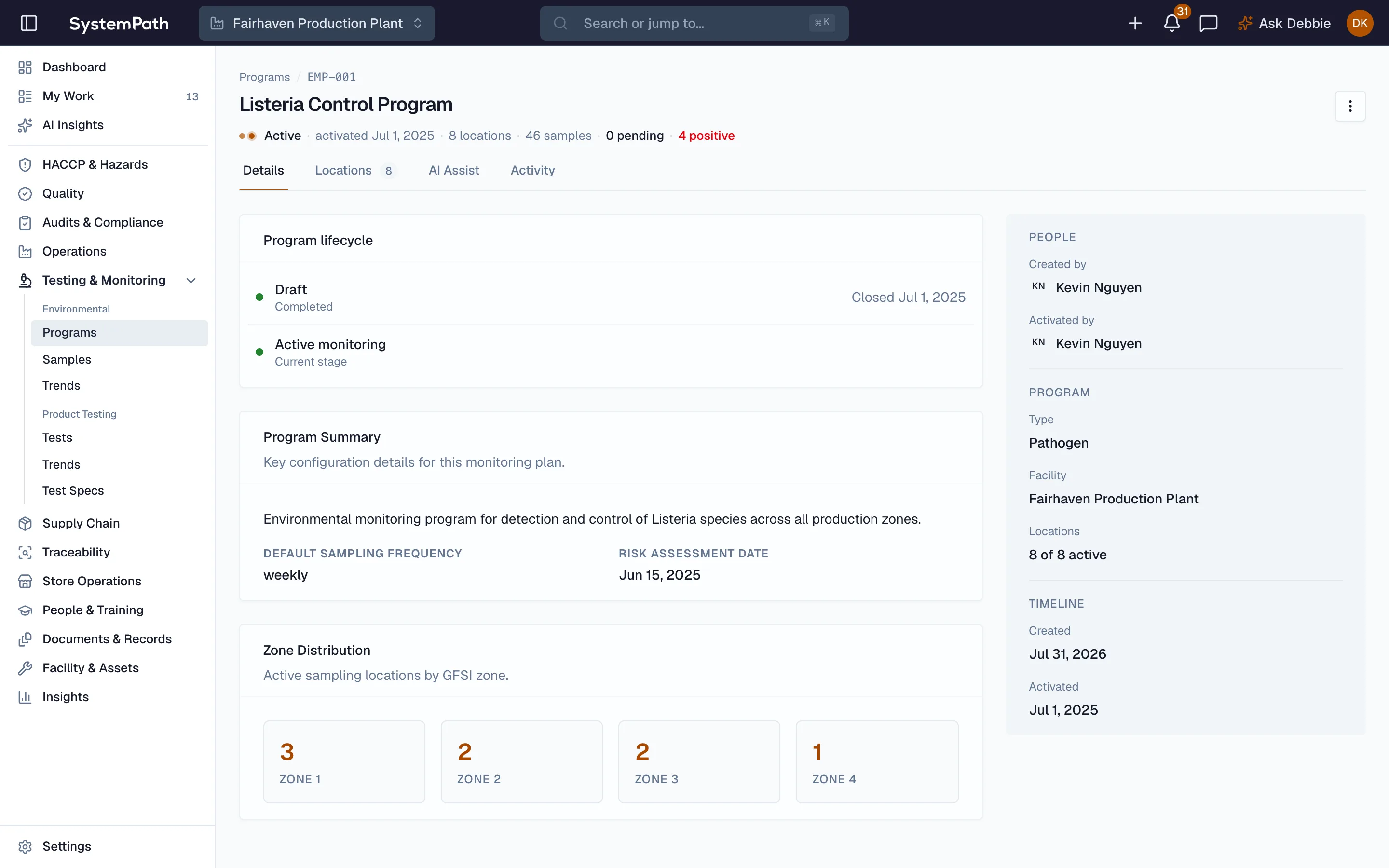
The target organisms, the sites, and the cadence per zone, all driven by your product, your process, and your hazard analysis. A program designed from a generic template samples the wrong places at the wrong frequency. This step makes the plan fit the facility.
Explore Program Design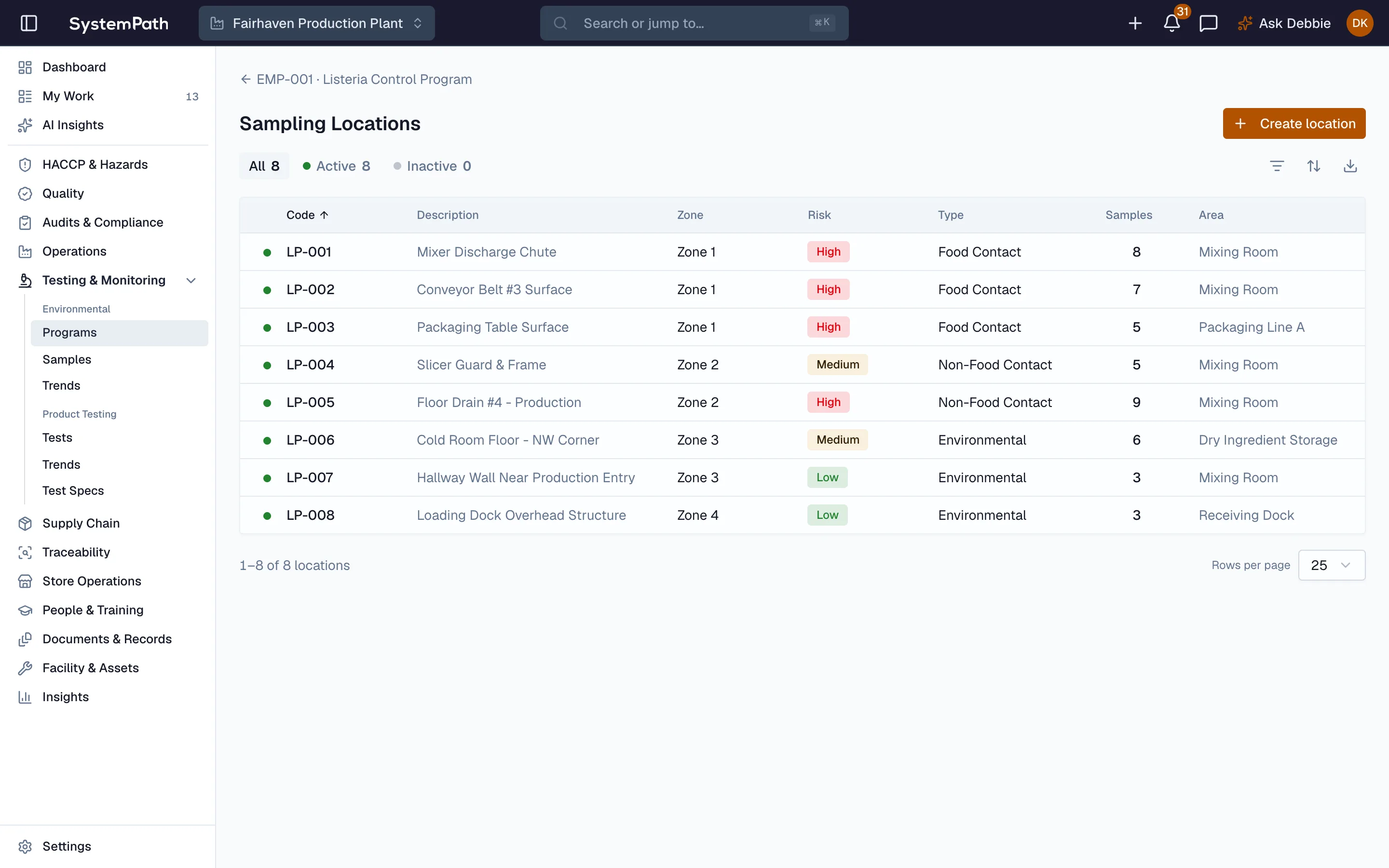
Zone 1 through Zone 4, mapped to real locations on a real line. Good zoning is what lets a Zone 3 positive read as an early warning rather than a surprise. We walk the facility and assign sites with intent, not by guesswork.
Explore Zoning and Site Mapping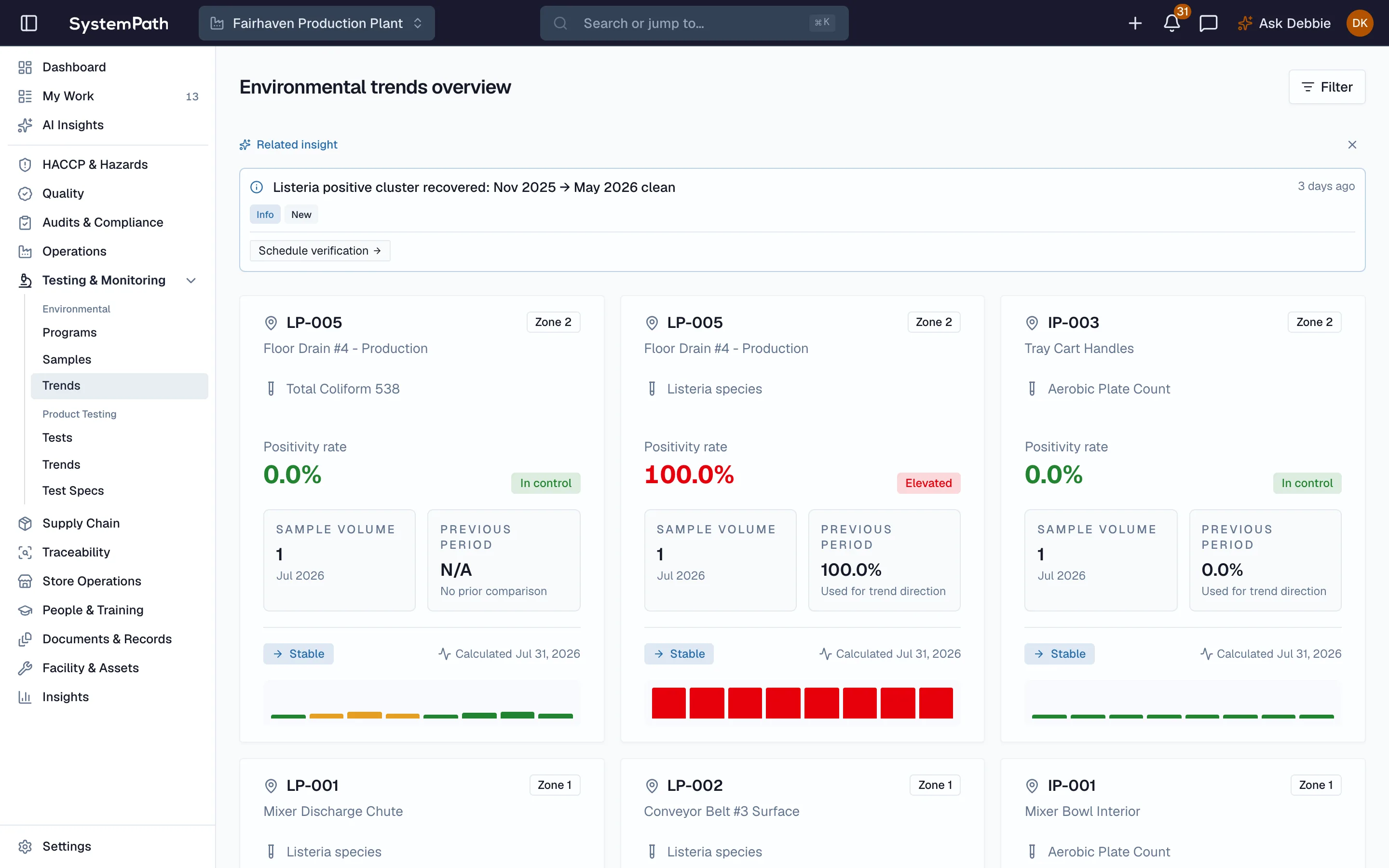
Every swab logged against its zone and site, then trended over time so a recurring positive in one area surfaces as a pattern. This is the heart of the program. A spreadsheet stores results. Trending turns them into a decision.
Explore Results and Trending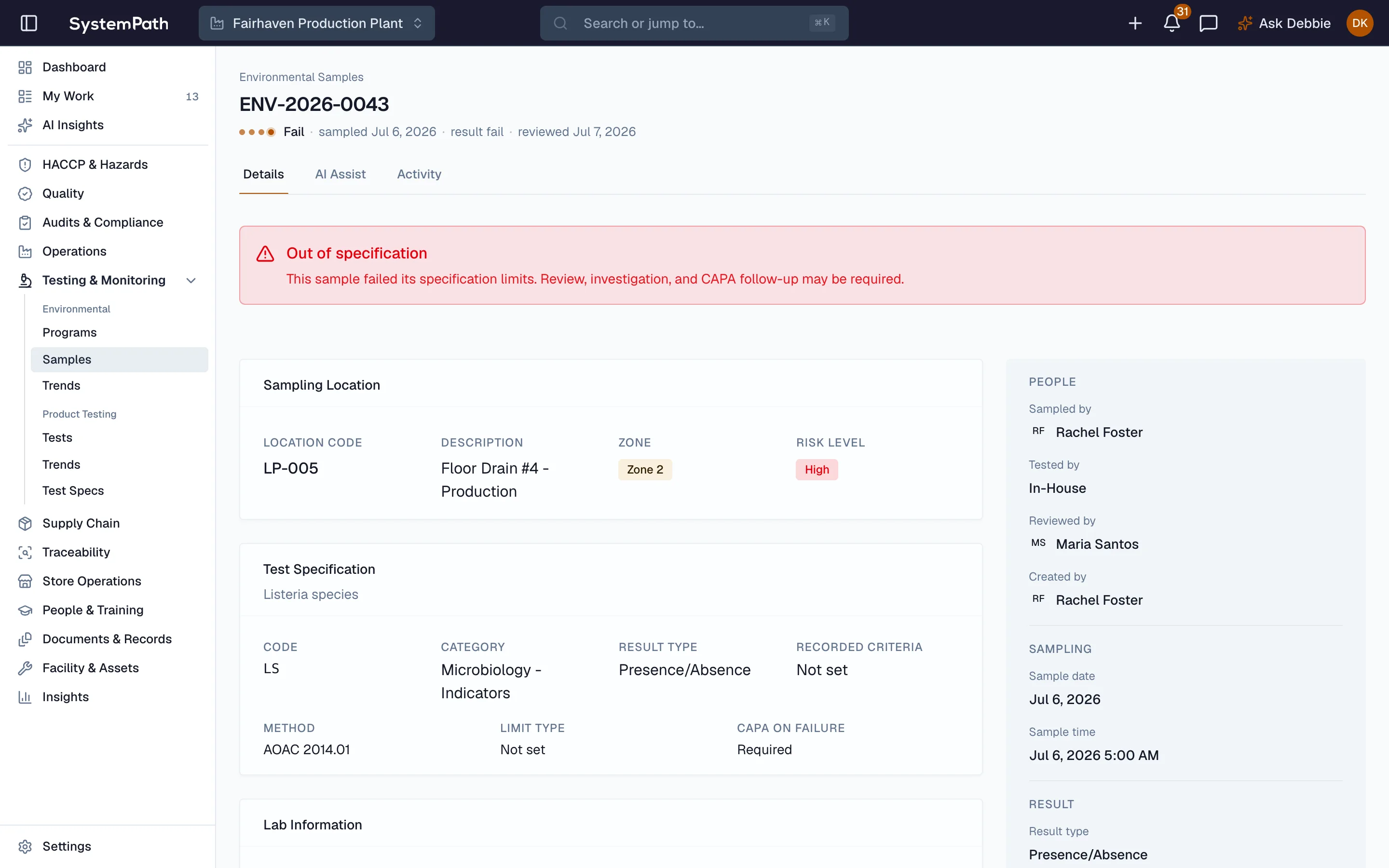
A positive triggers investigative swabbing to find the source, a corrective action on the niche, and a documented close. Auditors look for the response, not just the result. Beacon routes each positive to an owner and tracks it to a verified close.
Explore Investigation and Corrective ActionFrom facility walk to a program you trust
Standing up a real EMP takes a few weeks of design and a few months of operating history before the data starts talking. We build the plan, then the platform holds it and trends it. The result is a program you can defend, not just produce.
Start with a facility walkFacility walk and risk map
1 weekWalk the line, identify the high-risk sites, and map zones to real locations. The map is the foundation everything else sits on.
Design the sampling plan
1-2 weeksSet target organisms, sites, and frequency per zone from your hazard analysis. Define the response plan for a positive before you ever get one.
Implement and baseline
1-3 monthsRun the plan, train the people taking swabs, and collect a baseline so normal is defined before you chase abnormal.
Trend and review
ongoingRead the results as trends, not single points. Recurring positives in an area get flagged as possible harborage and escalated.
Investigate a positive
as neededWhen a positive lands, run investigative swabbing to find the source, correct the niche, and document the close. The loop that proves the program works.
Read it for years
ongoingKeep the program current, adjust frequency as risk moves, and walk into the audit with a trended history the auditor can follow site by site.
Four zones. One reason to sample each.
Zoning is what turns a swab into a signal. A finding means something different depending on how close to product it sat.
Zone 1
Food-contact surfaces
Surfaces that touch product directly. A Zone 1 positive is a stop, not a warning, and triggers product disposition.
Zone 2
Near food contact
Non-contact surfaces close to product, like equipment housings and framework. A positive here is a path to Zone 1, so it gets attention fast.
Zone 3
Processing environment
Floors, drains, and walls in the processing room. A recurring Zone 3 positive is the early warning that points at harborage.
Zone 4
Outside processing
Warehouses, hallways, and break areas. A positive here shows how organisms travel toward the line, which informs traffic control.
Zoning only works if someone reads the trend behind it. Send us your current plan and we will tell you where it is blind.
Our environmental monitoring work is led by practitioners who have traced recurring positives back to the hollow roller and the cracked weld more times than they can count. Meet Jeff.
Your swab history lives in Beacon. Not in a spreadsheet.
Everything we design during the engagement runs in Beacon: the sampling plan, the results, the trends, and the corrective actions. A recurring hot spot is visible, and the full history is dated and ready when the auditor asks. See how the operations module works.
You can stand up an EMP with any lab or consultant. The difference is whether the trend is still being read a year later, when the harborage has moved. See why teams build it with us.
Build an EMP that finds the problem before the auditor does
Bring your last positive, or the customer request that started this. In 20 minutes you'll have a real read on your program and where the harborage risk sits.
Prefer the phone? (313) 484-4887
What happens next
Discovery call
About your facility and goals. Not a sales pitch.
See it in action
A live walkthrough of Beacon scoped to your operation.
Custom proposal
Software, consulting, and training sized to your facility.
You'll talk with a food safety expert, not a sales rep.
20 minutes · No commitment · No pressure
Send us your monitoring program
Send your current plan and the last few months of results. We come back with where the trend is blind and where a positive would hide, before you decide whether a call is worth your time.
Environmental monitoring questions, answered
Common questions from QA teams building or fixing an EMP.