


Answer the FSVP inspection from an organized file
FDA inspects FSVP by asking you, the importer, to produce the program for a given food and supplier. A real FSVP is scoped, documented, and kept current, so that request is answered from an organized file instead of a scramble through inboxes and shared drives.
Are you the FSVP importer? If you are the US owner or consignee of the food at entry, or the designated US agent when there is no US owner, the program is yours to hold. Settling that is step one of the work.
Not ready for a call? Send your supplier list and we'll tell you what an inspection would pull first.
Scope, evaluate, verify, and keep the file
An FSVP runs from importer scope through the verification record. An FDA inspection reads all four, and records only help the importer who can produce them on the day they're asked for.
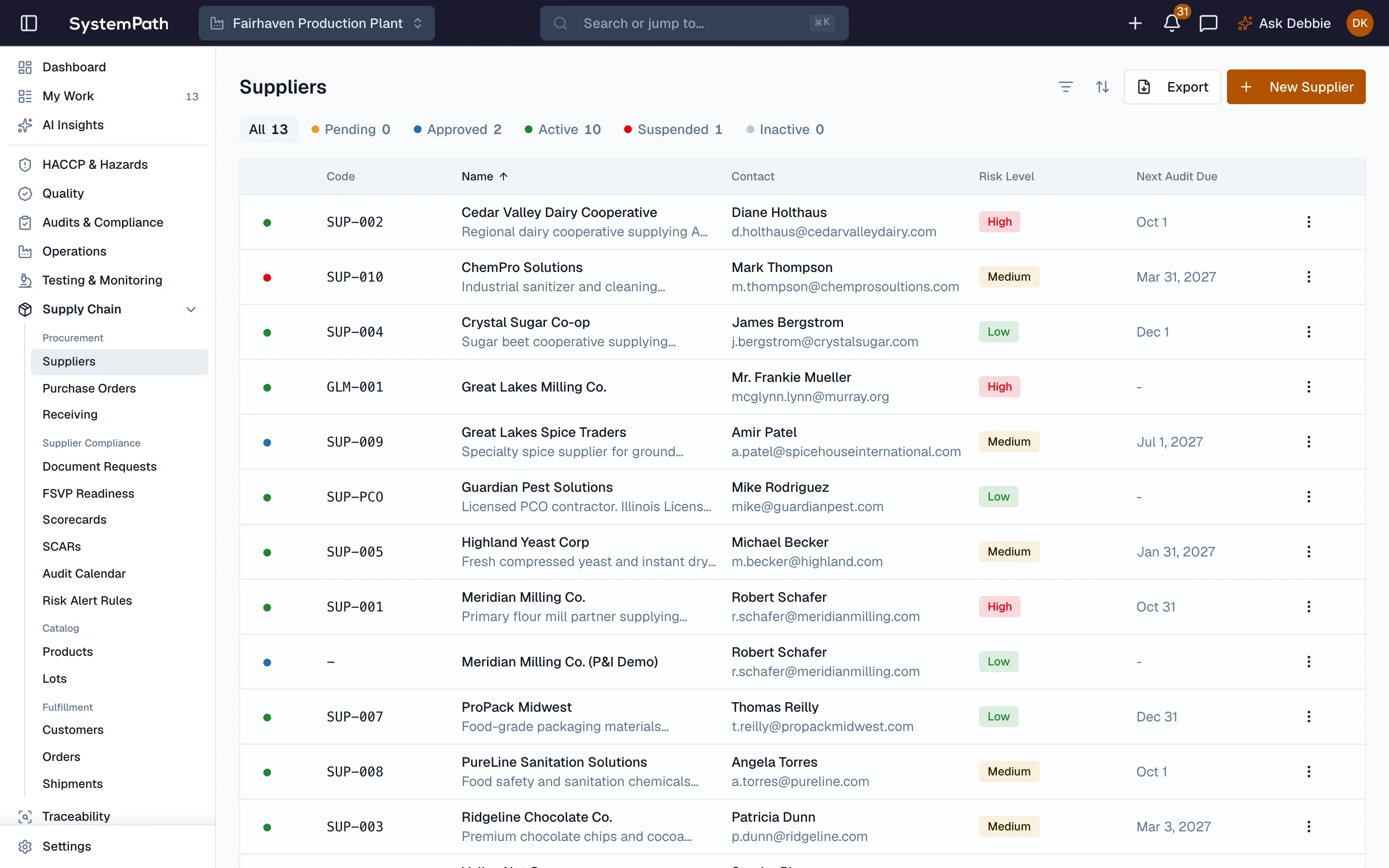
Before anything else, we confirm who the FSVP importer is for each entry and which imported foods fall in scope. Getting this wrong means the wrong party holds the program. Scoping sets the boundaries the rest of the work fits inside.
Explore Scope and Importer Status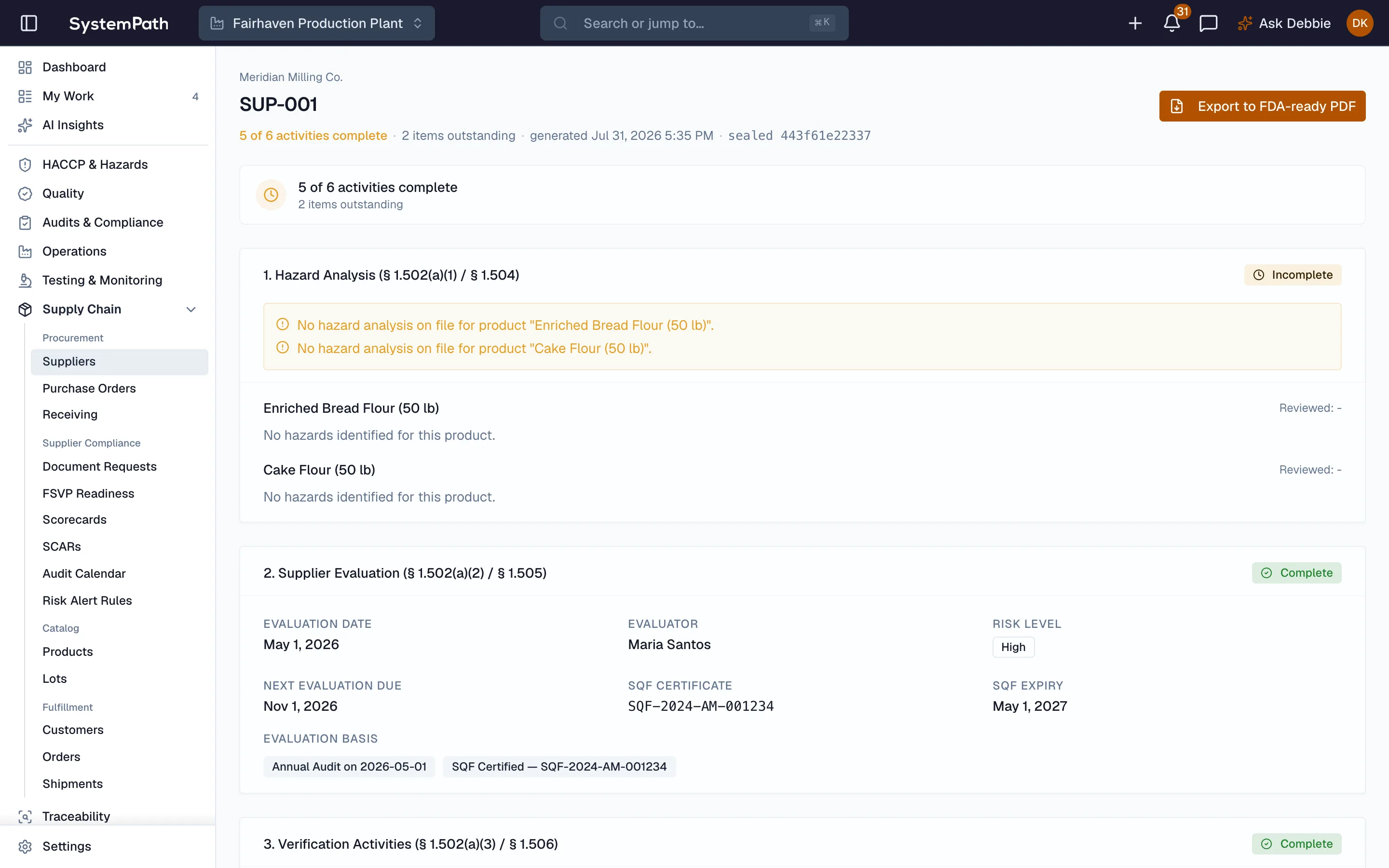
A hazard analysis for each imported food, paired with an evaluation of the supplier and the risk the food poses. The pairing is what sets the right verification activity. A high-risk hazard from a less-proven supplier calls for more than a certificate on file.
Explore Hazard Analysis and Supplier Evaluation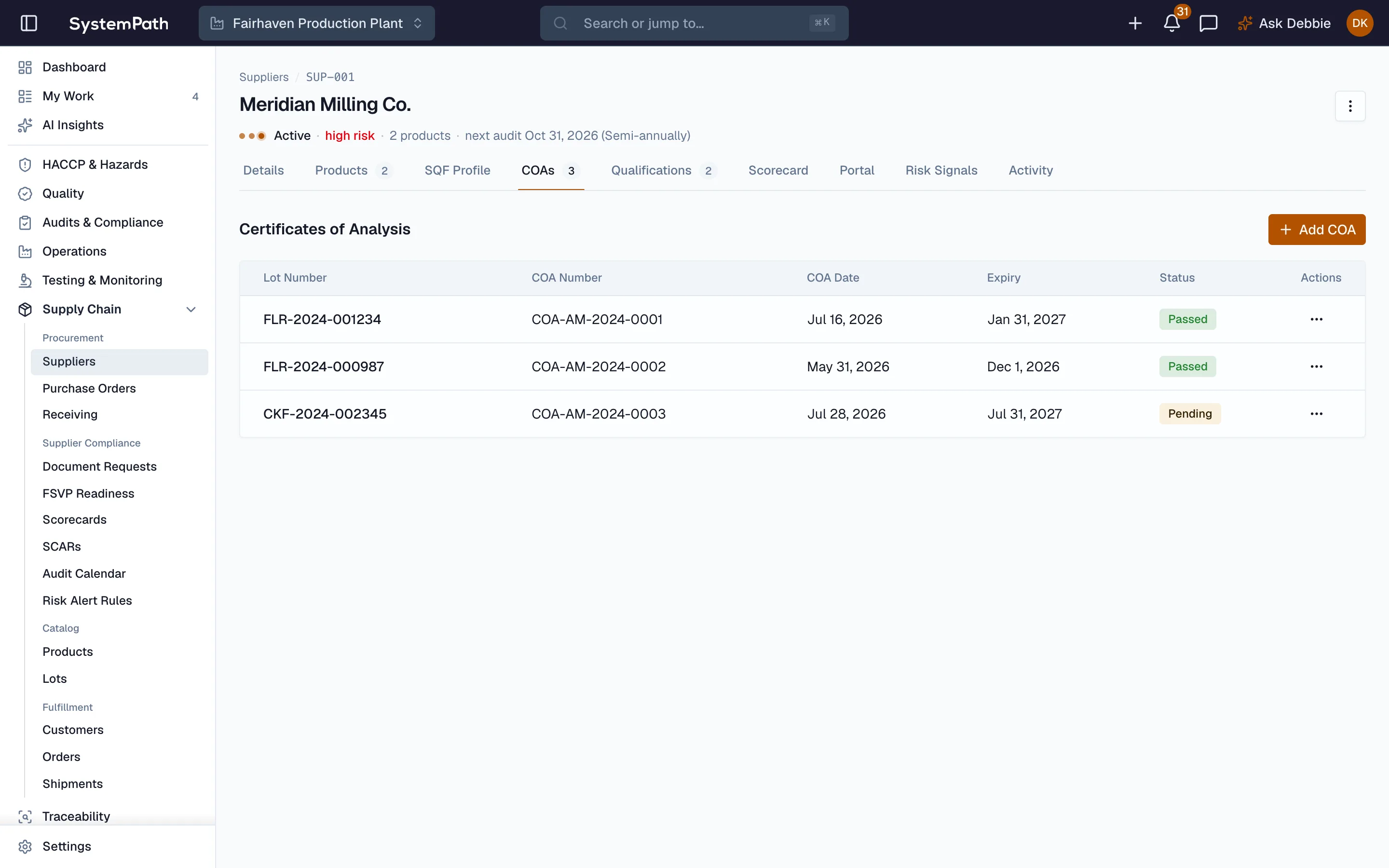
Supplier verification can mean an on-site audit, a review of the supplier's food safety records, or testing, chosen to match the hazard and documented. We send the questionnaires, collect the audit reports, and track the certificates of analysis the program relies on.
Explore Verification Activities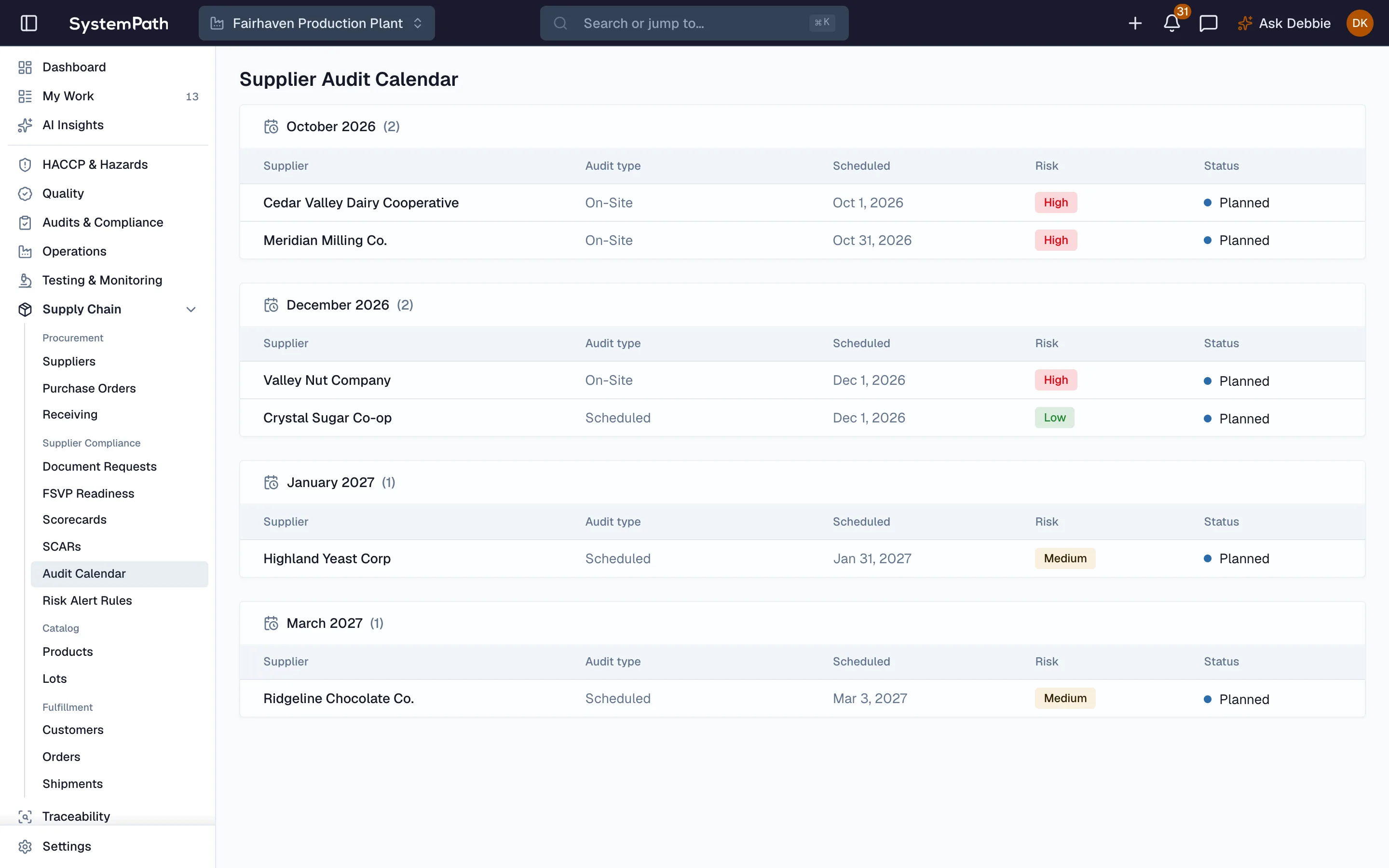
The written procedures, the verification results, and the re-evaluation schedule, organized by supplier and food so an inspection request is answered quickly. Re-evaluation runs at least every three years, and sooner on a trigger, with due dates tracked so nothing lapses.
Explore Records and Re-evaluationFrom scope to an inspection-ready file
Standing up an FSVP takes a few weeks of scoping and documentation, then a re-evaluation rhythm to keep. We scope the program, run the hazard analysis, set the verification activities, and organize the records. The platform then holds them so an inspection request is answered fast.
Start with a scoping reviewScope the program
1 weekConfirm the FSVP importer for each entry and which imported foods are in scope. The boundary everything else fits inside.
Run the hazard analysis
1-2 weeksAnalyze the hazards for each imported food and evaluate each supplier and the risk the food poses. The pairing that drives verification.
Set verification activities
1-2 weeksChoose an on-site audit, record review, or testing to match each hazard, and document why. The choice has to be justified, not assumed.
Collect the evidence
2-4 weeksSend the supplier questionnaires, gather audit reports, and track certificates of analysis, organized by supplier and food.
Write the procedures
1 weekDocument the written FSVP procedures and the re-evaluation schedule, so the program is a defined system, not a pile of records.
Maintain and re-evaluate
ongoingTrack re-evaluation dates, respond to triggers, and keep the file inspection-ready, so the next FDA request is a five-minute pull, not a fire drill.
Three ways to verify a supplier.
The rule lets you choose, as long as the activity matches the hazard and the choice is documented. These are the three the program builds around.
On-site audit
The higher-assurance route
An annual audit of the supplier, required when there is a hazard with a reasonable probability of serious adverse health consequences, unless you document a justified alternative.
Record review
Documented performance
Reviewing the supplier's relevant food safety records, often paired with a questionnaire, to verify the hazard is controlled at the source.
Sampling and testing
Direct evidence
Testing the imported food, with certificates of analysis tracked against each lot, where the hazard and the supplier history make testing the right fit.
Choosing the right activity is where the program is won or lost. Send us your supplier list and we'll tell you which activity each one needs.
Our FSVP and supplier work is led by a former SQF Lead Auditor who has sat on the asking side of a supplier-verification review thousands of times and knows exactly which records an FDA FSVP inspection pulls first. Meet Jeff.
Your FSVP records live in Beacon. Ready for the inspection request.
The supplier records, questionnaires, audit reports, and certificates of analysis live in Beacon, organized by supplier and food, with re-evaluation dates tracked so a due supplier is flagged. When the inspector asks for a program, the file is already assembled. See how the supply chain module works.
Any consultant can write your FSVP procedures. The difference is whether the file is still organized and current the day an inspector actually asks for it. See why teams build it with us.
Build an FSVP that produces the file when FDA asks
Bring your supplier list and the foods you import. In 20 minutes you'll know whether your file would survive an FDA inspection request and where the gaps are.
Prefer the phone? (313) 484-4887
What happens next
Discovery call
About your facility and goals. Not a sales pitch.
See it in action
A live walkthrough of Beacon scoped to your operation.
Custom proposal
Software, consulting, and training sized to your facility.
You'll talk with a food safety expert, not a sales rep.
20 minutes · No commitment · No pressure
Send us your supplier list
Send the foods you import and the suppliers behind them. We come back with the records an FDA inspection would ask for and the gaps in your file, before you decide whether a call is worth your time.
FSVP questions, answered
Common questions from importers building or maintaining an FSVP.