

Internal audits that read like the real thing
Every GFSI scheme requires you to audit your own system, on a schedule, using an auditor who did not do the work being checked. Most facilities either skip the internal audits, rush them, or run them so lightly that a certification body auditor spots the difference on day one.
Not ready for a call? Send us your last internal audit report.
A program the outside auditor can follow
Internal audits run on the same record as everything else: scheduled, worked against a checklist, and routed to a fix. An external auditor reads the trail, not just the score.
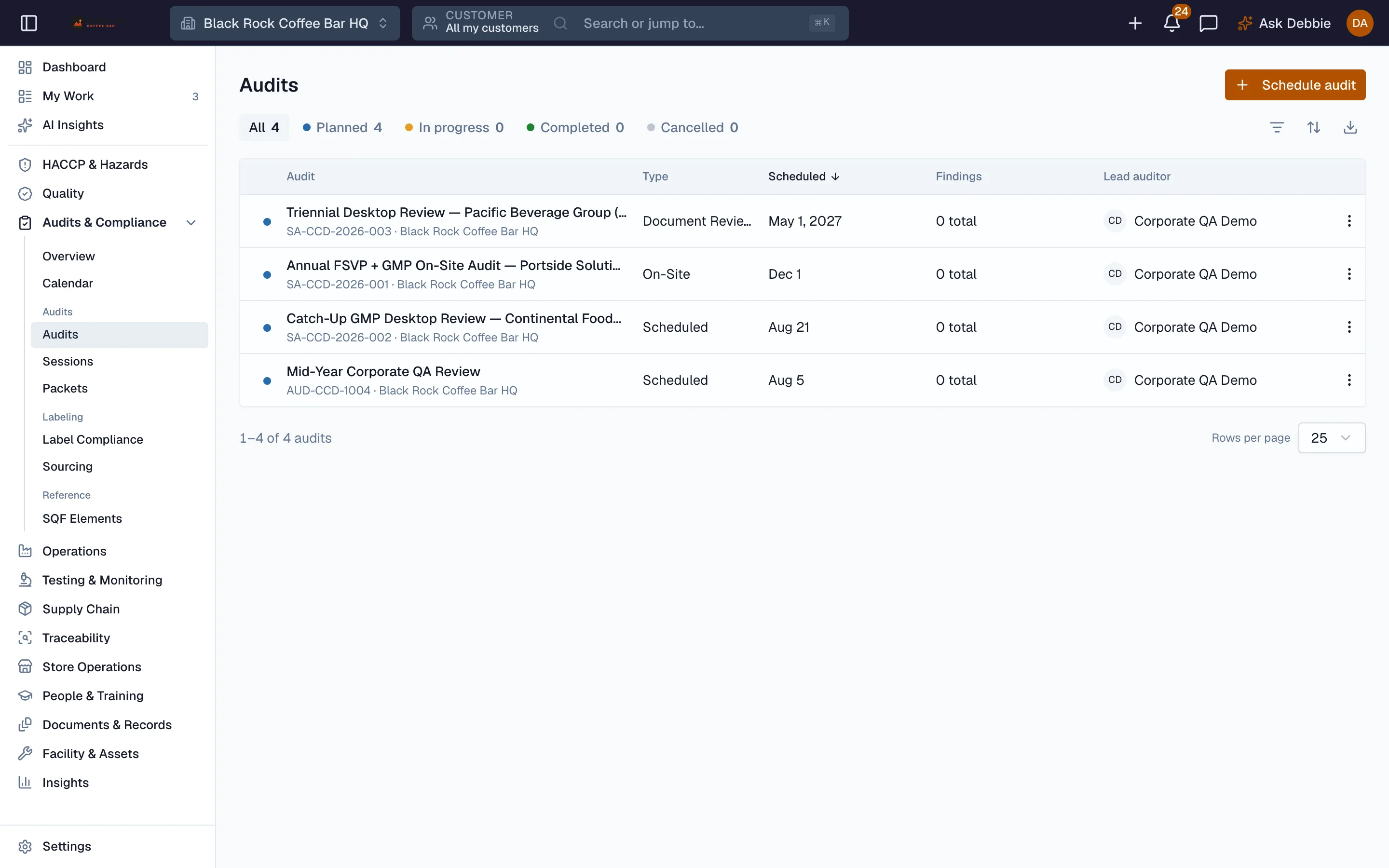
We set the audit frequency, assign auditors who did not perform the work being checked, and map the scope across your applicable SQF elements. Independence is the part a rushed program skips first, and the part an outside auditor checks first.
Explore Program Design and Independence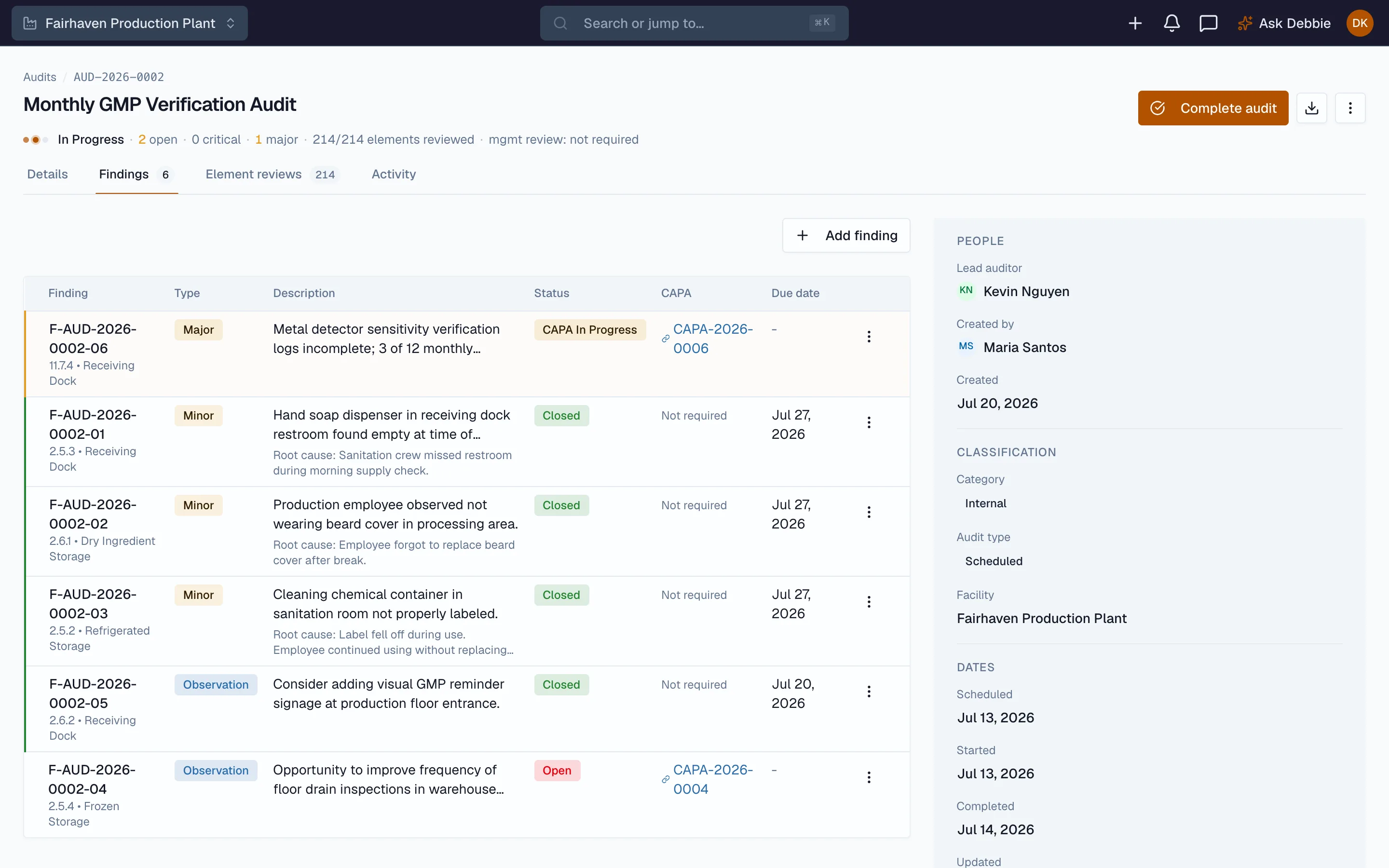
Auditors work a facility-specific checklist, not a generic template, with each item tied to the element it verifies. A finding gets recorded where it happens, not reconstructed from memory afterward.
Explore Run the Checklist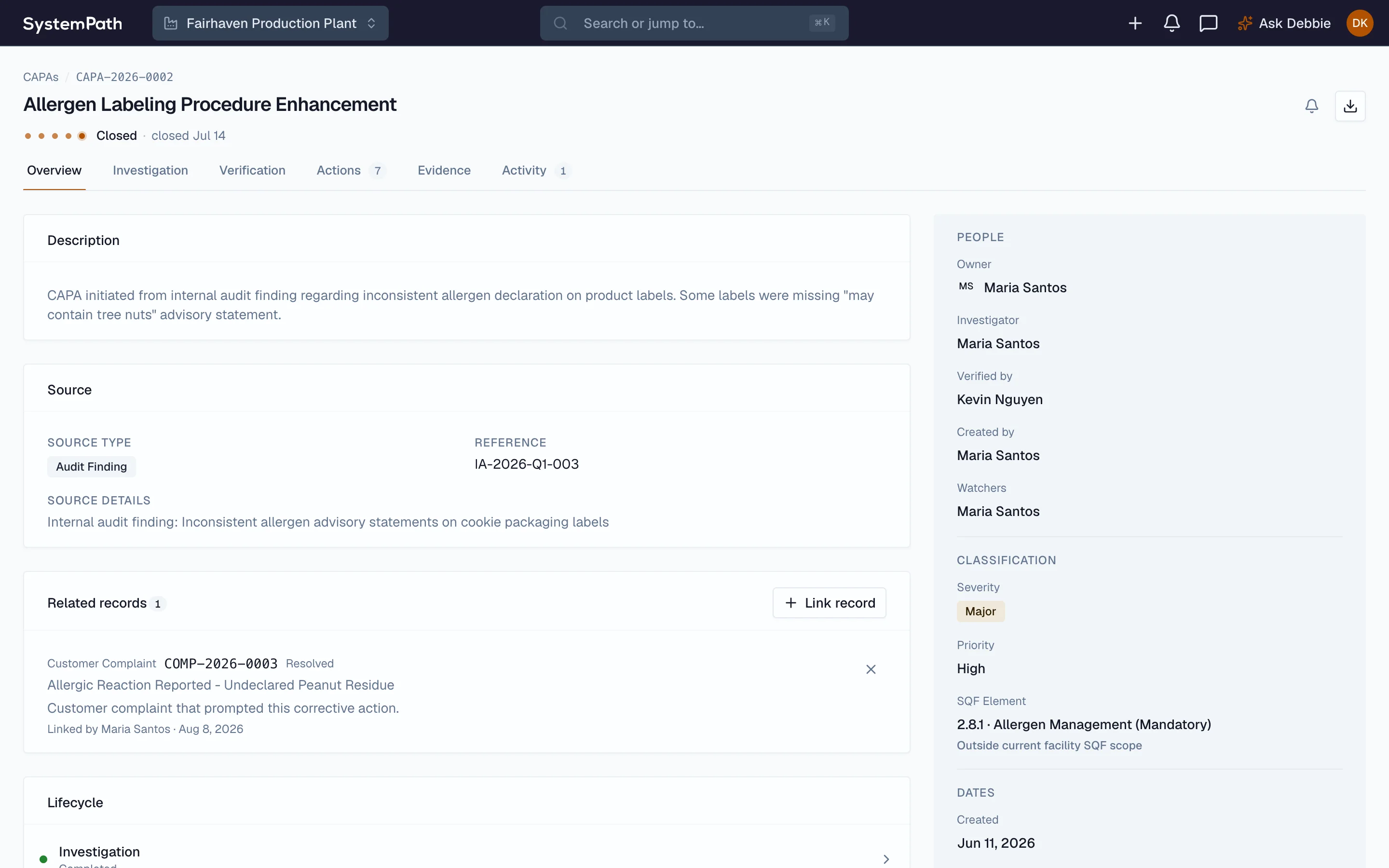
A finding becomes a corrective action with an owner and a due date the moment it is recorded. Root cause, correction, and verification of effectiveness live on the same record as the finding that opened it.
Explore Findings to CAPA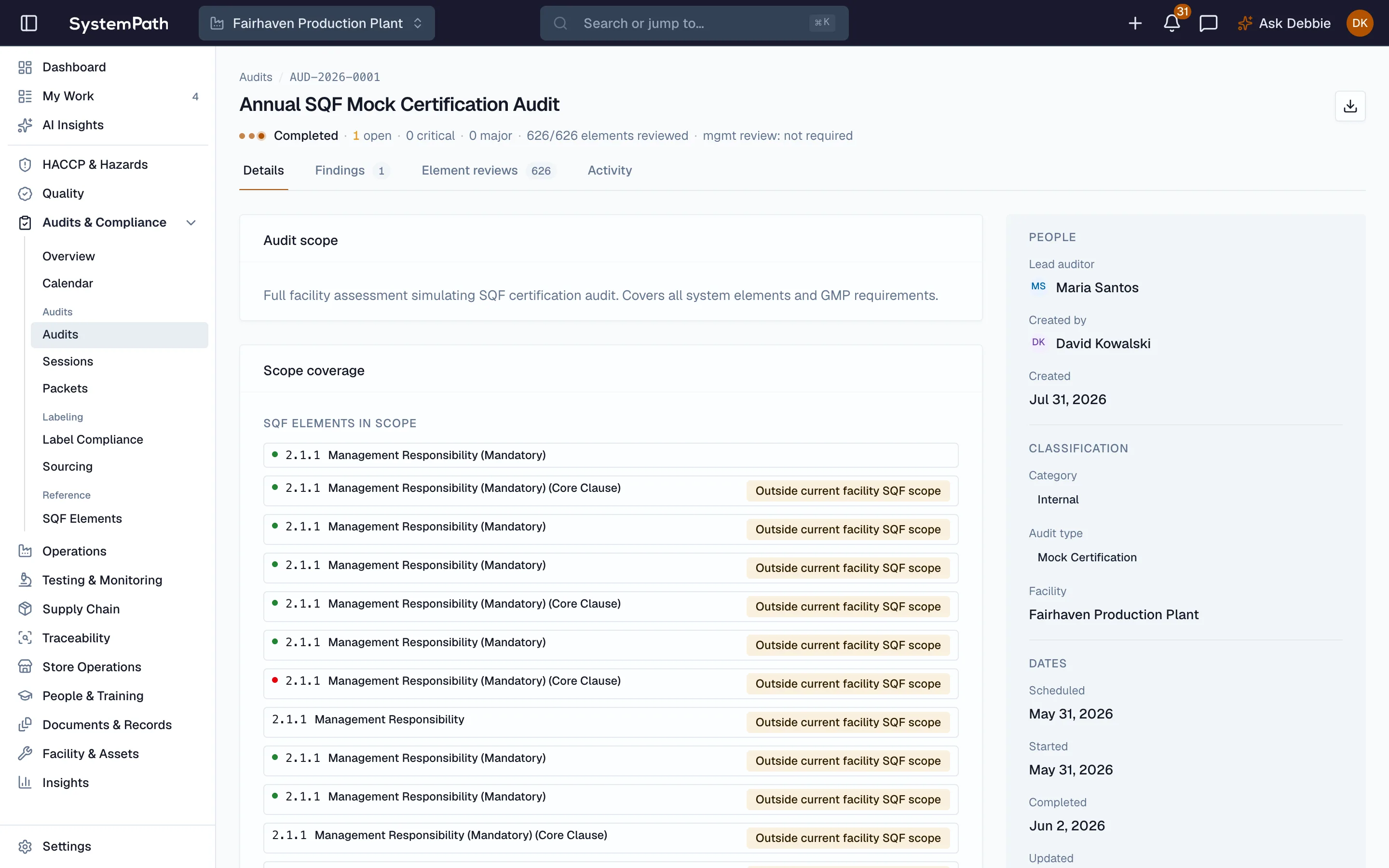
Closing an internal audit is blocked while a critical or major finding has no corrective action opened against it, so a gap can't be quietly forgotten. The dated trail, schedule, checklist, finding, and close, is what the outside auditor actually reads.
Explore Verify, Close, and Prove ItFrom scope to a program you can run yourself
Standing up a real internal audit program takes a few weeks of scoping and checklist work, then a running rhythm to keep. We scope the program, assign independent auditors, build the checklist, and set the schedule. The platform then runs the loop between engagements.
Start with a scoping reviewScope the program
1 weekConfirm which elements and areas fall under your internal audit schedule and how often SQF requires each one.
Assign independent auditors
1 weekMatch each area to an auditor who did not perform the work being checked. Independence gets confirmed before the first audit runs.
Build the checklist
1-2 weeksTurn your applicable SQF elements into a facility-specific checklist, not a generic template.
Run the audits
ongoingWork the schedule, record findings where they happen, and route each one to a corrective action with an owner and due date.
Close and verify
as neededConfirm root cause, correction, and effectiveness before a finding is marked closed.
Read it for years
ongoingKeep the schedule current, adjust scope as the program grows, and walk into the external audit with a trail the auditor can follow start to finish.
What a real internal audit program requires.
Skip any one of these and the outside auditor tends to notice before you do.
Independence
Checked first, every time
The person auditing an area did not do the work in it. Certification bodies verify this before they read a single finding.
Full coverage
Not just the easy elements
Every applicable element gets audited within your cycle, on the schedule you set, not only the areas that are convenient to check.
Finding to CAPA
Or it isn't a finding
A finding without a linked corrective action is a note nobody acted on. Every finding gets an owner and a due date.
A dated trail
The way an audit gets read
Schedule, checklist, finding, and close, timestamped and attributable, the way an external auditor actually reads the record.
Not sure your program covers all four. Send us your last internal audit report and we'll tell you what's missing.
Our internal-audit work is led by a former SQF Lead Auditor who has reviewed internal-audit programs from both sides of the table and knows exactly which gaps a certification body auditor flags first. Meet Jeff.
Your internal audits live in Beacon. Ready before the CB auditor asks.
The schedule, the checklist, the findings, and the corrective actions live on one record, tied to the SQF elements they verify. When the external audit starts, the internal-audit trail is already there. See how the audits module works.
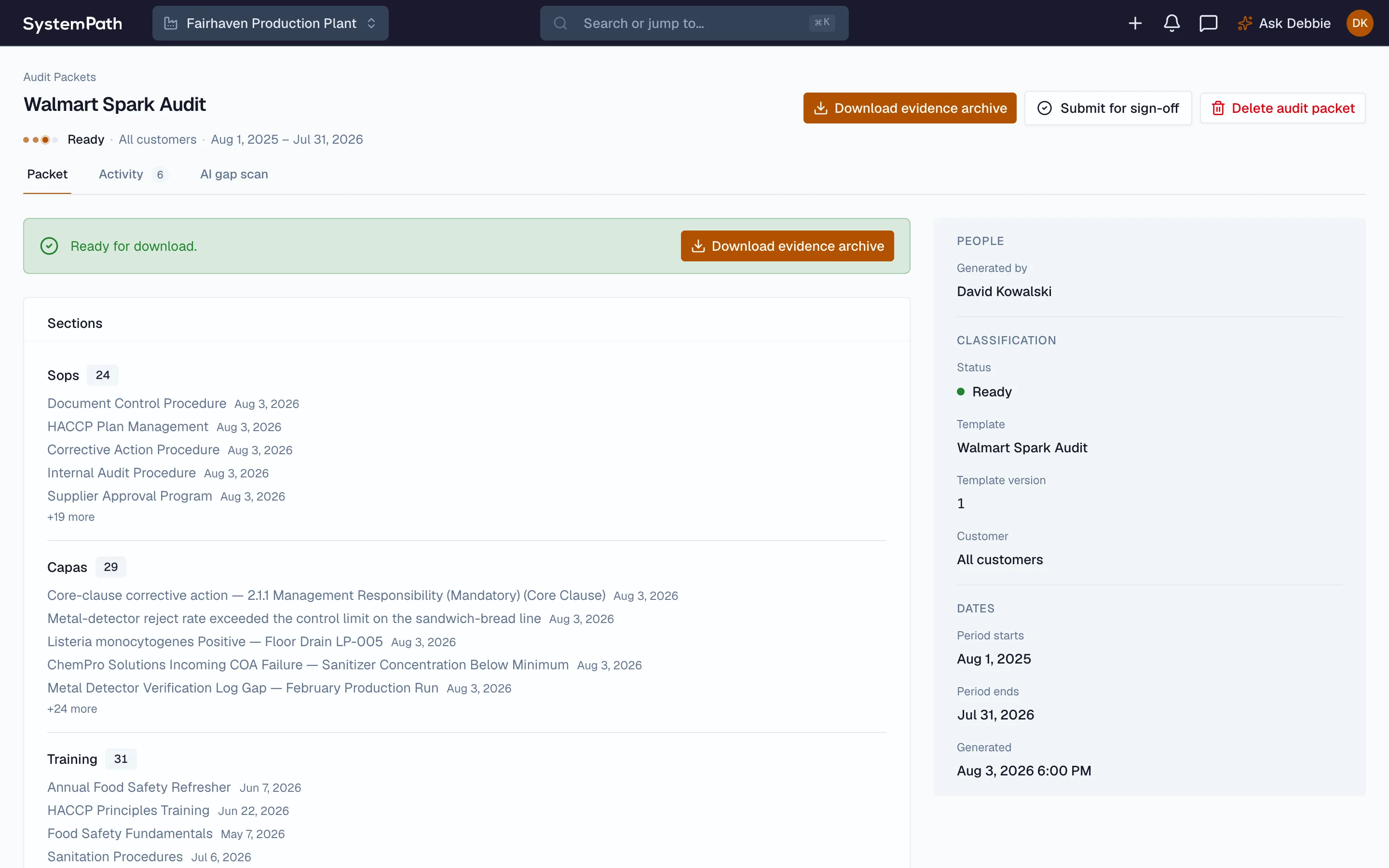
Any consultant can help you write an internal-audit procedure. The difference is whether the trail still holds up the day an external auditor actually reads it. See why teams build it with us.
Build an internal audit program your CB auditor recognizes as real
Bring your last internal audit report. In 20 minutes you'll know whether it would survive a certification-body reviewer's first look and where the gaps are.
Prefer the phone? (313) 484-4887
What happens next
Discovery call
About your facility and goals. Not a sales pitch.
See it in action
A live walkthrough of Beacon scoped to your operation.
Custom proposal
Software, consulting, and training sized to your facility.
You'll talk with a food safety expert, not a sales rep.
20 minutes · No commitment · No pressure
Send us your last internal audit report
Send your most recent internal audit, findings and all. We come back with a read on independence, coverage, and whether your findings actually close, before you decide whether a call is worth your time.
Internal audit questions, answered
Common questions from QA teams building or running an internal audit program.