


Rank the fraud risk, then defend the plan
A commodity you rely on just spiked in price, and that is exactly when the incentive to adulterate it climbs. Food fraud is economic adulteration, the cousin of food defense, and your GFSI scheme expects a plan for each. A real vulnerability assessment ranks your inputs by the economics that drive fraud, so the one that just got risky already has a control tied to it.
Not ready for a call? Send your ingredient list and we'll rank the risk first.
From a ranked assessment to a defended plan
A food fraud program is a chain: assess, mitigate, evidence, and review. An auditor checks every link, and a shifting commodity market is what strains the weakest one first.
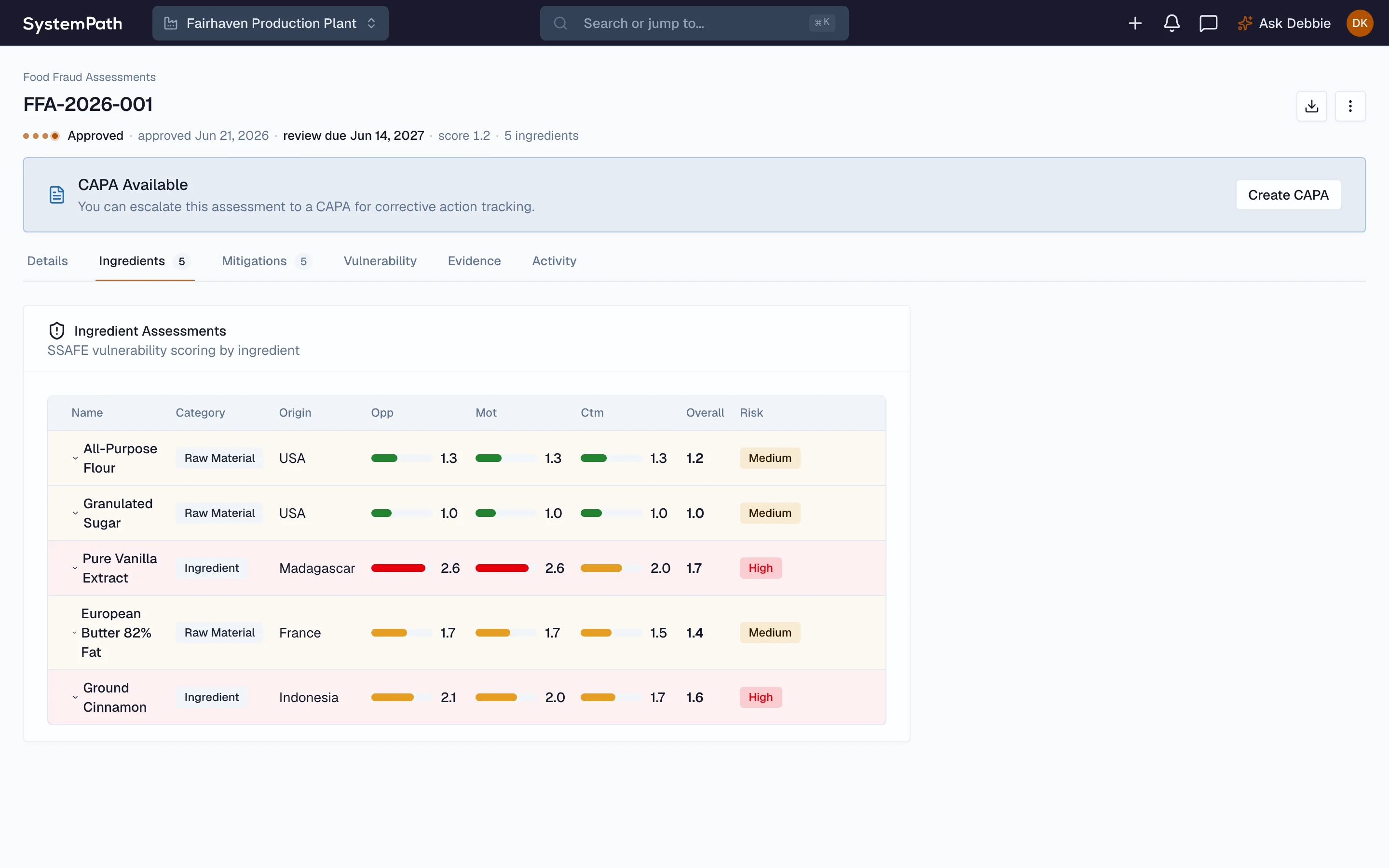
We examine each raw material and ingredient for fraud likelihood and impact, weighing supply chain complexity, price volatility, adulteration history, and detectability. The output is a ranked list of your most vulnerable inputs, the foundation the whole plan sits on.
Explore Vulnerability Assessment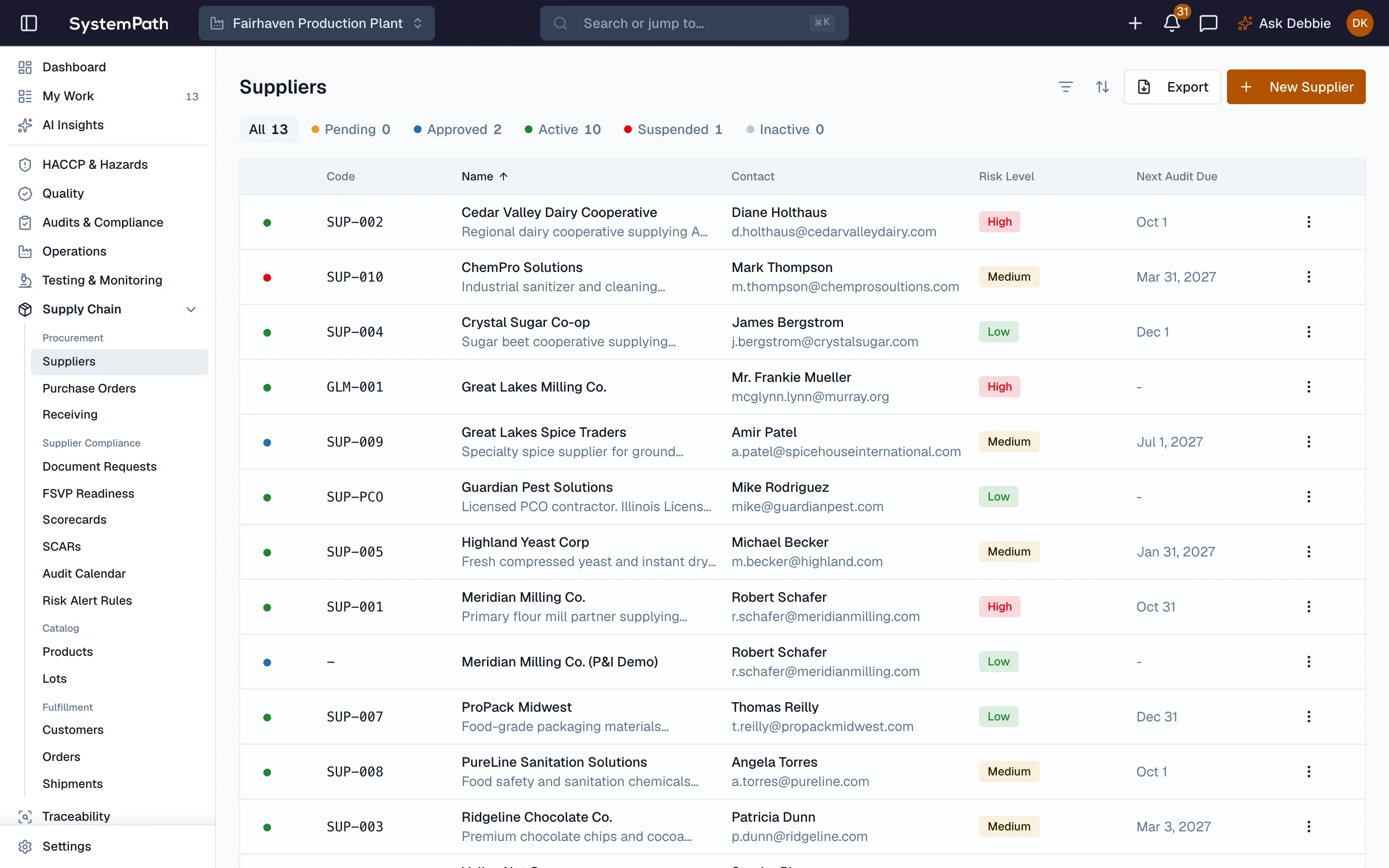
Each high-vulnerability input gets a control: supplier approval, authenticity testing, specification tightening, or a verification step at receiving. Every control links back to the vulnerability it addresses, so an auditor can trace the logic instead of taking it on faith.
Explore Mitigation Plan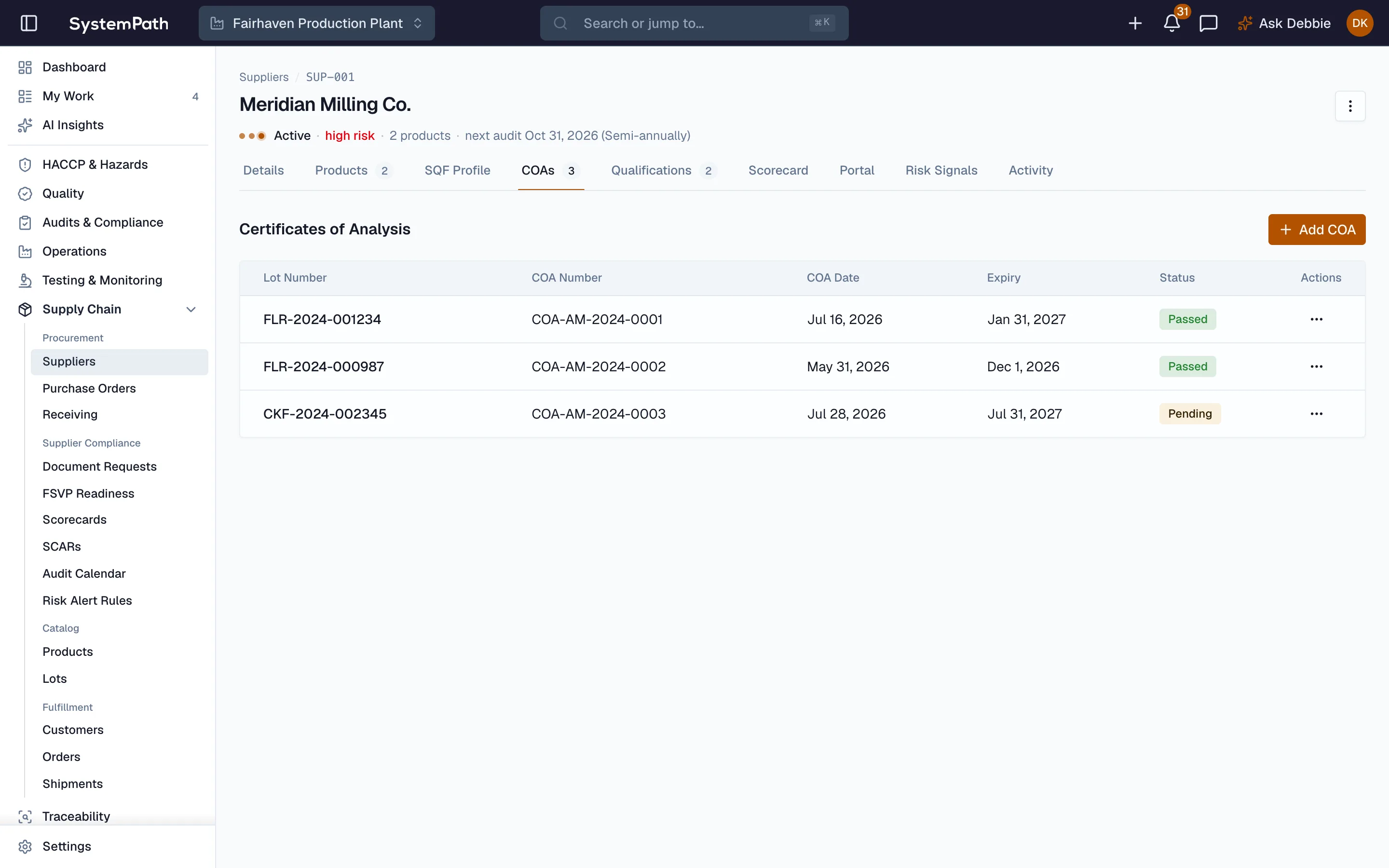
A mitigation plan is only as good as the supplier approvals and documents it relies on. We tie the plan to your approved-supplier program and document control, so the certificate of authenticity or specification the plan calls for is actually on file and current.
Explore Supplier and Document Controls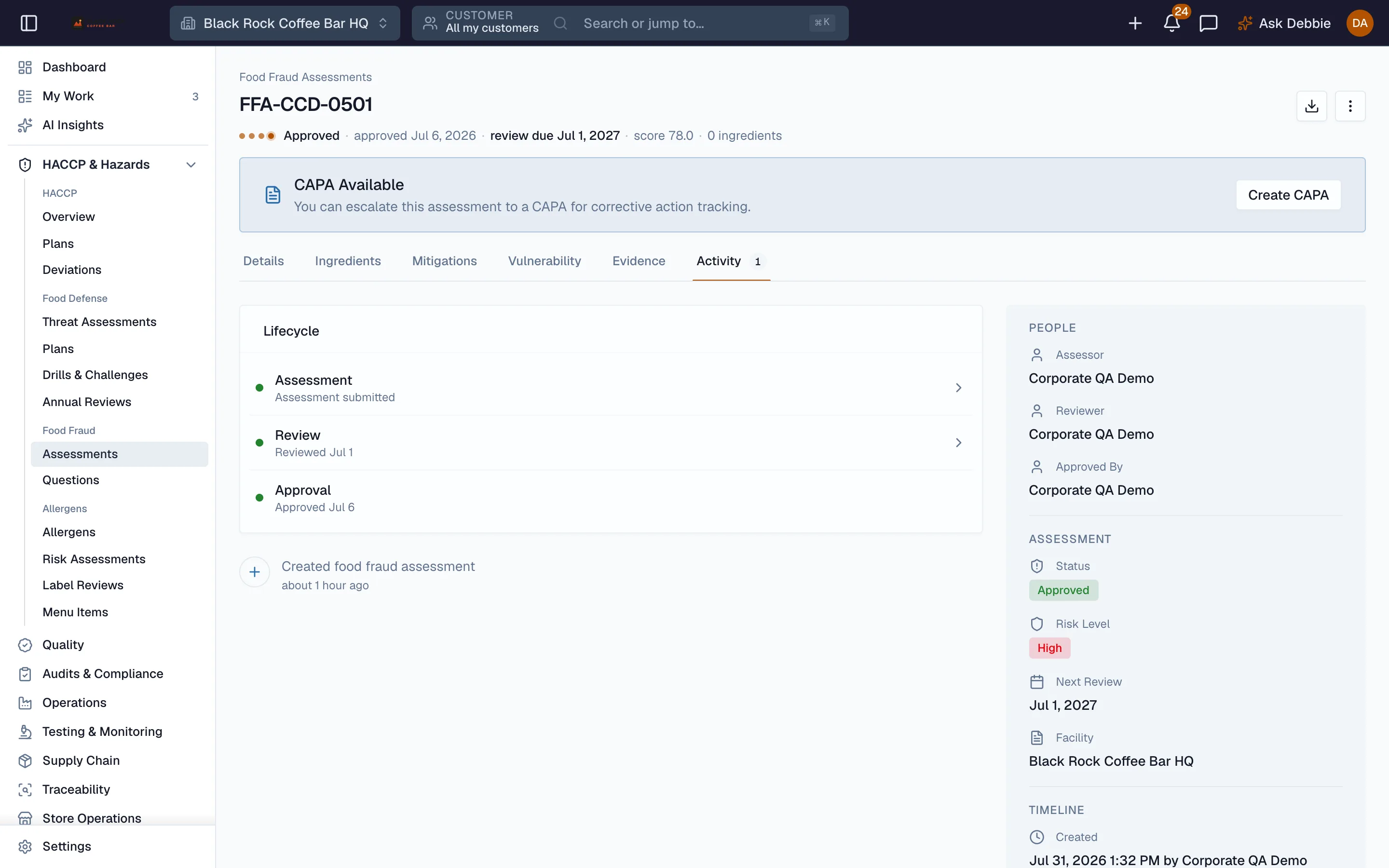
Fraud risk moves with markets, so the assessment is reviewed annually and after any trigger: a new supplier, a price spike, or a published incident in your category. A defined set of sources and a review owner keep the plan alive, and the record proves it to the auditor.
Explore Review and Horizon ScanningFrom ingredient list to a defended plan
A solid food fraud program takes a few weeks to build and a defined cadence to keep. We run the assessment, write the mitigation plan, and set the review rhythm. The platform then holds it all so the plan stays current between audits.
Start with an assessmentMap the inputs
1 weekList every raw material and ingredient and the supply chain behind each. You cannot assess what you have not mapped.
Run the vulnerability assessment
1-2 weeksScore each input on likelihood and impact, using commodity history, price volatility, and detectability. Produce a ranked list of the vulnerable few.
Build the mitigation plan
1-2 weeksAssign a control to each high-vulnerability input and link it to the risk it addresses. The traceable logic that an auditor follows.
Wire in the evidence
1-2 weeksTie the plan to supplier approvals, certificates, and specifications already in document control, so the controls are real, not aspirational.
Set the review cadence
ongoingDefine the annual review, the triggers, and the horizon-scanning sources, with an owner for each. A plan with a heartbeat.
Maintain and defend
ongoingKeep the assessment current as suppliers and prices move, and walk into the audit with a plan whose every control traces back to a ranked risk.
Three forces rank every ingredient you buy.
A vulnerability assessment scores each input two ways: how likely fraud is, and how badly it would hurt. Three forces drive that score, and weighing them honestly is where the assessment earns its keep.
Economic incentive
Price and margin
High-value and price-volatile commodities, like spices, oils, honey, and seafood, draw fraud because the margin on a substitution is large. When a commodity spikes, the incentive climbs with it, which is why a spike is its own trigger to reassess.
Supply chain complexity
Distance and hops
The more brokers, borders, and handoffs between origin and your dock, the more chances there are to adulterate what you receive, and the harder it is to verify you got what you paid for.
Detectability
How easily fraud hides
An adulteration your incoming checks would never catch is more dangerous than one you would spot at receiving. Low detectability raises the impact score and usually calls for authenticity testing.
The framework only means something against your actual ingredient list. Send us your inputs and we'll show you which ones rank highest.
Our food fraud and food defense work is led by the practitioner who co-authored the post-9/11 military food-defense guidance adopted by the FDA and USDA, building vulnerability assessments input by input, ranked by real risk. Meet Jeff.
Your fraud plan lives in Beacon. Not in a stale document.
The food defense and food fraud module keeps the assessment, controls, supplier links, and review dates together. The plan stays current between audits instead of aging in a folder. See how the food safety module works.
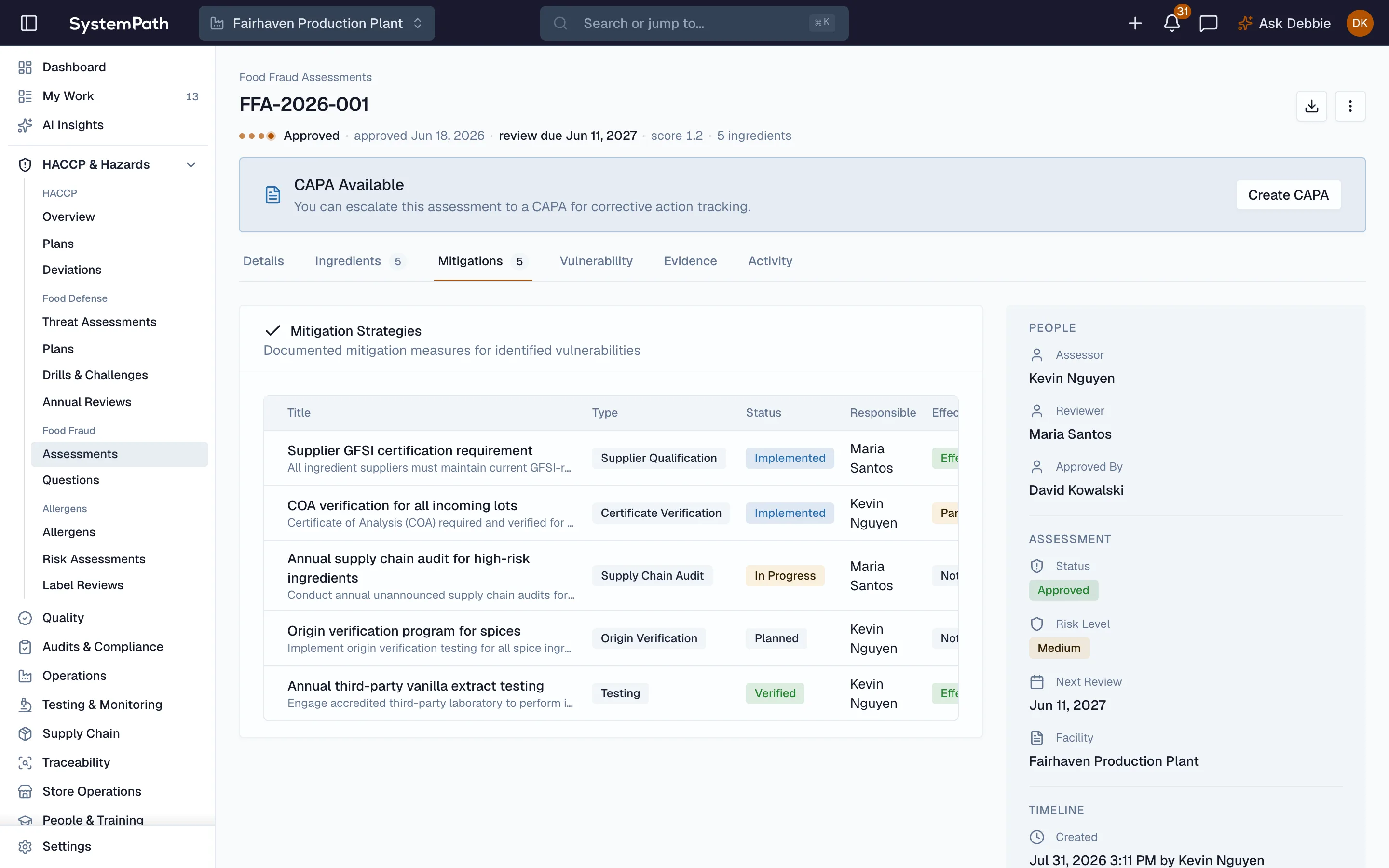
Any consultant can hand you a vulnerability assessment. The difference is whether it still gets reviewed when a commodity price moves, six months after they have gone. See why teams build it with us.
Build a food fraud plan that ties controls to real risk
Bring the ingredient that worries you most, or the customer request that started this. In 20 minutes you'll have a read on where your fraud risk really sits and what a defensible plan takes.
Prefer the phone? (313) 484-4887
What happens next
Discovery call
About your facility and goals. Not a sales pitch.
See it in action
A live walkthrough of Beacon scoped to your operation.
Custom proposal
Software, consulting, and training sized to your facility.
You'll talk with a food safety expert, not a sales rep.
20 minutes · No commitment · No pressure
Send us your ingredient list
Send the raw materials and ingredients you buy and where they come from. We come back with which inputs would rank highest for fraud risk and where your current plan is thin, before you decide whether a call is worth your time.
Food fraud prevention questions, answered
Common questions from QA teams building a GFSI-ready fraud plan.