


The packet is built before they ask.
Internal, external, and supplier audits on one system. Retailer packets assembled on demand with a sealed checksum, and an audit-day mode that focuses the floor while the auditor is on site.
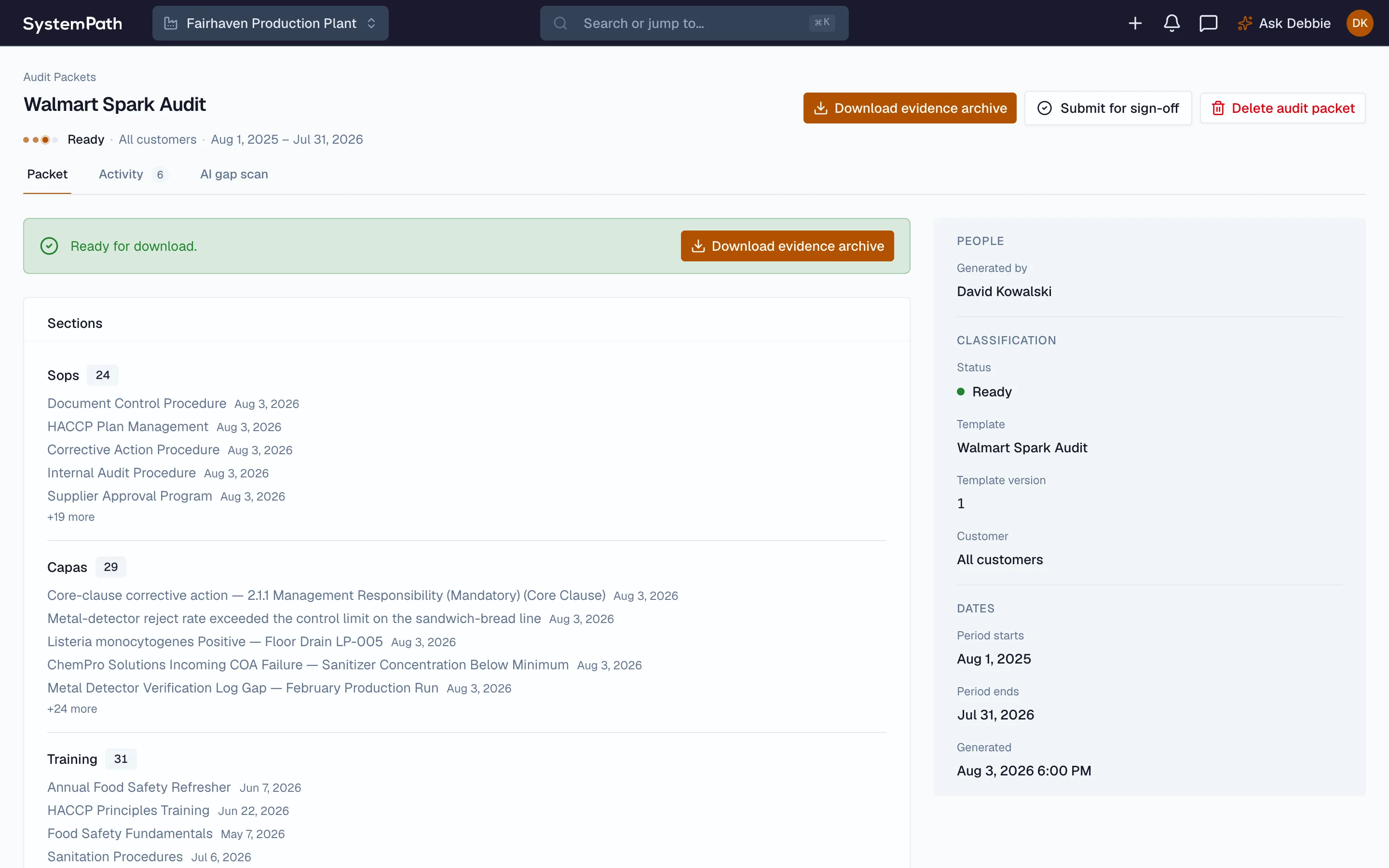
A finding leaves the audit with an owner attached.
Internal, external, and supplier audits run on one system. Each finding carries its type, the clause it was raised against, the area it was seen in, the root cause once it is known, and a due date, and it can open a corrective action directly from the audit rather than becoming a line in a report nobody reopens. The audit cannot be completed while a critical or major finding has no corrective action against it, so closing an audit means the work is placed, not filed.
- Internal, external, and supplier audits on one calendar
- Findings typed, clause-referenced, and located to an area
- A finding opens a corrective action from the audit itself
- Completion blocked while a critical or major finding has no CAPA
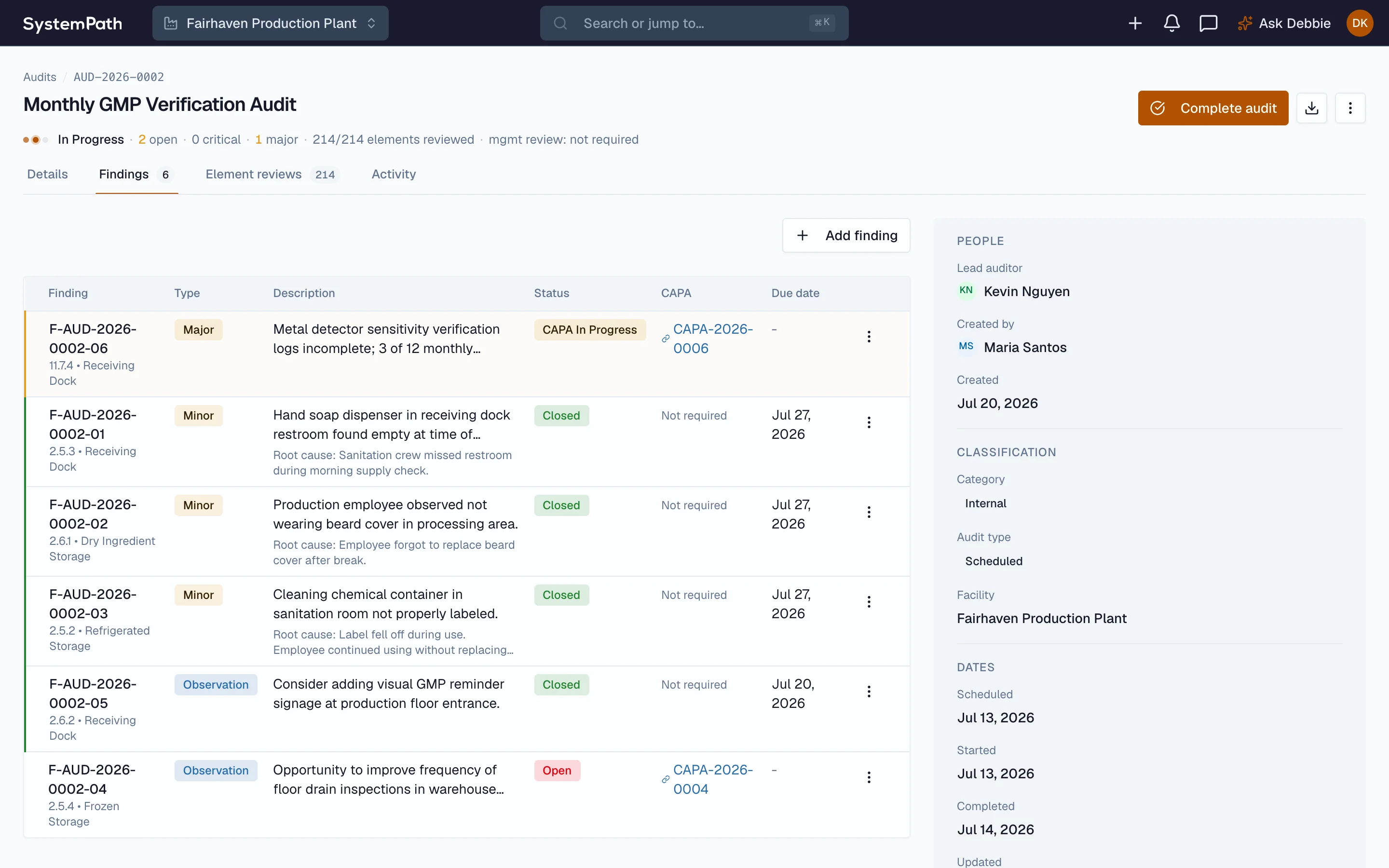
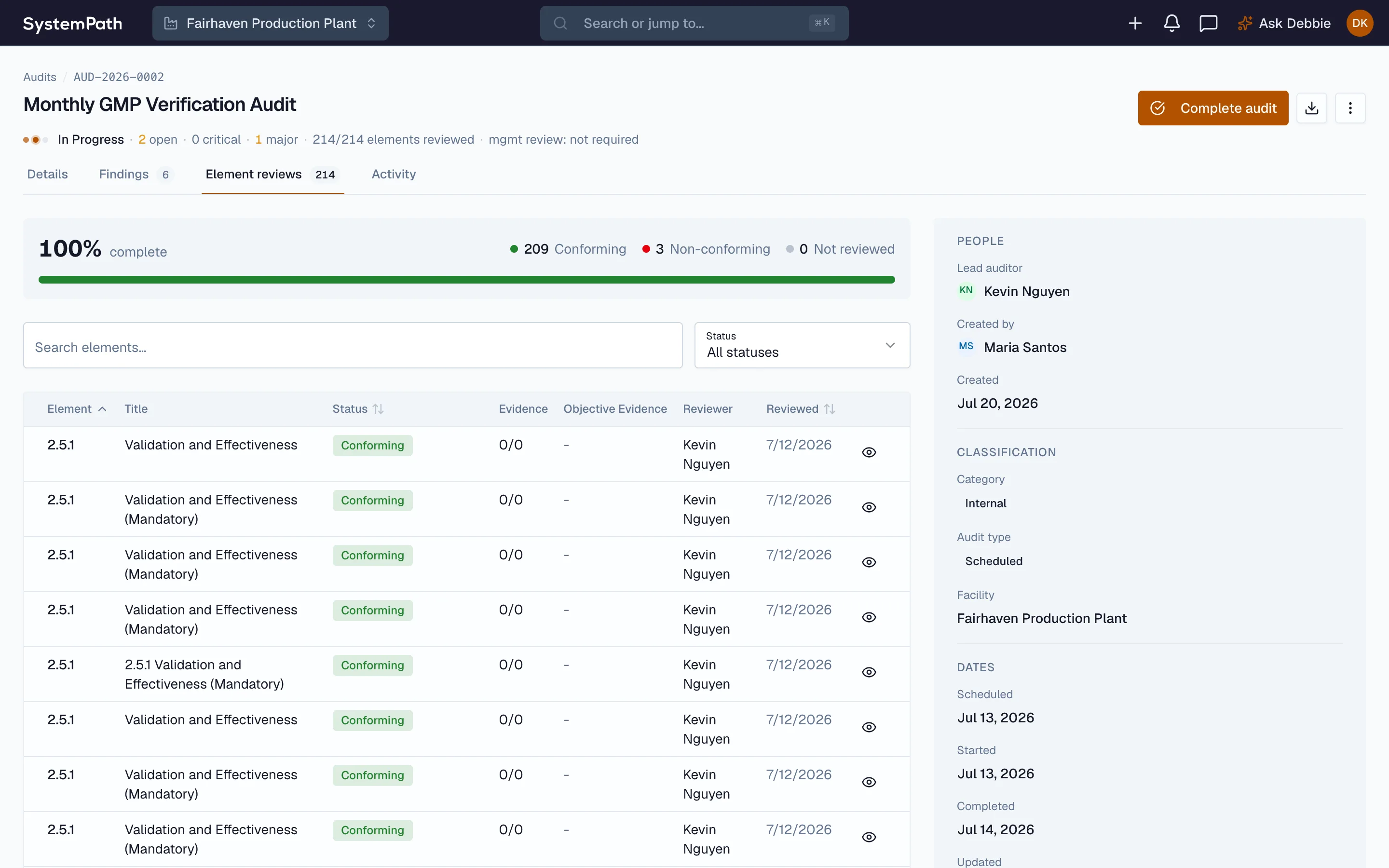
The evidence bundle, assembled from records you already keep.
Beacon ships packet templates for six major US retailers, FDA FSVP, SQF Edition 10, and BRCGS Issue 9. Each pulls its sections from your live records, seals with a SHA-256 checksum, and renders one PDF. Pick the template and the reporting window, and the packet matches what the customer asked for. Underneath it, the audit itself is scored clause by clause, so the packet is drawn from work that was already reviewed rather than assembled to look complete.
- Templates for six major US retailers
- FDA FSVP, SQF Edition 10, and BRCGS Issue 9
- Sealed manifest with a SHA-256 checksum, rendered to PDF
- Sections pulled from live records, dated and attributed
- Clause-by-clause element reviews behind the packet
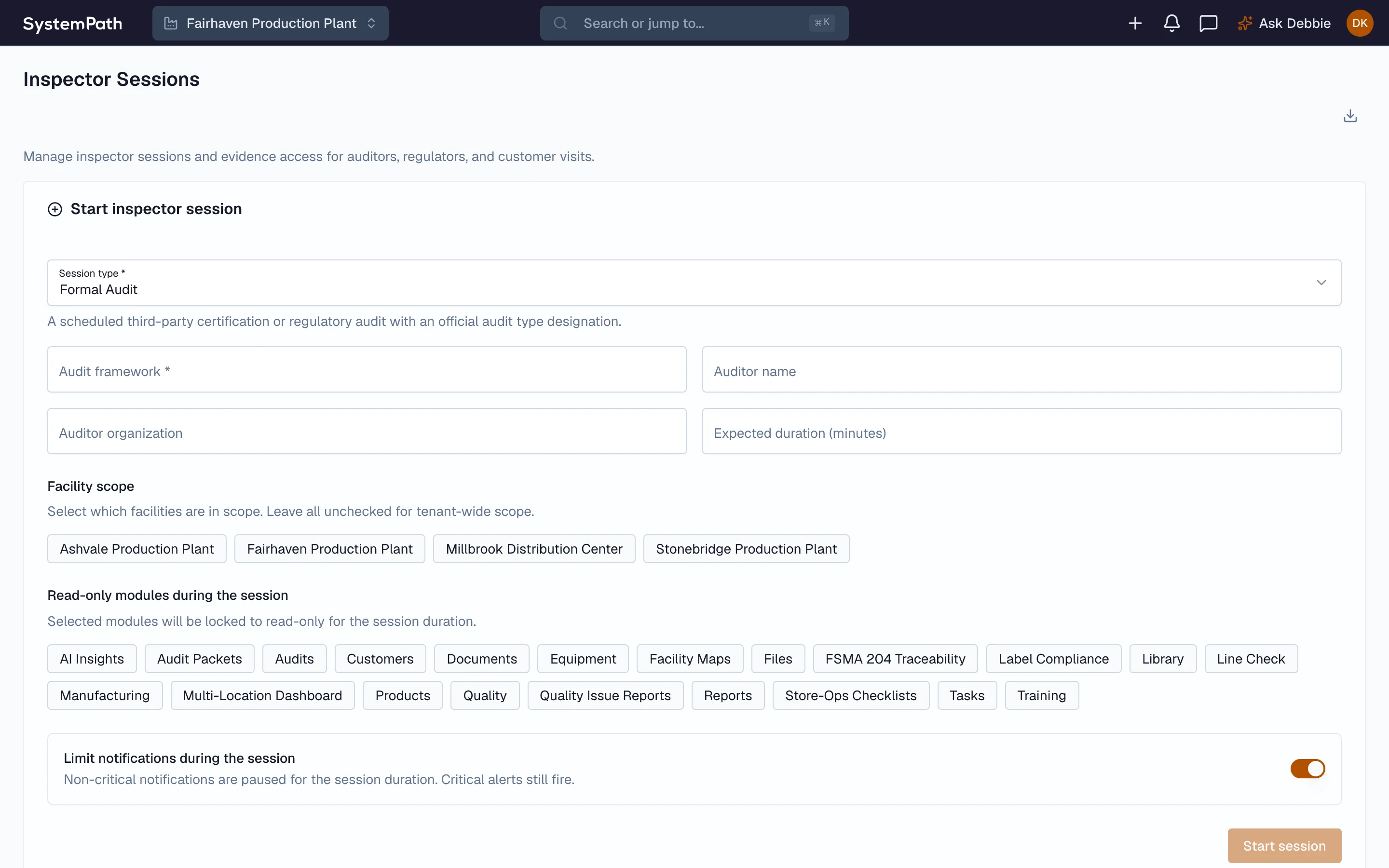
Switch it on when the auditor walks in.
Starting a session sets the scope for the visit: which facilities are in it, which modules are locked read-only while the auditor is on site, and whether non-critical notifications are held back so the team can focus. Critical alerts still fire. Every tenant-side and auditor-side access during the session is recorded, and a summary PDF is generated when it ends, so the visit leaves its own trail rather than only a memory of how it went.
- Formal audit, regulatory visit, or customer visit, scoped per session
- Modules locked read-only for the session duration
- Non-critical notifications paused; critical alerts still fire
- A time-limited link for the auditor, with every access recorded
- A summary PDF generated when the session ends
Every audit question, answered before they walk in.
An audit is a request for evidence you either have or do not. When the audits, the corrective actions, and the documents live on one system, the packet is a download rather than a fortnight.
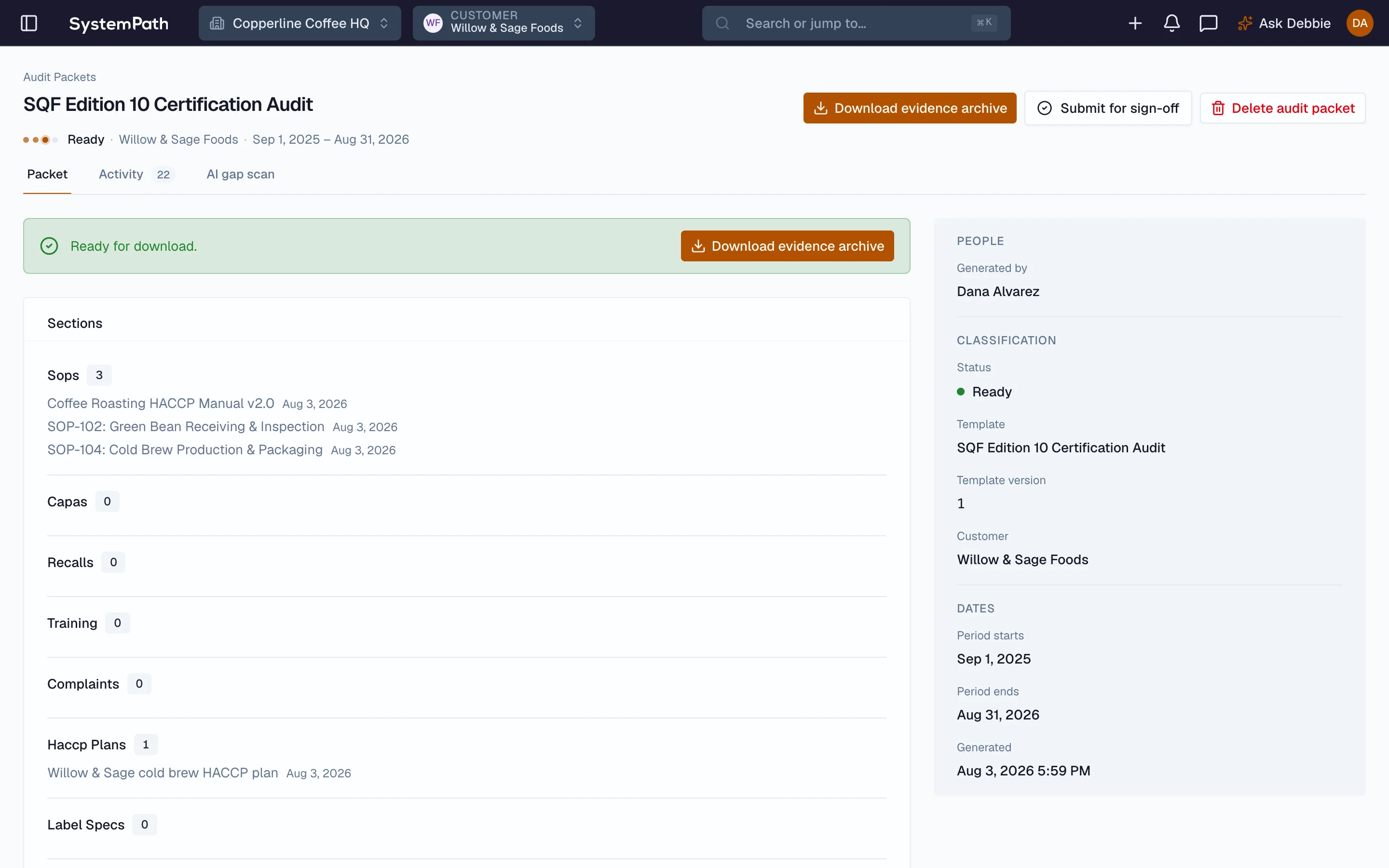
Packets are scoped by customer, so a co-packer sends each brand a bundle drawn only from that brand's records. One system, one set of procedures, a separate evidence pack per customer.
Explore Co-packer packets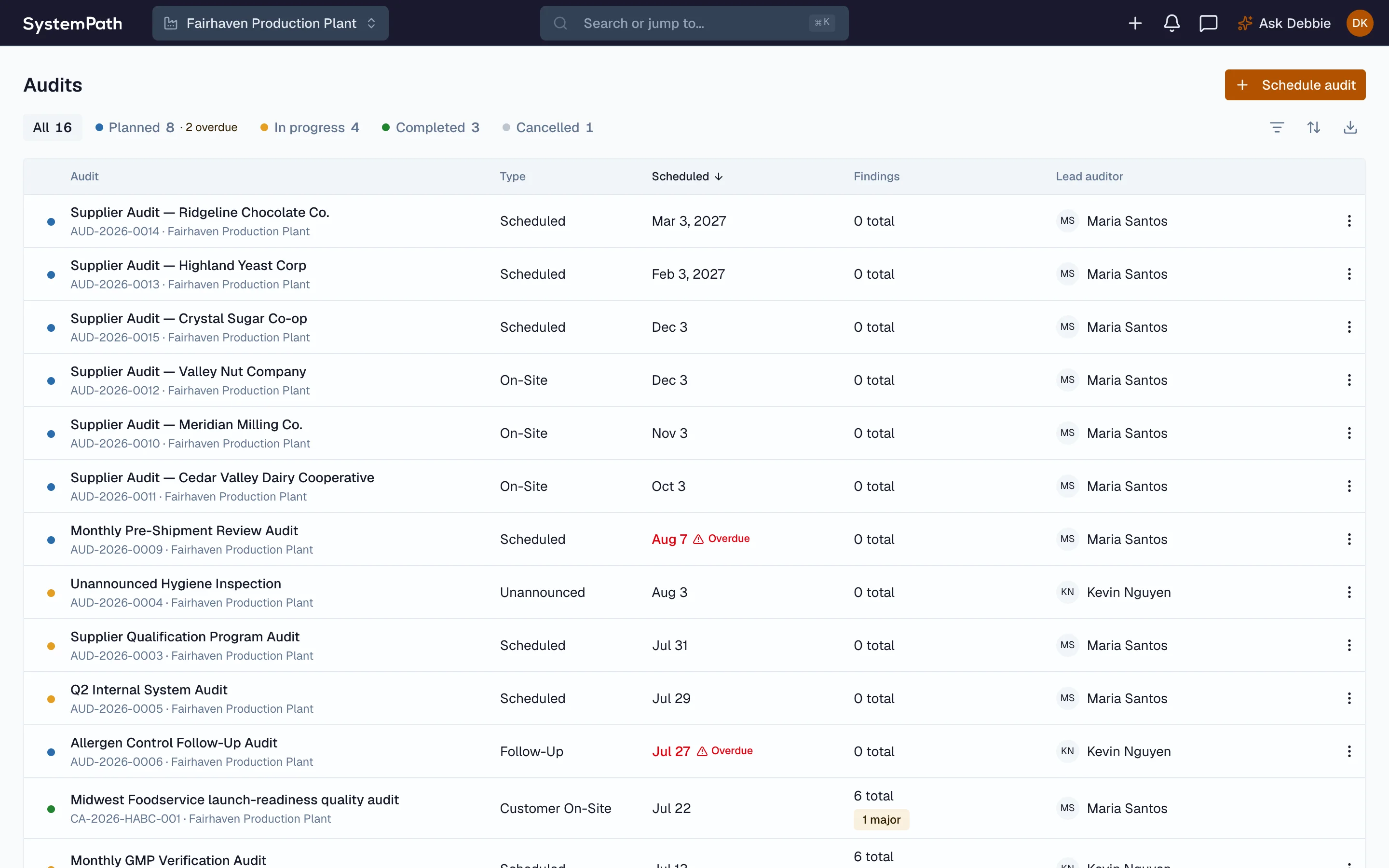
Internal, external, and supplier audits sit in one register with their type, their scheme, their status, and their finding counts. The answer to "how often do you audit yourselves" is a screen rather than an assurance.
Explore Audit history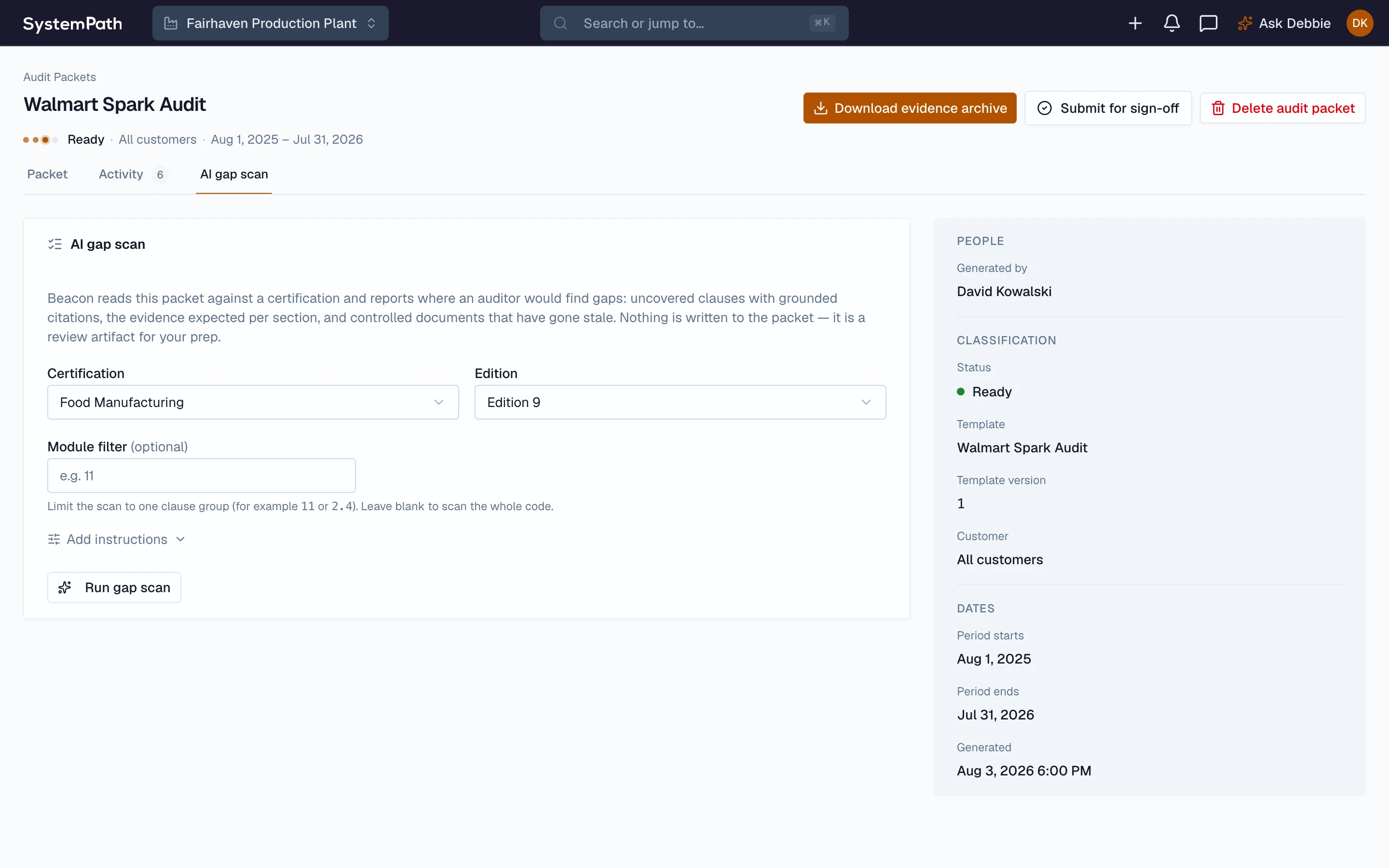
Beacon reads a packet against a certification and reports where the gaps are: uncovered clauses with their citations, the evidence expected per section, and controlled documents that have gone stale. It writes nothing to the packet. It is a review artifact for your prep, and it says so on screen.
Explore Gap scanSee the packet build itself.
A 20-minute walkthrough of the audit loop, the packet, and Audit Day Mode on real data, with your audit calendar in hand.
Prefer the phone? (313) 484-4887
What happens next
Discovery call
About your schemes, your customers, and your next audit date.
Live walkthrough
A packet assembled from live records, and a session started on the floor.
Custom proposal
Software, consulting, and training sized to your operation.
You'll talk with a food safety expert, not a sales rep.
20 minutes · No commitment · No pressure
Questions audit teams ask.
Answers from the team that runs Beacon inside a working SQF-certified plant.
Internal, external, and supplier audits, all on one system. You schedule the audit, work from a checklist for the scheme you are certified against, tie findings to the SQF elements they belong to, and route each finding to a corrective action with an owner and a due date. The audit and everything it produced live in one place, not in a binder and three inboxes.
A retailer audit packet is the evidence bundle a customer or certification body asks for, assembled on demand. Beacon ships nine system templates covering six major US retailers, FDA FSVP, SQF Edition 10, and BRCGS Issue 9. Each one walks its required sections through a gatherer that pulls your live records, seals the result with a SHA-256 checksum, and renders a single downloadable PDF.
When a packet is assembled, Beacon records exactly which records went into it and computes a SHA-256 checksum over the sealed contents. The checksum travels with the PDF, so anyone can confirm the packet has not been altered since it was sealed. The evidence is dated, attributed, and tamper-evident.
The nine templates ship as system baselines with their required sections defined, and you choose the reporting period each time a packet is generated, so the window matches what the customer asked for. Cloning a baseline into a tenant version with your own section tuning is in development; the baselines cover the programs customers actually audit against today.
Audit Day Mode is what you switch on when the auditor arrives. The interface signals an audit is underway, non-critical notifications are held back so the team can focus, and a time-limited, expiring link gives the auditor read-only access to exactly what they need. Every tenant-side and auditor-side access is recorded, and a summary PDF is generated when the session ends.
Not if the findings are critical or major. An audit's close is blocked while one of those findings has no corrective action opened against it, so a gap cannot be noted and quietly forgotten. The audit's history shows what was found, who owned it, and how it was resolved, which is exactly the trail the next auditor wants to see.