


Find the cause before it repeats
Most corrective actions close on a restated symptom: retrain, remind, revise. Then the problem comes back with an auditor watching. We run structured root cause analysis while the evidence is fresh, and we build teams that can run it without us.
Active incident? Say so in the form and we move today.
From incident to a cause you can act on
Containment, method, system fix, verification: the four moves of an investigation that ends problems instead of documenting them. We run all four with your team on the record.
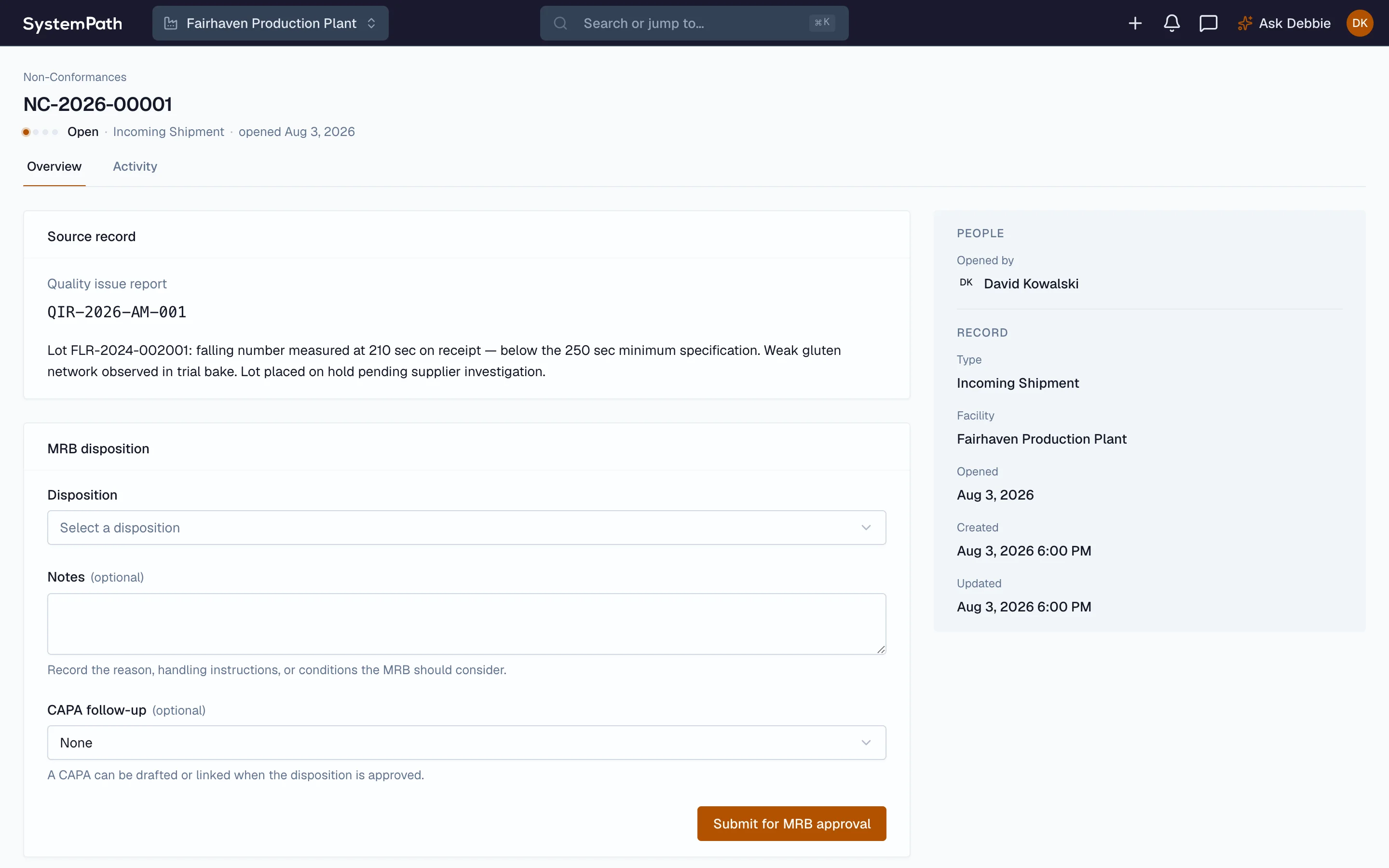
Hold what might be affected, scope the exposure by lot and time window, and make the disposition someone signs. Analysis under containment can take the time it needs; analysis during an uncontained problem is triage.
Explore Contain First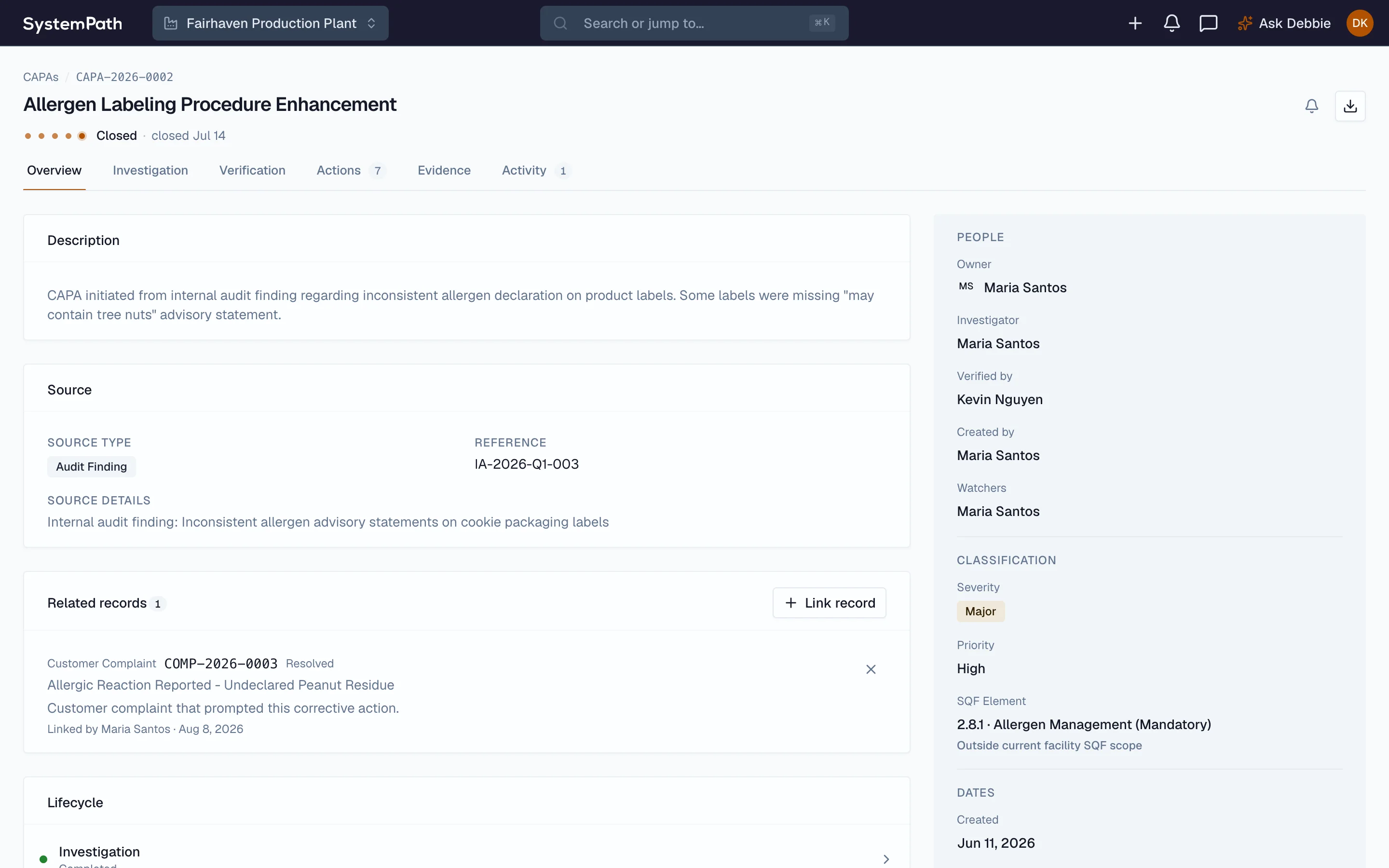
5 Whys when there is one thread to pull, a fishbone when causes could live in several places at once. Worked with the people who saw it, against records rather than recollection, until the chain holds up to a hostile reading.
Explore Structured Methods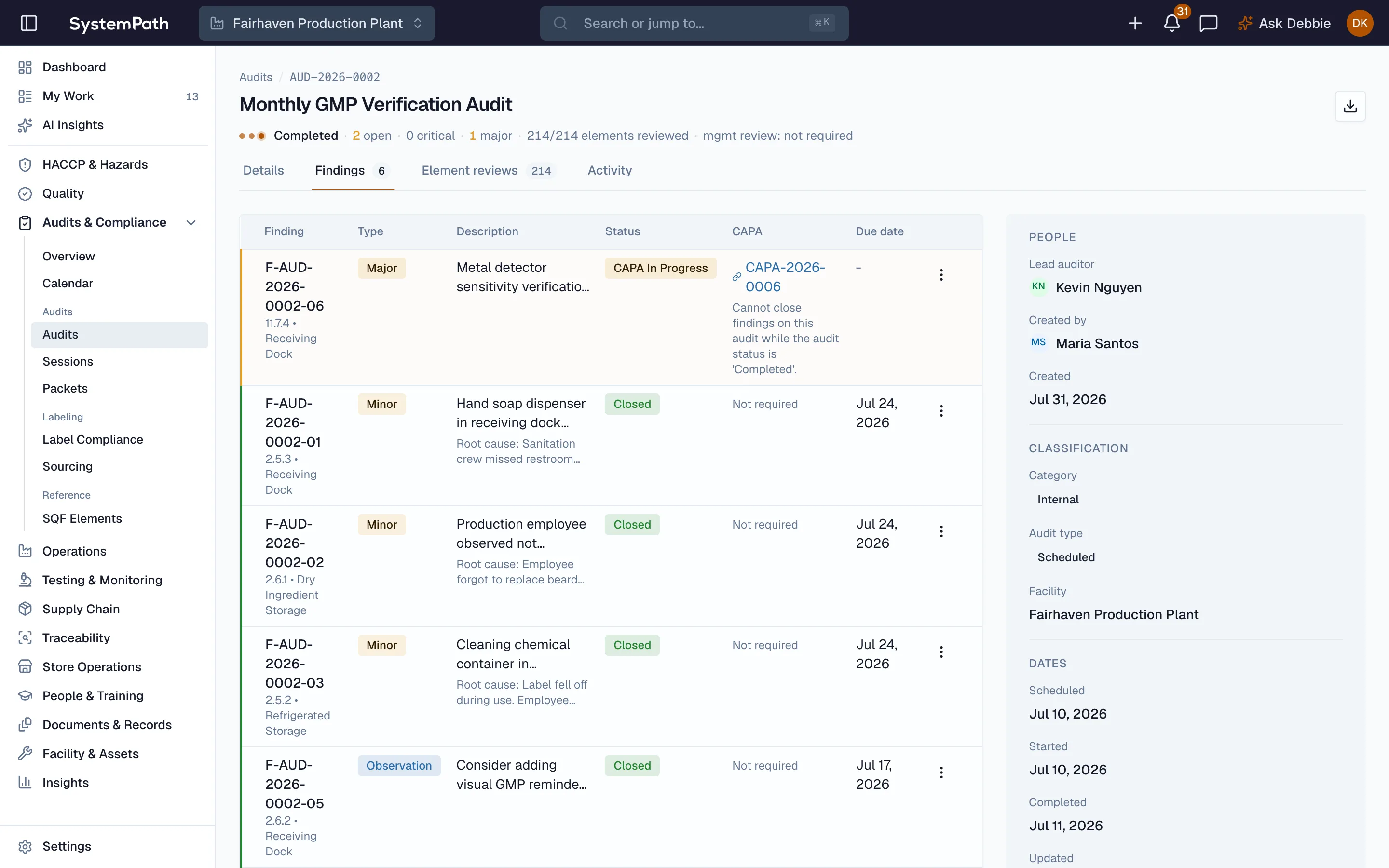
The correction handles today; the corrective action changes the system that made the failure possible, with an owner and a due date. If the fix is "retrain and remind," the analysis is not finished.
Explore Fix the System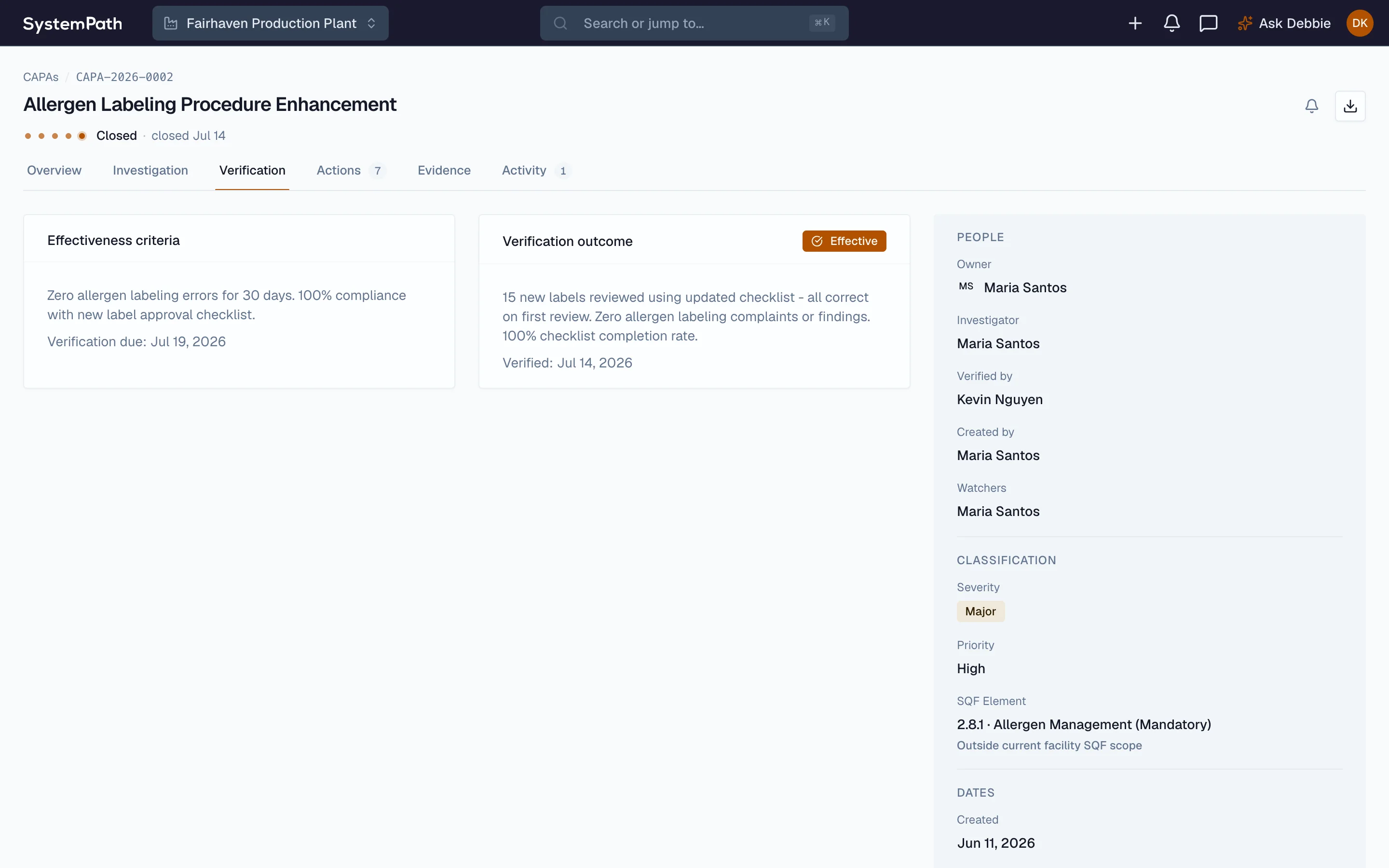
Effectiveness criteria get written when the action does: what will be measured, over what window, and what result closes it. The corrective action stays open until the evidence says the cause is gone.
Explore Prove It WorkedHow an investigation actually runs
The same discipline whether the trigger is a customer complaint, an audit finding, or a hold on the floor. Speed matters at the start, patience matters in the middle, and proof matters at the end.
Bring us your hardest oneContain and hold
day oneStop the exposure: hold suspect product, scope by lot and time window, and record the disposition path before anyone theorizes.
Capture the evidence fresh
days 1-3Records pulled, the timeline built, the people who saw it interviewed before the shift rotates and the memory becomes a story.
Pick the method
day 3One thread: 5 Whys. Causes scattered across people, method, machine, and material: fishbone first, then drill the branch that holds.
Find the system cause
week 1-2Keep asking why past the person and the part, down to the process that made the failure possible. Stop only at a cause the facility controls.
Correct and act
week 2The correction fixes today. The corrective action changes the system, with an owner, a due date, and effectiveness criteria written up front.
Verify effectiveness
30-90 daysMeasure what the criteria said, over the window they set. Closed means the evidence says the cause is gone, not that the paperwork is done.
What separates analysis from paperwork.
Auditors read corrective actions for these four things. So do we.
Containment first
Before the theories
Product safety does not wait for the analysis. Hold, scope, disposition, then investigate with the pressure off the decision.
Facts, then causes
Records over recollection
The timeline comes from records and fresh interviews, not from the loudest memory in the room. Evidence decays; capture it early.
A cause you control
Not a person to blame
"Operator error" is where analysis quits. Keep going until you reach the process that made the error possible. That is the thing you can fix.
Verified closure
Proof, not paperwork
Effectiveness criteria written up front, measured on schedule, and the action stays open until the evidence says the cause is gone.
Got a corrective action that keeps reopening. Tell us about it and we'll tell you where the analysis stopped short.
Our RCA work is led by a former SQF Lead Auditor who has read thousands of corrective actions from the auditor's chair and can tell a root cause from a restated symptom in one line. Meet Jeff.
The investigation lives in Beacon. So does the proof.
Every corrective action carries its source record, its root cause with the fishbone behind it, the actions with owners, and the effectiveness verification that closes it. The trail an auditor wants is the trail the work leaves. See how CAPA works.
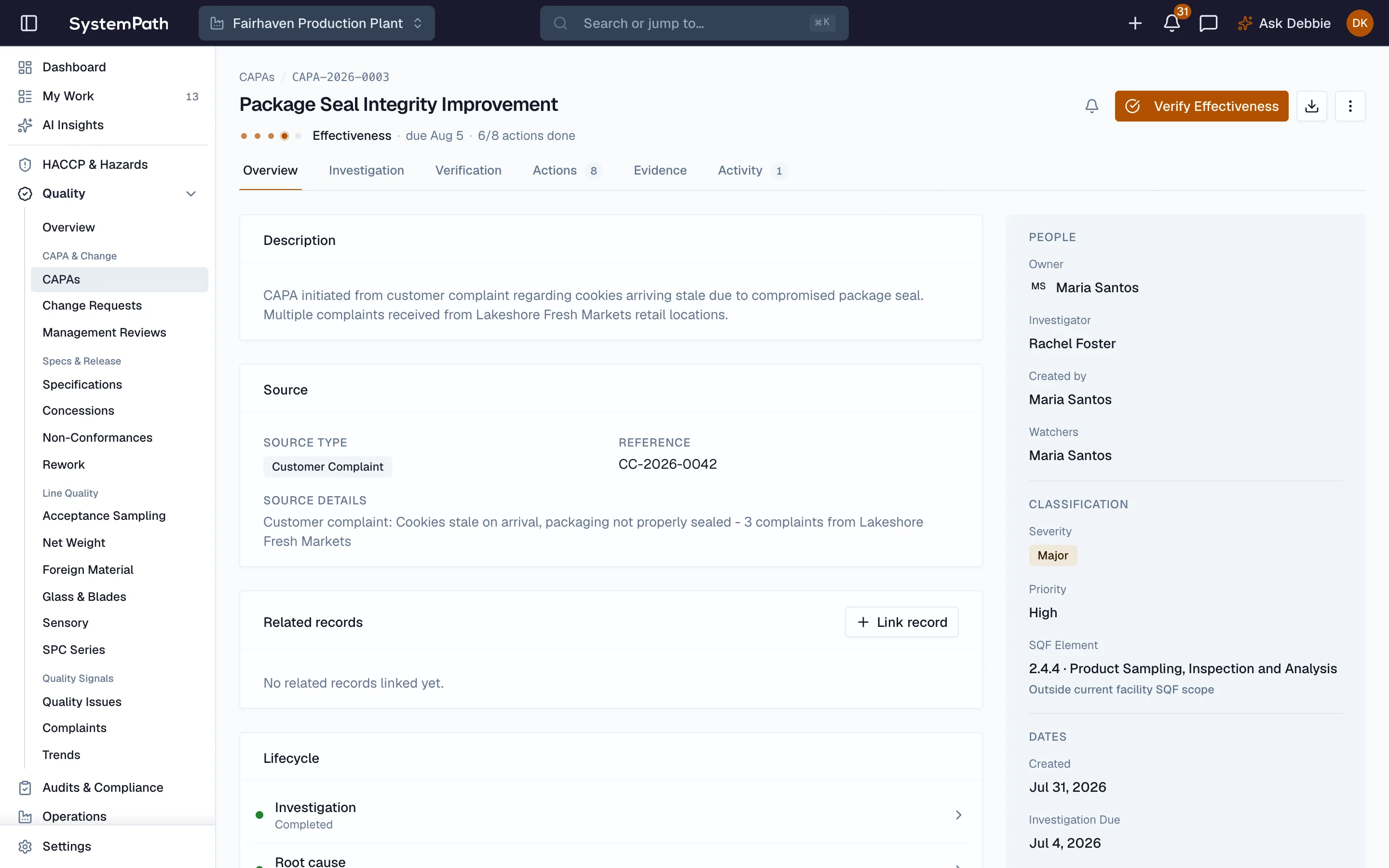
Anyone can fill in a 5 Whys template. The difference is whether the problem is still gone at the next audit. See why teams bring the hard ones to us.
Get to the real cause while the evidence is fresh
Bring the incident, the complaint, or the corrective action that keeps reopening. In 20 minutes you'll know where the last analysis stopped short and what it will take to end the repeat.
Prefer the phone? (313) 484-4887
What happens next
Discovery call
About your facility and goals. Not a sales pitch.
See it in action
A live walkthrough of Beacon scoped to your operation.
Custom proposal
Software, consulting, and training sized to your facility.
You'll talk with a food safety expert, not a sales rep.
20 minutes · No commitment · No pressure
Tell us about the problem that keeps coming back
The complaint that returns every quarter, the finding that reopens under a new number, the incident nobody quite closed. We come back with a read on where the last analysis stopped and what a real one would examine. Active incidents get a same-day response.
Root cause analysis questions, answered
Common questions from QA teams running investigations or rebuilding their corrective action discipline.