


The system behind the certificate
An FSMS is not a binder of documents. It is one traceable structure: the policy leadership signed, the programs that carry it, the procedures your floor follows, and the records that prove it ran. We build that structure with your team, or repair the one that grew up in pieces.
Not ready for a call? Tell us how your documents are organized today.
Four tiers, one traceable line through them
A working FSMS lets anyone trace from the policy to a program, from the program to a procedure, and from the procedure to yesterday's record. We build each tier and the connections between them.
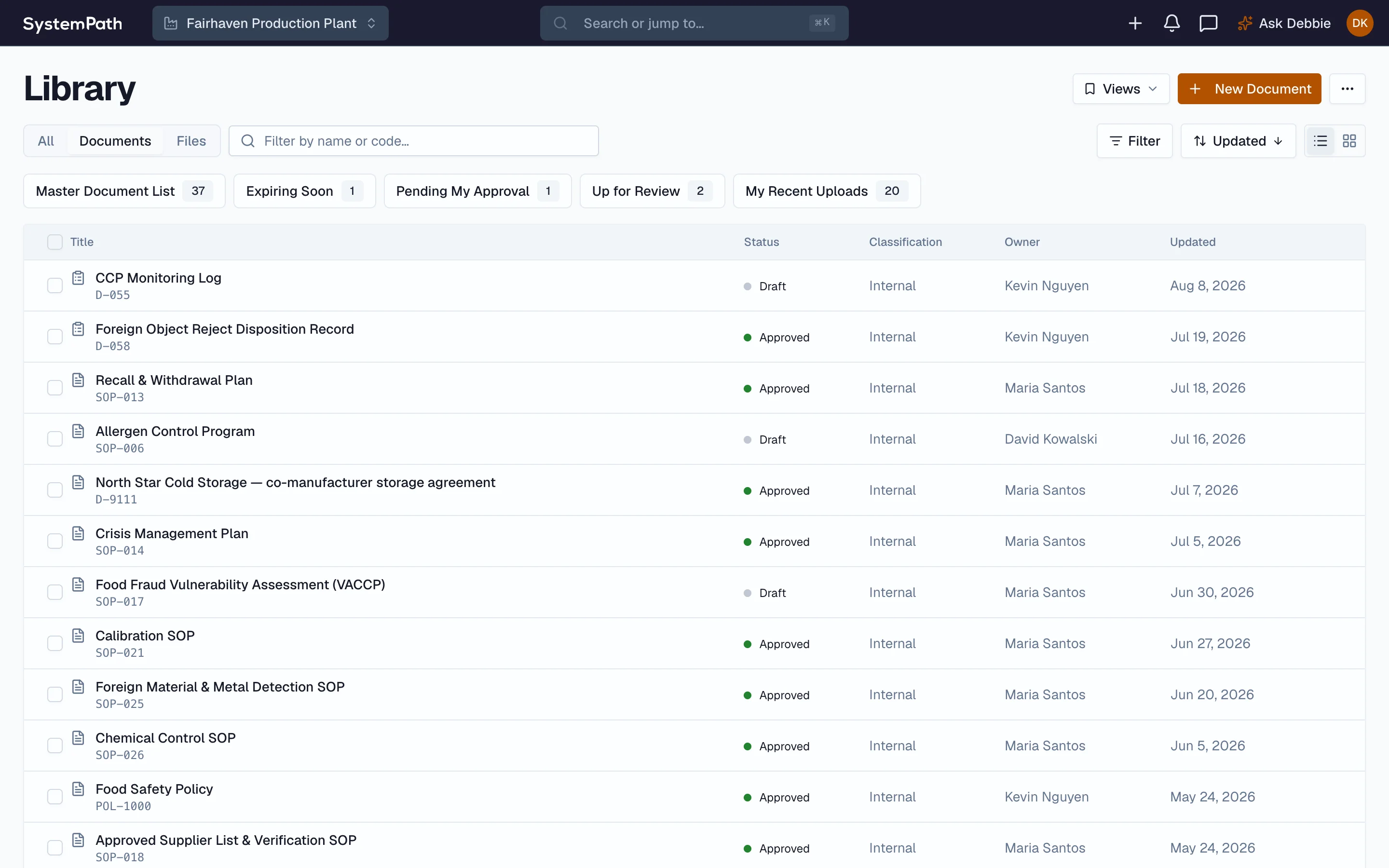
We structure the system so every document has a number, an owner, a review date, and exactly one current version. The versions people carry in their heads or on their desktops stop competing with the one that is approved.
Explore Structure and Document Control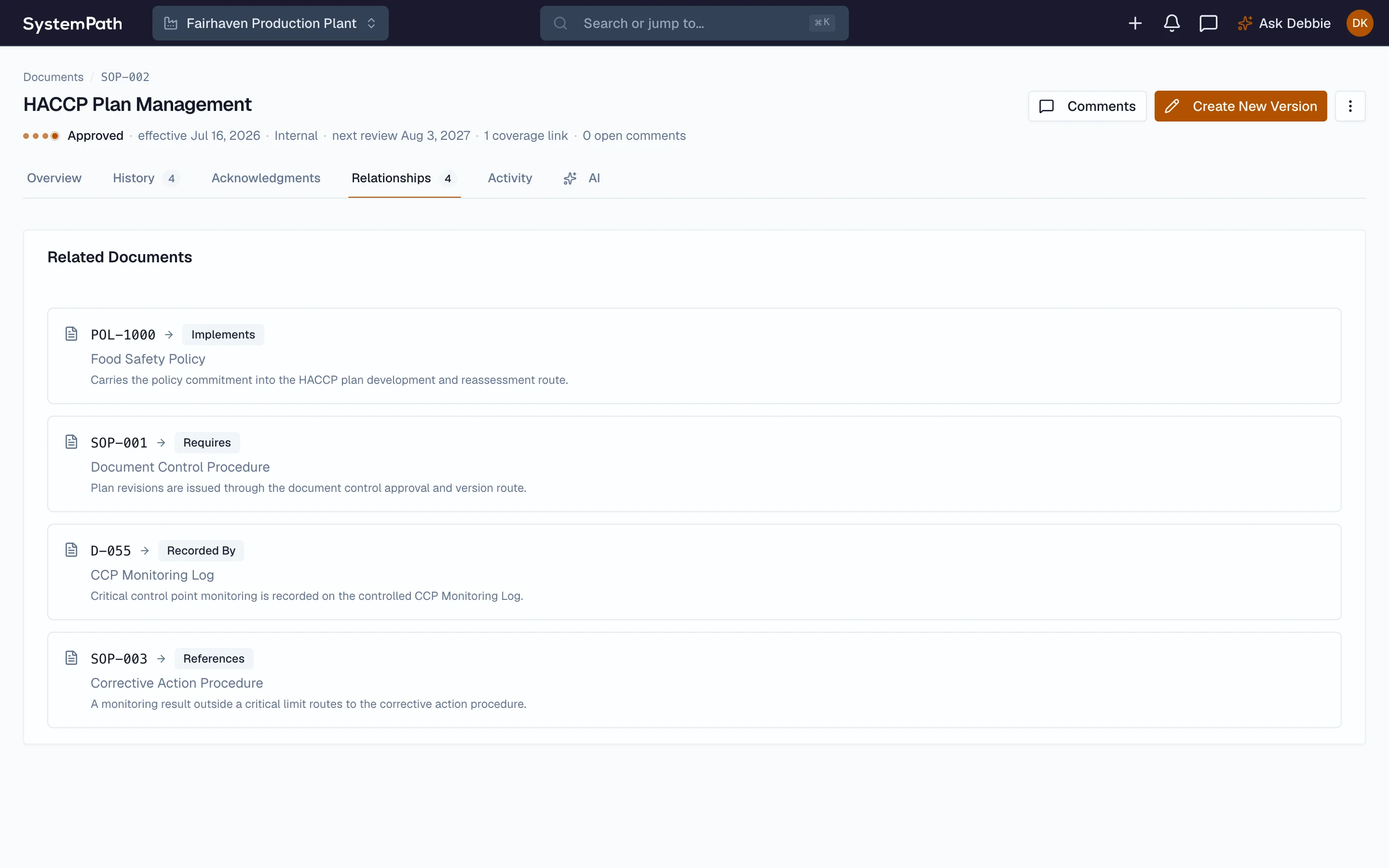
HACCP or preventive controls, prerequisite programs, supplier approval, training: written from how your facility runs, then corrected against practice. A procedure nobody follows is a finding waiting for an auditor to write it.
Explore Programs Built to Your Scheme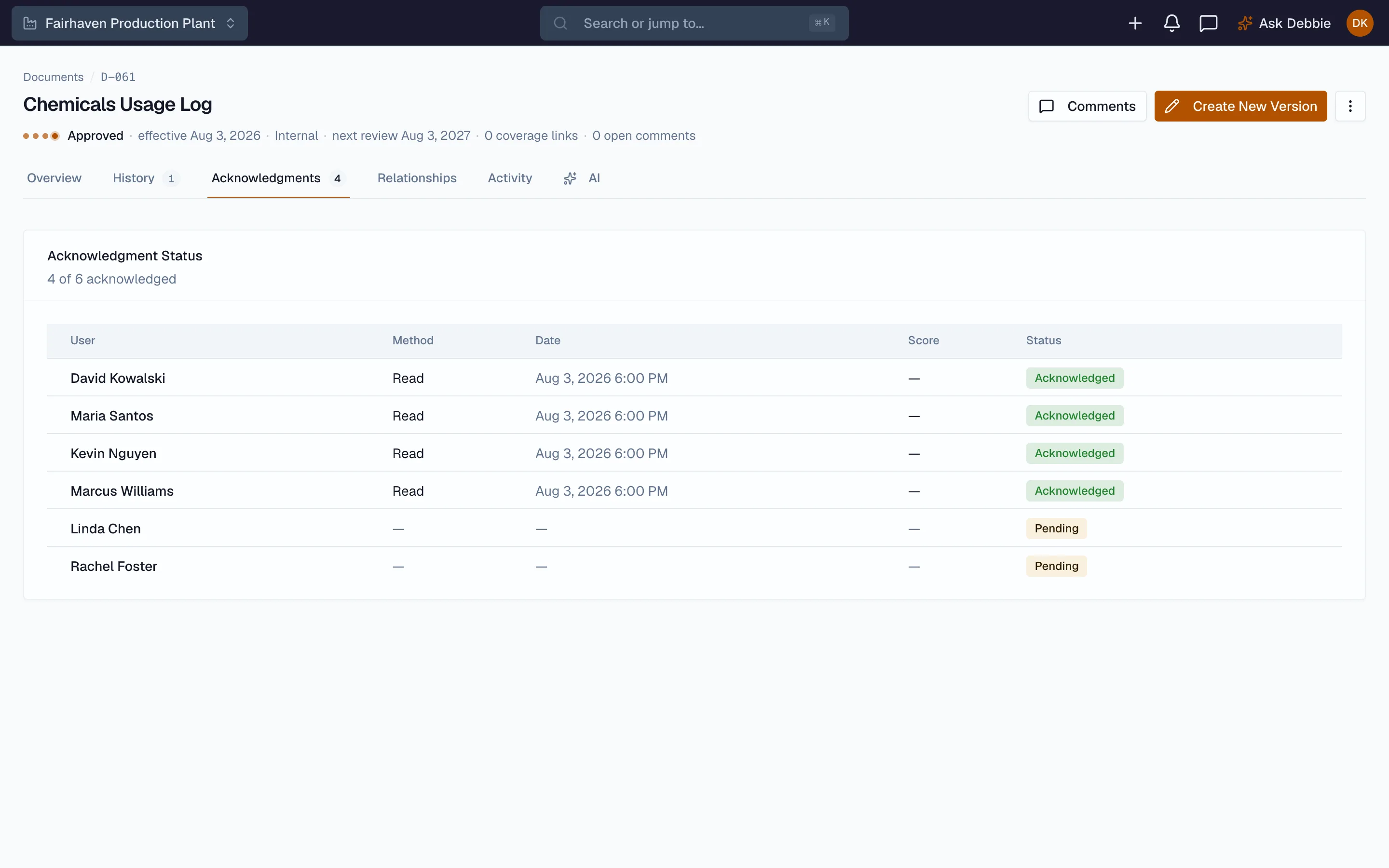
Monitoring logs, checks, and verifications get recorded where they happen, with the person and the moment attached. When a customer or auditor asks for the record, it exists because the work created it.
Explore Records Where Work Happens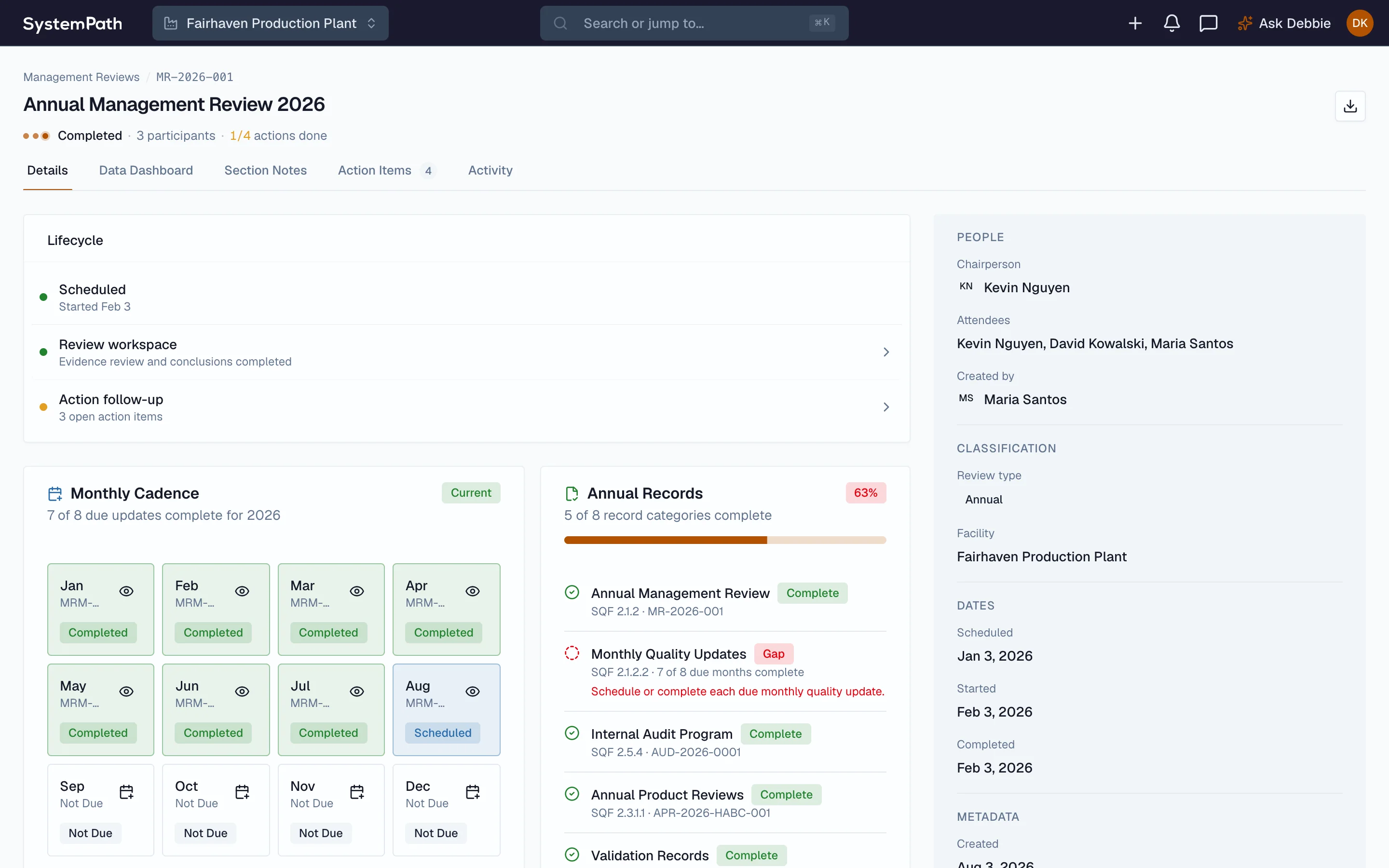
Scheduled reviews pull audit results, corrective actions, complaints, and trends into one agenda, and every gap becomes an action item with an owner. The loop from record back up to policy is what makes it a management system.
Explore Management ReviewFrom scattered documents to a system you can defend
Most facilities do not start from zero. They start from a system that grew one document at a time, written by people who have since left, in formats that no longer match. We map what exists, keep what works, and rebuild the structure around it.
Start with a system mapMap what exists
1-2 weeksInventory every program, procedure, and record against what your scheme or regulation requires. Most systems have more coverage than their owners think, in worse shape than they hope.
Design the structure
1 weekSet the document hierarchy, numbering, ownership, and review cycles. This is the skeleton everything else hangs on, and the part a homegrown system almost never has.
Write and correct the programs
3-6 weeksDraft program and procedure documents from how the facility actually runs, then walk them with the people who do the work until the paper matches the practice.
Stand it up in document control
1-2 weeksLoad the system into Beacon with owners, approval routes, and review dates. The shared-drive era ends here.
Train and run
ongoingThe floor works from current documents and makes records where the work happens. The system starts producing its own evidence.
Review and improve
quarterlyManagement review runs on schedule, reads the live system, and turns gaps into owned actions. The loop that keeps the system honest.
What separates a system from a stack of documents.
Auditors read structure before they read content. These are the four things they trace first.
One current version
Of every document
Two versions of the same SOP in circulation is not a filing problem. It is an uncontrolled process, and auditors treat it as one.
Paper matches practice
The floor test
An auditor reads the procedure, then watches the line. Any gap between the two becomes a finding, no matter how well either one stands alone.
Records made in time
Not the night before
A record created when the work happened reads differently from one reconstructed later, and experienced auditors can tell them apart.
A closed loop
Review that acts
Management review turns what the records show into decisions with owners. Without it, the system runs open-loop until an audit closes it for you.
Not sure your system passes all four. Tell us how your documents are organized and we'll map the gaps.
Our FSMS work is led by a former SQF Lead Auditor who has read hundreds of management systems from the auditor's chair and knows exactly where a structure that grew in pieces falls apart under tracing. Meet Jeff.
Your FSMS lives in Beacon. Not in a shared drive.
The structure we build together is the structure your team runs every day: controlled documents with role-based approvals and electronic signatures, records made on the floor, and a management review that reads the live system. See how document control works.
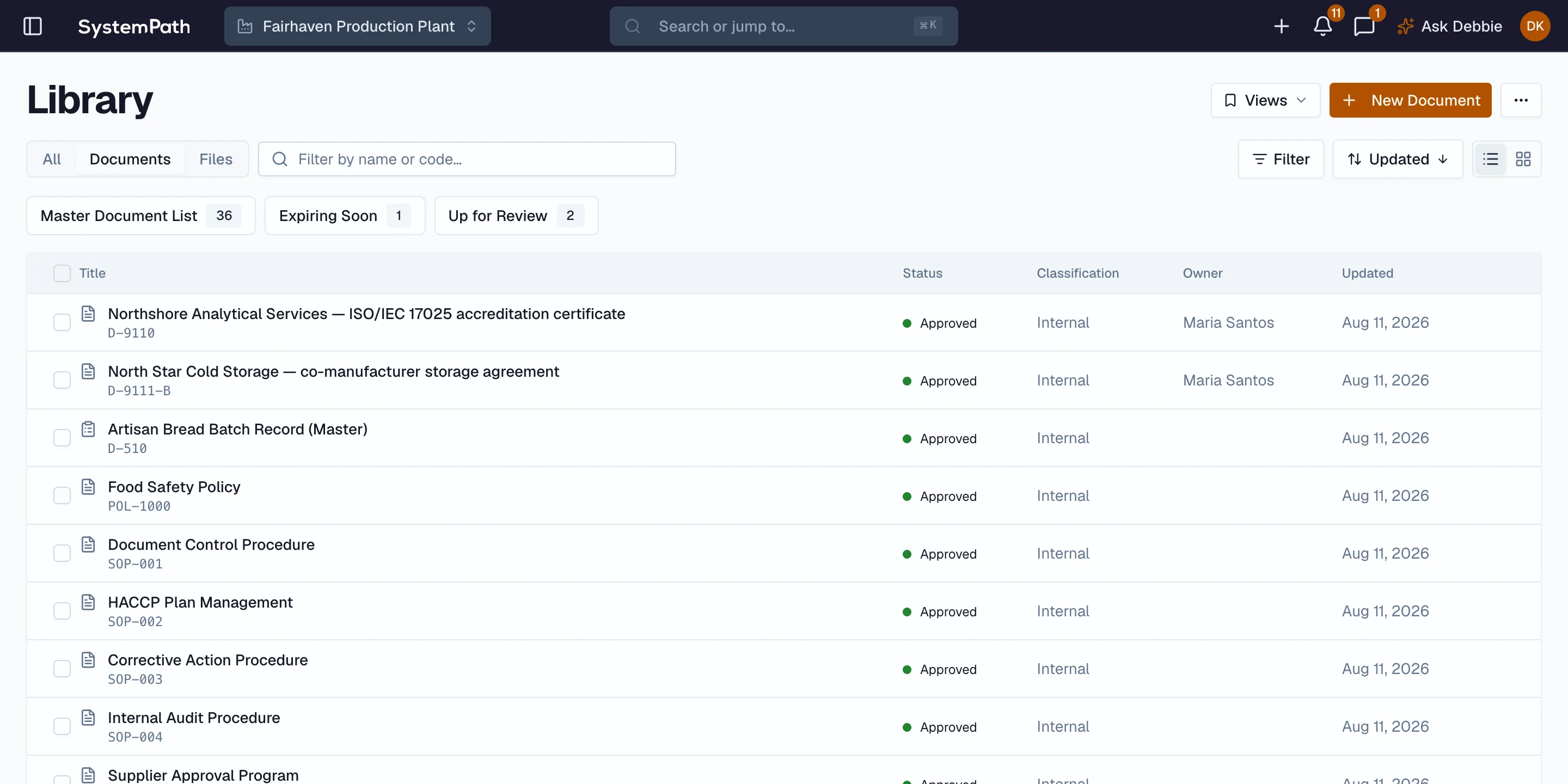
Plenty of consultants will write you a management system. The difference is whether it still traces top to bottom a year after the engagement ends. See why teams build it with us.
Build a management system an auditor can trace
Tell us how your system is organized today. In 20 minutes you'll know whether it traces from policy to record and which tier needs the work.
Prefer the phone? (313) 484-4887
What happens next
Discovery call
About your facility and goals. Not a sales pitch.
See it in action
A live walkthrough of Beacon scoped to your operation.
Custom proposal
Software, consulting, and training sized to your facility.
You'll talk with a food safety expert, not a sales rep.
20 minutes · No commitment · No pressure
Tell us how your system is organized
Describe how your documents, programs, and records are structured today, shared drive and all. We come back with a read on where the structure holds, where it will not trace, and what we would fix first.
Management system questions, answered
Common questions from QA teams building or rebuilding a food safety management system.