


Field Notes · Apr 27, 2026 · Updated Aug 16, 2026 · 6 min read
Two Allergen Recalls in One Day. The Allergens Weren't the Problem.
On April 24, FDA posted two undeclared-allergen recalls. Different products, different states, different mechanisms. Both came back to the same root cause. The label said one thing and the bag held another. That makes this a changeover-and-reconciliation problem, not an allergen problem, and the distinction changes how a QA team should respond.
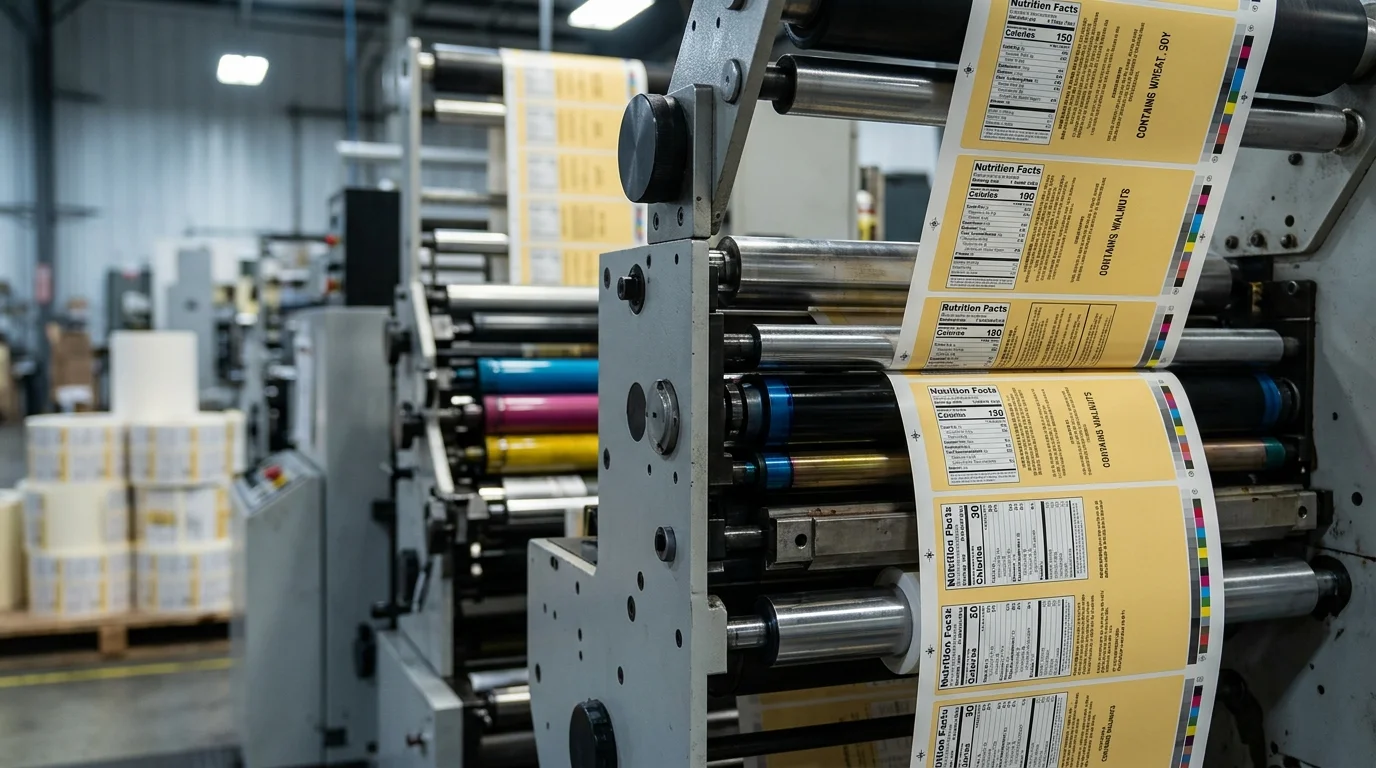
On April 24, FDA posted two separate undeclared-allergen recalls. Ferris Coffee & Nut Co. for wheat and soy in a trail mix. French Broad Chocolates for walnuts in a bonbon box.
Different products, different states, different mechanisms. Same root cause. The label didn't match what was in the package.
That distinction matters. If you treat this as an allergen-control problem, you'll go look at your allergen matrix. The matrix is fine. The problem is upstream of the matrix, in the part of your system that should catch it when the label and the product disagree.
What happened at Ferris Coffee & Nut
The product: Frederik's by Meijer Vanilla Bourbon Trail Mix. 9-ounce black bag, lot 6069-1, expiration 12/10/26. Distributed in Michigan, Indiana, Ohio, Illinois, Wisconsin, and Kentucky.
What went wrong: chocolate-covered pretzel balls (which contain wheat and soy) were packaged in bags labeled for bourbon-flavored caramels (which don't). No illnesses reported. Production suspended.
If you've ever run a multi-SKU bagging line, you know this scenario. Two products move through the same packaging area on the same day. Both look similar. Both go into similar bags. The line clears one product, sets up for the next, and somewhere in the changeover the wrong product ends up in the right bag.
This is a packaging-changeover failure dressed up as an allergen failure. The pretzel formulation is fine. The caramel formulation is fine. The two SKUs collided during changeover, and nothing in the post-changeover process caught the swap before it shipped.
What happened at French Broad Chocolates
Different mechanism. The Bette's Bake Sale Bonbon Collection contains a Walnut Fudge bonbon. The product was the right product. The packaging was the right packaging. The failure was on the printed tasting guide that ships with each box, where the Walnut Fudge bonbon was incorrectly identified. A consumer relying on the guide to tell the bonbons apart could have eaten one with walnuts without knowing.
Distributed April 14 through April 20 from the company's Asheville retail stores and shipped online to 40 states plus Washington, DC.
The printed tasting guide is the kind of secondary document that sits in a separate print queue from the product label, often handled by a different vendor and rarely reviewed against the actual product manifest. That's exactly where this kind of error hides.
The shared root cause: label-to-product reconciliation
Both recalls came down to the same gap. At some point in the process, a person or system should have read what the label says, looked at what's in the package, and verified that the two match.
Neither company caught it.
Most facilities run a version of this check, but it's almost always informal. The line lead glances at the label as the first case comes off the changeover. The print operator pulls a sample from the run and eyeballs the copy. None of this is documented, and none of it is reconciled against an authoritative source like the spec sheet or the master allergen list.
When a regulator or a customer asks how you verified the label matched the product, most QA teams can't answer with a record.
The 24-hour reality of a supplier recall gets a lot of attention. The hours-zero reality of preventing one is what nobody writes about.
What changeover validation should actually look like
For a multi-SKU line like the one Ferris ran, the procedure has four parts.
1. Visual line clearance, documented. Not "the line lead checked." A signed clearance form that names the previous SKU, the next SKU, the time of clearance, and the person who cleared it. The form lives in the production batch record.
2. Allergen-aware changeover sequencing. If the previous product contained wheat and the next does not, the changeover protocol changes. Soy and wheat are major allergens under FALCPA. The protocol should specify what cleaning is required, what verification is required, and who signs off.
3. First-case label-to-product check. When the first case comes off the line after changeover, the line lead pulls a unit, reads the label out loud against the product, and signs the batch record. This is a manual reconciliation. It takes 60 seconds. It catches more mismatches than any other check on the line.
4. Packaging reconciliation at end of run. The case count produced should match the labeled units of the right SKU. If you produced 4,200 units of Product A but the system shows you only had 4,180 labels for Product A, you have a problem to find before the truck leaves.
Most facilities have parts of this. Few have all four written, signed, and audited.
What label-print reconciliation should look like
The French Broad failure is different. The product was right. The printed insert was wrong. That gap usually exists because labels and inserts are produced through separate workflows, often by different vendors, and rarely cross-checked against each other.
The fix is a master spec for each SKU that lists every printed surface and every printed component, with allergen content explicitly called out. Before any printed piece ships from the printer, a sign-off matches every printed surface against the spec.
This is mechanical. It doesn't require AI. It requires that one person owns the spec and one person owns the sign-off, and they can't be the same person.
The drill that finds these gaps
Pull the last 10 changeovers your facility did. For each, ask:
Is there a signed line clearance form?
Is there a first-case label-to-product check, signed?
Is the case count reconciled against label inventory?
For products with allergen changes between SKUs, is there a documented allergen-cleaning step?
If you can't answer yes for all four on at least 9 of the 10, your facility has Ferris's gap.
Then run the same drill on printed components. For the last 10 SKU print runs, is there a signed reconciliation between the printed copy and the master spec? If not, your facility has French Broad's gap.
Both gaps are easy to fix in advance. They get hard only after the recall.
What we built into Beacon
When we built Beacon's allergen and labeling workflow, we started with the failure modes from real recall investigations, not a matrix-on-a-PDF. Each SKU has an allergen profile that ties to the area changeover procedure and the label review. The label review compares what's declared on the label against what the product actually contains, and a discrepancy escalates to CAPA instead of getting initialed off in a binder.
The system makes the reconciliation steps mandatory and signed, instead of trusting that the line lead did them informally.
If your changeover and label reconciliation runs on paper, those signatures are sitting in 12 different binders nobody opens until the next audit. That's the part that breaks.
Book a call and I'll show you how the workflow runs.
More in Field Notes
All Field Notes
Three Dessert Recalls in 30 Days. Three Different Hazards.
Steven Moussawer · May 18, 2026 · 7 min read
Raw Farm's Tests Came Back Clean. The Outbreak Still Traces to Them.
Steven Moussawer · Apr 21, 2026 · 5 min read

When Your Supplier Causes a Recall, You Have 24 Hours
Steven Moussawer · Apr 14, 2026 · 6 min read
Run a food safety program? See how Beacon keeps it audit-ready.
See Beacon in 20 minutes